
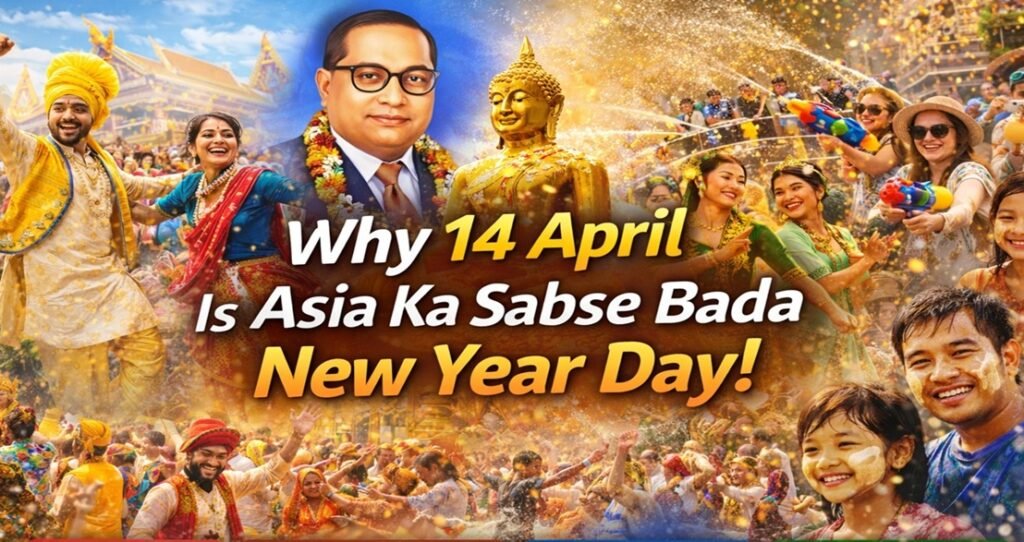
Why 14 April Is The Biggest New Year Day In The World
Every year, 14 April quietly becomes one of the most culturally significant days across the globe—especially in Asia. While most people celebrate New Year on January 1, millions across countries celebrate their traditional New Year on or around 14 April.
From India to Southeast Asia, this date marks renewal, harvest, and solar transition, making it arguably the biggest New Year day in the world.
The Science Behind 14 April: Solar New Year
The reason so many cultures celebrate New Year on this day lies in astronomy.
- Around 14 April, the Sun enters Aries (Mesh Rashi)
- This transition is known as Mesh Sankranti
- It marks the beginning of the solar calendar year in many traditions
Unlike January 1 (Gregorian calendar), this date is based on natural celestial movement, which is why multiple civilizations independently chose it.
India: A Land of Multiple New Years
India alone celebrates several New Year festivals on this date.
🌾 Vaisakhi
- Celebrated in Punjab
- Marks harvest season and Khalsa स्थापना
🌸 Pohela Boishakh
- Celebrated in West Bengal & Bangladesh
- Cultural fairs, music, and traditional food
🌼 Puthandu
- Tamil New Year
- Special rituals and festive meals
🌿 Pana Sankranti
- Odisha’s solar New Year
- Famous for “Pana” drink
🌞 Bohag Bihu
- Assam’s biggest festival
- Dance, music, and agriculture celebration
👉 One country, 5+ New Year celebrations on the same day — that itself is massive.
Southeast Asia: Water Festivals of Renewal
💦 Songkran (Thailand)
- Famous worldwide for water fights
- Symbolizes washing away sins and bad luck
💧 Thingyan (Myanmar)
- Combines celebration with charity
- Strong Buddhist spiritual roots
🌊 Chaul Chnam Thmey
- Cambodia’s traditional New Year
- Temple visits and family rituals
💦 Pi Mai Lao
- Laos New Year
- Similar water traditions as Songkran
🌺 Aluth Avurudu
- Celebrated in Sri Lanka
- Ritual timings and family bonding
Why So Many New Years on the Same Day?
1. 🌞 Solar Calendar Alignment
Most of these cultures follow solar calendars, not lunar ones.
👉 The Sun entering Aries = New agricultural & spiritual cycle
2. 🌾 Harvest Season Connection
- April = Harvest time in many regions
- Farmers celebrate new beginnings and prosperity
3. 🧘 Cultural & Spiritual Renewal
- Cleaning homes
- Visiting temples
- Performing charity
👉 It’s not just a calendar change—it’s a life reset
Global Scale: How Big Is It?
👉 On 14 April:
- India: 5+ major New Years
- Thailand, Myanmar, Laos, Cambodia, Sri Lanka: National festivals
- Hundreds of millions of people celebrating simultaneously
This makes it one of the largest synchronized cultural celebrations in the world.
More Than Just New Year
14 April is also important for:
- Dr. B. R. Ambedkar Jayanti
- World Chagas Disease Day
👉 So the day blends history, culture, and global awareness
Final Conclusion
14 April is not just another date—it is a global cultural phenomenon.
From the colorful streets of Kolkata to water-soaked celebrations in Bangkok and spiritual rituals in Yangon, the world comes together to celebrate new beginnings.
👉 That’s why 14 April truly deserves the title:
“The Biggest New Year Day in the World.”
