

How Long Will a Power Inverter Run?
The Runtime of an Inverter
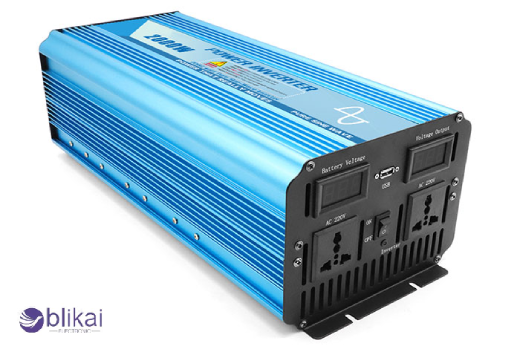
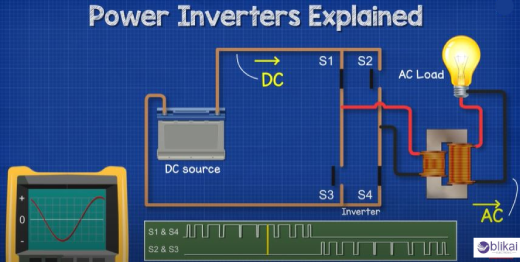
The power inverter depends mainly on the capacity of the battery, the efficiency of the inverter and the wattage of the gadget being powered. Inverters do not produce electricity, but they use a battery to pull power and change DC power to AC power. Due to this fact, the inverter can only operate to the extent that the battery will be able to provide enough current. Age of battery, ambient temperature and conversion efficiency of the inverter are other factors that affect the runtime.
Battery Capacity and Its Impact on the Run Time
One of the most significant factors that is used to determine the duration of a power inverter running is battery capacity. Capacity is amp-hours (Ah), and it is used to understand the amount of energy that can be held by the battery. The increased Ah rating implies increased available energy and a longer run time. In one example, a 12 V 100 Ah battery has a theoretical capacity of 1,200 watt-hours of energy (12 V 100Ah ). But the real working power is usually less because of ineffective work and recommended release rates to ensure the good health of the battery. Deep-cycle batteries can safely be discharged up to 50 percent, whereas car batteries are not deep-cycle and have even less capacity.
Effects of the Wattage Load on the Runtime
The runtime is highly dependent on the power usage of the gadgets that you use in the inverter. Big devices such as microwaves, refrigerators, and space heaters burn much energy as opposed to small electronics such as LED lights or laptops. The runtime will be estimated by the amount of wattage of all devices that will be connected to the inverter. The greater the load, the quicker the battery will discharge, and the greater the heat generated and hence the inverter becomes more difficult and so increases the run time. That is why, in practice, the support of even large batteries can only serve relatively short-term high-power appliances.
Simple Formula to calculate Runtime
The most popular formula to determine the runtime of an inverter can be:
Runtime (hours) = Battery Wh × Inverter Efficiency ÷ Load (watts).
An example is that a battery of 100Ampere 12 Volt contains approximately 1,200 Watts hours. Suppose you have an inverter with an 85% efficiency and a device with a power requirement of 300 W The exact amount of run time would be:
1,200Wh × 0.85 ÷ 300W ≈ 3.4 hours
The formula assists users in easily predicting desired performance, but in practice, results vary because batteries get old, get hot, and wiring losses occur. Nevertheless, it offers a realistic approach to the planning of power consumption when camping, in case of an emergency, or when disconnected.
Inverter Efficiency and Energy Loss in the Real World
Inverter efficiency is another important variable that influences runtime. Most of the modern inverters have an efficiency of between 80 and 95 percent, i.e., a portion of the energy goes to waste as heat during the conversion of DC to AC. The lower the performance of the inverter, the more power is wasted and the less energy can be obtained by the appliances in general. In addition, inverters consume a very low amount of power even when not under load, making them shorten the runtime as well. Pure sine wave inverters tend to be more efficient than modified sine wave inverters, which may be a very high difference with long-term operation and battery life, especially with high-demand applications.
Effects of Battery Type on Inverter Run Time
The types of batteries used offer varying amounts of usable energy, which influences the length of time the inverter may be used. AGM and lithium-ion batteries with deep-cycle are the best batteries that should be used in inverters since they are designed to undergo repeated discharge cycles without damage. Particularly, lithium batteries provide close to their rated capacity, high efficiency, and steady voltage output, and can be employed to extend their runtime of traditional lead-acid batteries of the same rating on their Ah rating. By comparison, the starting batteries in cars are not meant to provide long discharges and are instead meant to be short bursts of power and therefore not suitable to be used for long inverter use and could be damaging to their life cycle.
Environmental and Usage Factors Which Minimise Runtime
Real-world conditions will tend to make the known inverter runtime less than the calculated. Cold climate reduces the battery capacity by 20 percent, and hot climate increases internal resistance, which enhances battery degradation. Poor wiring, loose connections and thin cables also cause voltage drop, leading to the inverter working harder and turning off earlier. In addition, the instantaneous spike in appliances like refrigerators or power tools will also momentarily raise the strength of the current flow, thus reducing efficiency. With this knowledge, the users will be well prepared to use them outdoors, during an emergency, or in off-grid power systems.
Real-Life Applications of Runtime Scenarios
The typical runtime conditions can be used to explain how various loads influence performance. A laptop with 100W would have a battery with 100Ah capacity, which would be able to support 8 to 10 hours; however, a 600W kitchen appliance would take an hour or two. A refrigerator that switches itself off and on can take as long as 12 to 6 hours, depending on efficiency and insulation. In the meantime, a single battery had the capacity to be used to power a complete household within less than half an hour when driven at a rate of 2000W. Such illustrations reveal that load size is a very important concept to explore when deciding on backup power or choosing a battery system to use during camping or an RV.
