
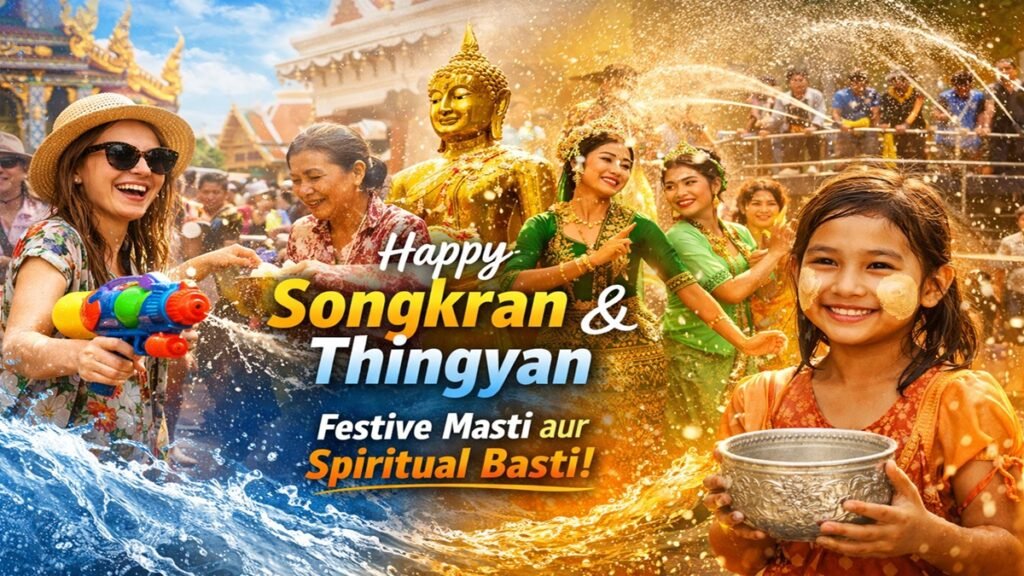
Songkran and Thingyan Festivals: Water, Renewal, and Cultural Joy in Southeast Asia
Southeast Asia is home to some of the most vibrant New Year celebrations in the world. Among them, Songkran in Thailand and Thingyan in Myanmar stand out for their joyful water rituals, deep cultural roots, and spiritual meaning.
Both festivals mark the traditional New Year and symbolize purification, renewal, and the washing away of past misfortunes.
Songkran Festival (Thailand)
What is Songkran?
Songkran is the traditional Thai New Year, celebrated annually from April 13 to 15. The word “Songkran” comes from Sanskrit, meaning movement or transformation, referring to the sun entering a new zodiac sign.
Key Traditions
- Water Splashing
The most iconic part of Songkran is the massive water fights on streets. Water symbolizes cleansing, washing away bad luck, and welcoming a fresh start. - Buddha Statue Bathing
People gently pour water over Buddha images as a sign of respect and purification. - Respecting Elders
Younger people pour scented water on elders’ hands to seek blessings. - Temple Visits
Families visit temples, offer food to monks, and participate in merit-making activities.
Cultural Significance
Songkran blends fun with spirituality. While tourists enjoy water fights, locals emphasize family bonding, respect, and religious devotion.
Thingyan Festival (Myanmar)
What is Thingyan?
Thingyan is the Burmese New Year festival, usually celebrated in mid-April. It is based on the Burmese calendar and lasts for several days, culminating in New Year’s Day.
Key Traditions
- Water Throwing (Ye-kyan)
Like Songkran, people splash water on each other to cleanse sins and bad luck. - Pandals (Water Stages)
Temporary stages are set up where people spray water using hoses and buckets. - Traditional Performances
Music, dance, and cultural shows are common during the festival. - Charity and Good Deeds
Many people donate food, release fish or birds, and perform acts of kindness. - Thanaka Application
A traditional paste called thanaka is applied on the face for cooling and beauty.
Cultural Significance
Thingyan is deeply rooted in Buddhist values, focusing on cleansing, merit-making, and compassion. It is not just a celebration but also a time for reflection and spiritual growth.
Similarities Between Songkran and Thingyan
- Both celebrate traditional New Year in April
- Water symbolizes purification and renewal
- Strong connection with Buddhist traditions
- Emphasis on family, respect, and charity
- Streets turn into lively water festivals
Key Differences
| Aspect | Songkran (Thailand) | Thingyan (Myanmar) |
|---|---|---|
| Duration | 3 days (often extended) | 4–5 days |
| Style | More tourist-friendly, global appeal | More traditional and cultural |
| Activities | Water fights, temple visits | Water stages, charity, performances |
| Cultural Focus | Mix of fun and spirituality | Stronger emphasis on merit-making |
Conclusion
Songkran and Thingyan are more than just water festivals—they represent renewal, gratitude, and cultural identity. While they share similar roots, each festival reflects the unique traditions of its country.
Whether you’re enjoying the energetic streets of Bangkok or the cultural vibrancy of Yangon, these festivals offer unforgettable experiences filled with joy, tradition, and meaning.
