
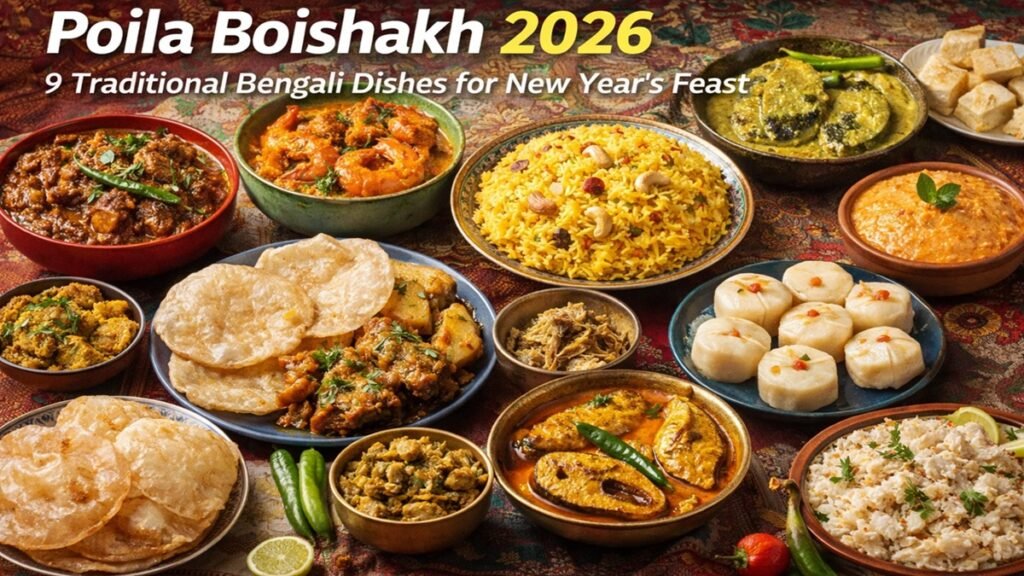
Poila Boishakh 2026: 9 Traditional Bengali Dishes That Define the New Year Feast
As the Bengali New Year—Poila Boishakh 2026—arrives, homes across West Bengal and Bangladesh come alive with vibrant traditions, new beginnings, and most importantly, a grand festive meal. This day is not just about celebration, but also about honoring culture through food that has been passed down for generations.
From rich curries to iconic sweets, the Poila Boishakh feast reflects the true essence of Bengali heritage—flavourful, diverse, and deeply rooted in tradition.
The Significance of Food on Poila Boishakh
Poila Boishakh marks the beginning of a new year in the Bengali calendar and symbolizes prosperity, renewal, and togetherness. Families clean their homes, wear traditional attire, and prepare elaborate meals to welcome the year with positivity.
Food plays a central role in these celebrations, with carefully curated dishes representing abundance and joy.
9 Traditional Bengali Dishes Served on Poila Boishakh
Here are some of the most iconic dishes that make the Bengali New Year feast truly special:
1. Kosha Mangsho
A rich and spicy mutton curry slow-cooked to perfection. It is thick, flavorful, and often paired with luchi or rice, making it a festive favorite.
2. Basanti Pulao
This mildly sweet yellow rice dish is cooked with ghee, saffron, and dry fruits. Its vibrant color symbolizes prosperity and celebration.
3. Shorshe Ilish
Hilsa fish cooked in mustard paste is considered the pride of Bengali cuisine. The strong mustard flavor combined with soft fish makes it a must-have dish.
4. Chingri Malai Curry
A luxurious dish made with prawns cooked in a creamy coconut milk gravy. It perfectly balances sweetness and spice.
5. Shukto
A unique bitter-sweet vegetable dish prepared with ingredients like bitter gourd and raw banana. It is traditionally served at the beginning of the meal.
6. Luchi with Aloo Posto
Luchi (deep-fried bread) served with potatoes cooked in poppy seed paste is a classic combination loved in Bengali households.
7. Macher Jhol
A light and comforting fish curry cooked with mustard oil and spices. It is simple yet deeply satisfying.
8. Mishti Doi
This caramelized sweet yogurt is a staple dessert in Bengal and an essential part of festive meals.
9. Sandesh
A delicate sweet made from fresh chhena (paneer), available in various flavors. It represents the sweetness of new beginnings.
Other Popular Dishes You Might See
Apart from these nine, many households also prepare:
- Panta Bhat with Ilish (fermented rice with fish)
- Payesh (rice pudding)
- Pitha (traditional rice cakes)
- Roshogolla and other Bengali sweets
These dishes add even more variety and richness to the festive spread.
Why These Dishes Matter
Each dish on the Poila Boishakh menu carries cultural significance:
- Fish symbolizes prosperity
- Sweets represent happiness and a fresh start
- Bitter dishes like Shukto remind us of balance in life
Together, they create a complete culinary experience that reflects Bengali philosophy and tradition.
Conclusion
Poila Boishakh is more than just a New Year celebration—it is a festival of flavours, emotions, and heritage. The traditional dishes served on this day are not just food, but a reflection of Bengali identity and culture.
As families gather around the table, these timeless recipes continue to connect generations, making every Poila Boishakh a celebration to remember.
