
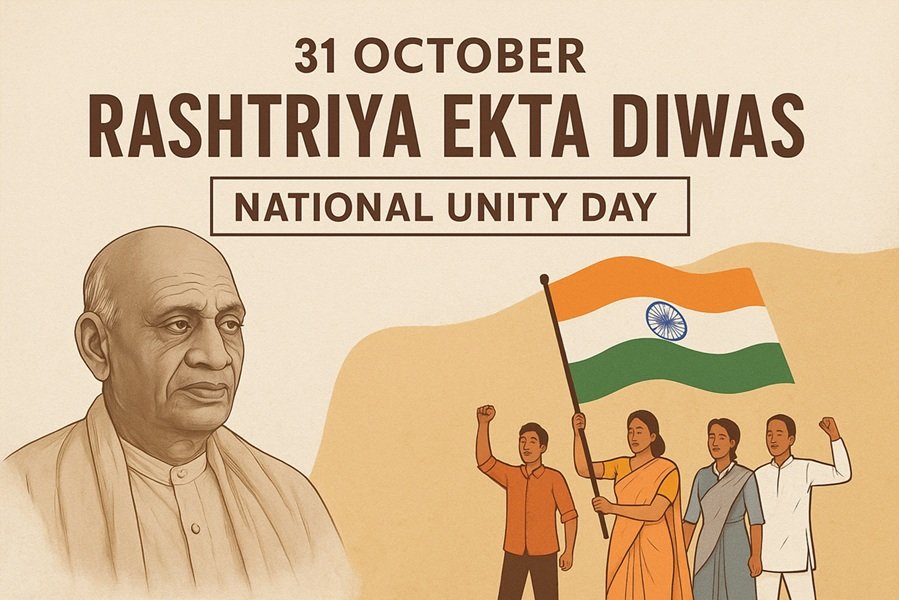
31 October – Rashtriya Ekta Diwas (National Unity Day)
Rashtriya Ekta Diwas, also known as National Unity Day, is observed every year on 31 October across India. The day commemorates the birth anniversary of Sardar Vallabhbhai Patel, one of the most respected leaders in Indian history and a key architect of national integration after independence.
Sardar Patel is often referred to as the “Iron Man of India” for his strong leadership, determination, and ability to unify the nation during a challenging period. This day serves as a reminder of the importance of unity, integrity, and the collective strength of the country.
Read This: Rashtriya Ekta Diwas / National Unity Day Captions & Wishes (80+ Multilingual)
Who Was Sardar Vallabhbhai Patel?
Sardar Vallabhbhai Patel (1875–1950) was a prominent leader of the Indian freedom struggle and later became the first Deputy Prime Minister and Home Minister of independent India.
Key Roles and Contributions
| Contribution | Description |
|---|---|
| Freedom Movement Leader | Participated in major movements like Non-Cooperation and Quit India Movement. |
| Role in Integration | Responsible for merging over 560 princely states into the Indian Union. |
| Administrative Reforms | Strengthened civil services to ensure stable governance. |
| Vision of Unity | Advocated national harmony, strong administration, and unity beyond differences. |
Without his diplomatic skills, firm decision-making, and persuasive leadership, India might have remained a divided nation even after independence.
Why is Rashtriya Ekta Diwas Observed on 31 October?
The Government of India declared 31 October—Sardar Patel’s birth anniversary—as Rashtriya Ekta Diwas in 2014 to honor his legacy and highlight his unmatched role in unifying India.
This day encourages citizens to:
- Understand the importance of unity and national integrity
- Strengthen the feeling of oneness among communities
- Stand together against any forces that attempt to divide society
Significance of Rashtriya Ekta Diwas
Rashtriya Ekta Diwas is not just about remembering a leader—it is about reinforcing the message that:
- The strength of India lies in its unity in diversity
- National progress depends on cooperation and stability
- Every citizen has a role in protecting the integrity of the nation
Unity is essential for social harmony, economic growth, and national security.
How is National Unity Day Celebrated?
Across the country, government offices, schools, colleges, and public institutions organize various activities such as:
1. Unity Run or Run for Unity
Mass public run events are held to symbolize collective movement towards unity.
2. Pledge Taking Ceremony
Citizens take an oath to preserve national integrity and fight against divisive forces.
3. Cultural Programs and Exhibitions
Events highlight Patel’s role in unifying the nation and preserving India’s territorial integrity.
4. Speeches and Seminars
Educational institutions conduct talks to create awareness about Patel’s life and values.
5. Statue of Unity
Many celebrations take place near the Statue of Unity in Gujarat, the world’s tallest statue, built in honor of Sardar Patel.
Rashtriya Ekta Diwas Pledge (Common Format)
“I solemnly pledge that I will dedicate myself to preserving the unity, integrity, and security of the nation and strive hard to spread this message among my fellow countrymen. I take this pledge in the spirit of unification of my country which was made possible by the vision and actions of Sardar Vallabhbhai Patel.”
Conclusion
Rashtriya Ekta Diwas reminds us that unity is the foundation of India’s strength.
Sardar Vallabhbhai Patel’s contribution to national integration continues to inspire every generation.
Observing this day on 31 October each year reinforces the idea that no matter how diverse we are in language, culture, religion, or region, we are one nation — with one identity and one destiny.
Sardar Patel’s message remains timeless:
“Manpower without unity is not a strength unless it is harmonized and united properly.”
