
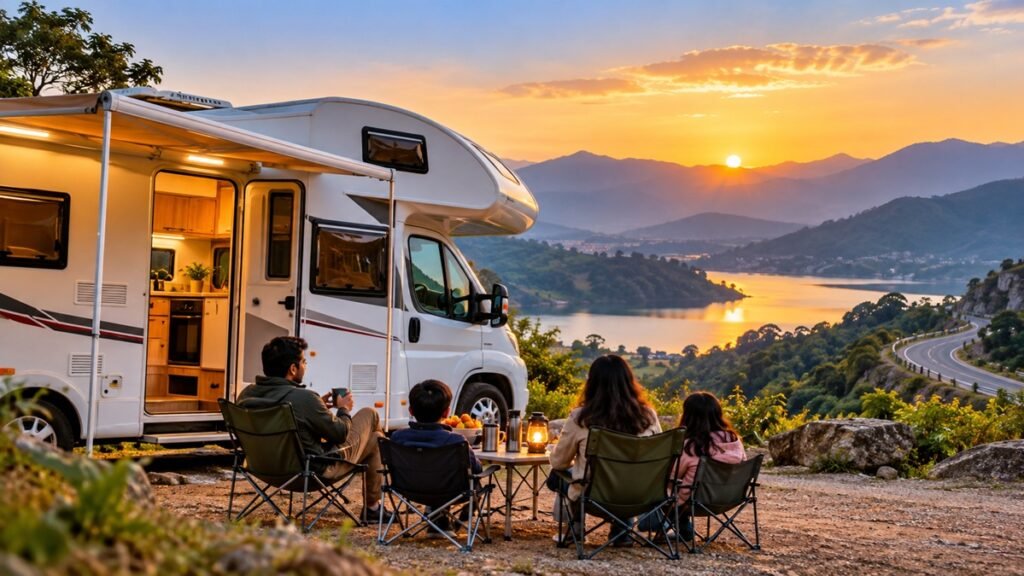
From Kerala to the Costa Blanca: What India’s Caravan Tourism Push Can Learn from Europe
Road trips have always been part of Indian travel culture: family drives to hill stations, long journeys to temples, weekend escapes from the cities. What has been missing is the infrastructure to turn the vehicle itself into accommodation. That is starting to change.
In 2021, India’s Ministry of Tourism released guidelines to promote caravan tourism and caravan parks, and several states began developing their own policies. Kerala was among the first, launching a dedicated caravan tourism programme the same year, with vehicles designed for families and couples and parks planned near scenic destinations.
The idea is promising. But building a caravan tourism sector from scratch raises a basic question: where do the vehicles come from, and who pays for them?
The European experience
In Europe, motorhome travel is a mature industry. Countries like Germany, France, the Netherlands and Spain have extensive networks of campsites and dedicated stopover areas, and motorhome sales grew strongly during and after the pandemic, as families looked for safer and more independent ways to travel.
But one of the most interesting features of the European market isn’t the infrastructure. It’s how the rental fleet is built.
The owner-rental model
Many motorhomes in Europe belong to private individuals who use them only a few weeks a year. The rest of the time, they sit in driveways or storage facilities, while insurance, maintenance and depreciation costs keep running.
To solve this, a growing number of owners choose to rent out their own motorhome through specialized local operators. The operator handles bookings, customer communication and handovers, while the owner earns income from a vehicle that would otherwise stand idle. In practice, this means the rental market can grow without a single company having to buy hundreds of expensive vehicles upfront.
In southern Spain, this model works particularly well because demand continues through winter. Travelers from northern Europe fly to cities like Alicante and rent motorhomes locally to escape the cold, which keeps vehicles in use for much more of the year than in colder regions.
Why this matters for India
India’s caravan tourism programmes have so far relied largely on government initiatives and private tourism operators investing in purpose-built vehicles. That approach is understandable at the start, but it has limits. Motorhomes are expensive, and a fleet built entirely by a few operators grows slowly.
The European experience suggests an additional path. As more Indian families and businesses buy caravans, a framework that allows them to rent their vehicles out safely could expand the market much faster. A family in Kochi or Bengaluru that uses its caravan for two holidays a year could make it available to travelers the rest of the time, under clear rules on insurance, safety and registration.
What would need to be in place
For an owner-rental model to work in India, several things would matter:
Clear regulation. Owners need certainty about whether renting out a private caravan is allowed, how it is taxed and what permits are required.
Insurance products. Standard vehicle insurance usually doesn’t cover rental to third parties. Dedicated policies are essential for both owners and renters.
Trusted intermediaries. In Europe, operators who manage handovers, explain the vehicle’s systems and inspect it after each trip are a key part of what makes the system safe. Motorhomes have water, electrical and sometimes gas systems that first-time users need to learn.
Parking and service infrastructure. Caravan parks with water, electricity and waste disposal are just as important as the vehicles themselves. India’s caravan park guidelines are a step in this direction.
Challenges unique to India
Of course, the European model cannot simply be copied. Road conditions vary widely, distances between services can be large, and climate conditions, from monsoon rains to extreme summer heat, place heavy demands on vehicles and their equipment. Cooling, not heating, is the bigger challenge in much of the country.
Cultural factors also matter. Indian family travel often involves larger groups, which affects the size and layout of vehicles that would be in demand.
A sector with room to grow
Caravan tourism in India is still at an early stage, but the ingredients are there: a strong road trip culture, spectacular landscapes from the Western Ghats to the Himalayas, and growing interest in flexible, independent travel. Government policies have opened the door.
The next step may be to look beyond operator-owned fleets and learn from markets where ordinary owners became part of the system. If India can combine public support, clear rules and private participation, caravan tourism could grow from a niche experiment into a real part of the country’s travel landscape.
