
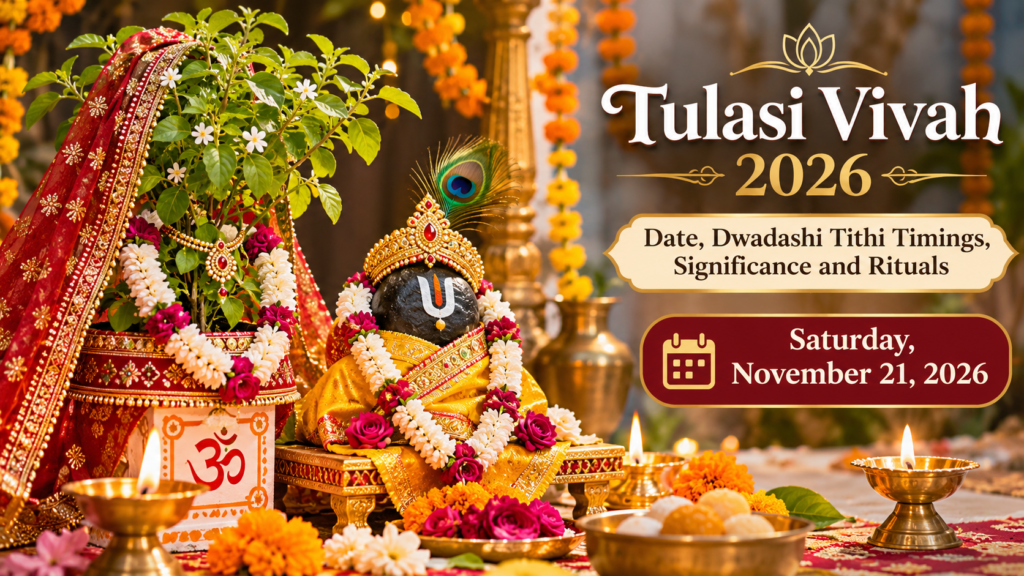
Tulasi Vivah 2026: Date, Dwadashi Tithi Timings, Significance and Rituals
Tulasi Vivah is an important Hindu religious festival that celebrates the ceremonial marriage of Goddess Tulasi (the sacred Tulsi plant) with Lord Vishnu, traditionally worshipped in the form of Shaligram. The festival holds special significance among Hindu devotees, particularly those who follow Vaishnav traditions. It symbolizes the divine union of Goddess Tulasi and Lord Vishnu and marks the beginning of the auspicious wedding season in many parts of India.
In 2026, Tulasi Vivah will be observed on Saturday, November 21, 2026. Devotees celebrate this occasion with prayers, traditional wedding rituals, devotional songs, and offerings to Goddess Tulasi and Lord Vishnu.
Read This: Ekadashi Vrat Calendar 2027: All Dates, Tithi Timings and Significance
Tulasi Vivah 2026: Date and Tithi Timings
According to the Hindu calendar, Tulasi Vivah 2026 will be celebrated on November 21. The Dwadashi Tithi is an important part of the observance.
The important date and timing details are as follows:
| Event | Date and Time |
|---|---|
| Tulasi Vivah 2026 | Saturday, November 21, 2026 |
| Dwadashi Tithi Begins | 06:31 AM on November 21, 2026 |
| Dwadashi Tithi Ends | 04:56 AM on November 22, 2026 |
Note: The timings are provided as per the supplied Panchang details. Local observance and ritual timings may vary depending on the region.
Significance of Tulasi Vivah
Tulasi Vivah represents the sacred marriage of Goddess Tulasi and Lord Vishnu. According to Hindu mythology, Goddess Tulasi is associated with Vrinda, a devoted woman whose story is closely connected with Lord Vishnu.
Tulasi is considered one of the most sacred plants in Hinduism. Its leaves are traditionally offered during the worship of Lord Vishnu, Lord Krishna, and other Hindu deities. Devotees believe that worshipping Tulasi brings peace, prosperity, happiness, and spiritual well-being to the household.
The festival also marks the end of the Chaturmas period, during which many traditional Hindu wedding ceremonies are avoided. After Tulasi Vivah, auspicious wedding ceremonies and other religious activities begin in many Hindu communities.
How Is Tulasi Vivah Celebrated?
Tulasi Vivah is celebrated with rituals similar to a traditional Hindu wedding. Families decorate the Tulasi plant and its surrounding area with flowers, colourful fabrics, rangoli, and lights.
Some of the common rituals include:
- Preparing the Tulasi Plant: The Tulasi plant is cleaned and decorated with flowers, a red or yellow cloth, and ornaments.
- Worshipping Lord Vishnu: A Shaligram Shila or an image of Lord Vishnu is placed near the Tulasi plant for the ceremonial wedding.
- Performing Wedding Rituals: Devotees perform traditional marriage ceremonies, including offering prayers, exchanging garlands, and conducting symbolic wedding rituals.
- Offering Prasad: Fruits, sweets, flowers, and other traditional offerings are presented to the deities.
- Singing Bhajans: Families and devotees sing devotional songs and recite prayers dedicated to Goddess Tulasi and Lord Vishnu.
The celebrations are often performed at homes and temples, bringing family members and communities together in devotion.
Why Is Tulasi Vivah Considered Auspicious?
Tulasi Vivah is regarded as an auspicious occasion for marital happiness, family prosperity, and spiritual growth. Many devotees believe that participating in the ceremony brings divine blessings and removes obstacles from family life.
Unmarried devotees may also offer prayers seeking a suitable life partner, while married couples worship Goddess Tulasi and Lord Vishnu for a peaceful and prosperous married life.
Conclusion
Tulasi Vivah 2026 will be celebrated on Saturday, November 21, marking an important occasion in the Hindu religious calendar. With the beginning of Dwadashi Tithi at 06:31 AM on November 21 and its conclusion at 04:56 AM on November 22, devotees can observe the festival through traditional prayers and wedding rituals.
Beyond its religious importance, Tulasi Vivah highlights the cultural and spiritual significance of the sacred Tulasi plant in Hindu households. The festival offers devotees an opportunity to seek the blessings of Goddess Tulasi and Lord Vishnu for happiness, harmony, and prosperity.
