
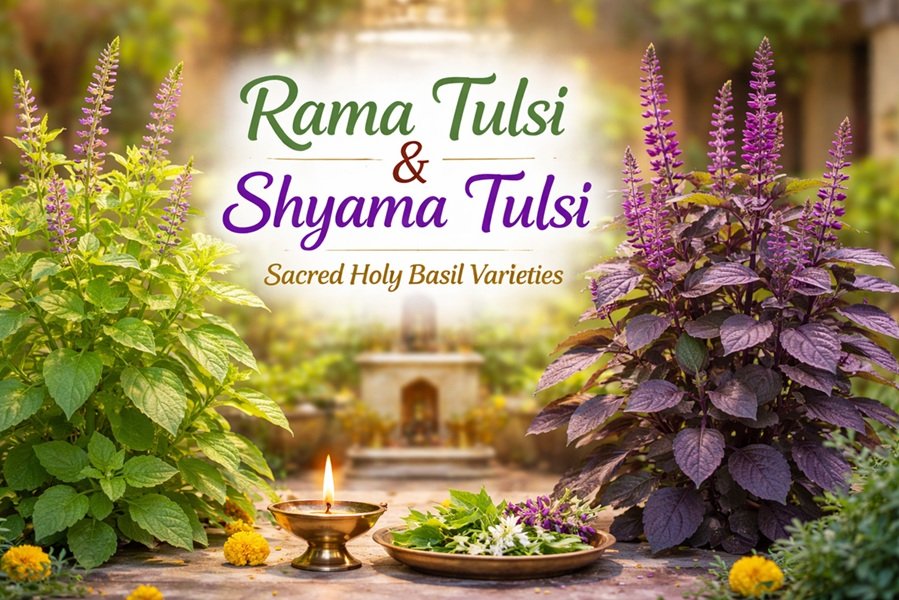
Rama and Shyama Tulsi: A Complete Guide to Sacred Holy Basil Varieties
Tulsi, also known as Holy Basil, is one of the most revered medicinal plants in India. For thousands of years, it has held a unique position in Ayurveda, Hindu spirituality, and traditional home remedies. Among the many types of Tulsi, Rama Tulsi and Shyama Tulsi (also called Krishna Tulsi) are considered the most important and widely used.
This detailed article explores Rama and Shyama Tulsi in depth—covering their botanical features, medicinal properties, religious significance, health benefits, differences, cultivation methods, and modern scientific relevance.
Introduction to Tulsi (Holy Basil)
Tulsi (Ocimum tenuiflorum or Ocimum sanctum) is a perennial aromatic herb belonging to the Lamiaceae (mint) family. It is native to the Indian subcontinent and is often called the “Queen of Herbs” due to its exceptional healing and spiritual qualities.
In traditional Indian households, Tulsi is not just a plant—it is treated as a living deity, commonly worshipped in courtyards and temples.
Among more than 100 varieties of basil worldwide, Rama Tulsi and Shyama Tulsi stand out for their therapeutic potency and sacred importance.
Rama Tulsi: The Green Holy Basil
Botanical Characteristics
Rama Tulsi is easily recognizable due to its bright green leaves and mild aroma. The leaves are slightly sweet and less pungent compared to Shyama Tulsi.
Key features:
- Light green leaves and stems
- Mild, refreshing fragrance
- Grows up to 60–75 cm
- Thrives in warm, tropical climates
Religious and Cultural Significance of Rama Tulsi
Rama Tulsi is closely associated with Lord Vishnu and is considered calm, sattvic, and soothing in nature. It is commonly planted in homes for peace, prosperity, and positive energy.
In many Hindu rituals:
- Rama Tulsi leaves are offered during puja
- Used in Vaishnav traditions
- Believed to purify the environment
Medicinal Properties of Rama Tulsi
In Ayurveda, Rama Tulsi is known for its balancing effect on Vata and Kapha doshas.
Major medicinal properties:
- Anti-inflammatory
- Antibacterial and antiviral
- Adaptogenic (stress-reducing)
- Antioxidant-rich
Health Benefits of Rama Tulsi
- Boosts Immunity
Regular consumption helps the body fight infections and seasonal illnesses. - Improves Respiratory Health
Useful in cough, cold, asthma, bronchitis, and sore throat. - Supports Digestive System
Reduces bloating, acidity, and indigestion. - Reduces Stress and Anxiety
Acts as a natural adaptogen that calms the nervous system. - Supports Heart Health
Helps regulate blood pressure and cholesterol levels.
Shyama Tulsi (Krishna Tulsi): The Purple Holy Basil
Botanical Characteristics
Shyama Tulsi is darker in appearance, with purple or dark green leaves, and has a strong, peppery aroma. It is considered more potent in medicinal terms.
Key features:
- Dark purple leaves and stems
- Strong, spicy fragrance
- Slightly bitter taste
- More resilient and hardy
Religious and Spiritual Importance of Shyama Tulsi
Shyama Tulsi is deeply associated with Lord Krishna, symbolizing strength, protection, and spiritual transformation.
Traditionally:
- Used in intense spiritual practices
- Planted in temples and ashrams
- Believed to ward off negative energies
Medicinal Properties of Shyama Tulsi
Shyama Tulsi is considered more heating and powerful, making it ideal for treating severe conditions.
Key properties:
- Strong antimicrobial action
- Anti-diabetic
- Anti-stress and neuroprotective
- Detoxifying
Health Benefits of Shyama Tulsi
- Powerful Immunity Enhancer
Helps fight viral, bacterial, and fungal infections. - Regulates Blood Sugar Levels
Beneficial for people managing diabetes (under guidance). - Improves Lung Function
Especially helpful for chronic respiratory disorders. - Enhances Brain Function
Improves memory, focus, and mental clarity. - Detoxifies the Body
Supports liver function and removes toxins.
Rama Tulsi vs Shyama Tulsi: Key Differences
| Feature | Rama Tulsi | Shyama Tulsi |
|---|---|---|
| Leaf Color | Light green | Dark purple |
| Taste | Mild, slightly sweet | Bitter, pungent |
| Potency | Moderate | High |
| Dosha Effect | Balances Vata & Kapha | Reduces Kapha & Vata |
| Spiritual Nature | Calming, peaceful | Powerful, protective |
| Usage | Daily health tonic | Strong medicinal remedies |
Ayurvedic Perspective on Rama and Shyama Tulsi
According to Ayurveda:
- Rama Tulsi is preferred for daily consumption
- Shyama Tulsi is used for specific therapeutic purposes
Both help balance Prana (life force) and improve Ojas (immunity and vitality).
Cultivation and Care of Tulsi Plants
Tulsi is easy to grow and suitable for both gardens and pots.
Growing Conditions
- Sunlight: 5–6 hours daily
- Soil: Well-drained, fertile soil
- Watering: Moderate; avoid waterlogging
- Climate: Warm and humid
Maintenance Tips
- Regular pruning encourages bushy growth
- Avoid chemical fertilizers
- Organic compost works best
Modern Scientific Research on Tulsi
Modern studies support traditional claims, showing Tulsi’s role in:
- Reducing oxidative stress
- Enhancing immune response
- Supporting metabolic health
- Acting as a natural adaptogen
Both Rama and Shyama Tulsi contain eugenol, ursolic acid, rosmarinic acid, and flavonoids, which contribute to their medicinal effects.
Conclusion
Rama Tulsi and Shyama Tulsi are not just herbs—they are living symbols of health, spirituality, and harmony. While Rama Tulsi offers gentle, everyday wellness benefits, Shyama Tulsi provides powerful medicinal and protective properties.
Incorporating either (or both) into daily life—whether through herbal tea, home remedies, or spiritual practice—can lead to better immunity, mental clarity, and overall well-being.
