
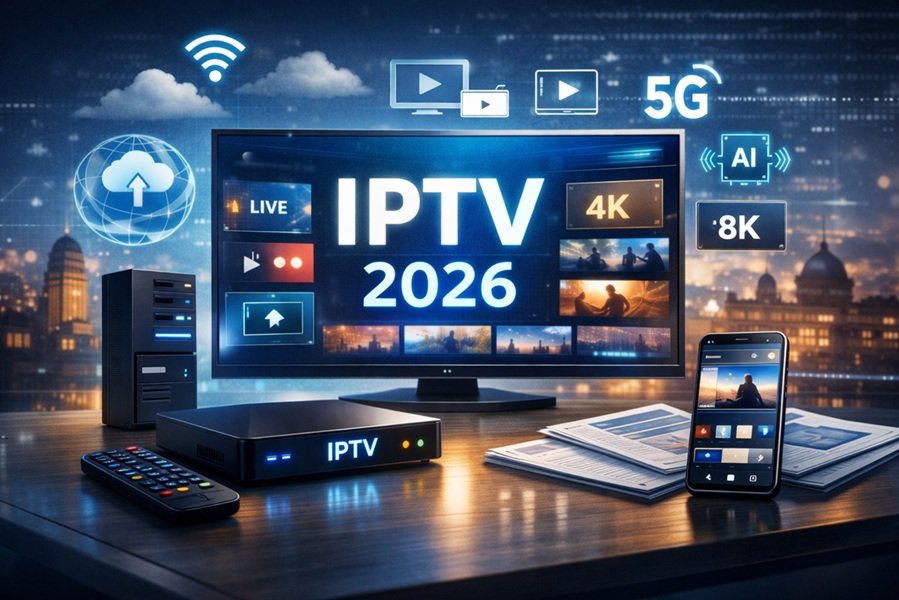
IPTV Explained: What It Is and How IPTV Services Are Evolving in 2026
Introduction
Internet Protocol Television, commonly known as IPTV, has steadily transformed how people consume television content across the world. Unlike traditional cable or satellite TV, IPTV delivers television programs and video content using the internet. As we move into 2026, IPTV services are becoming more sophisticated, regulated, and deeply integrated with smart devices, high-speed internet, and user-centric viewing habits.
With faster broadband, affordable smart TVs, and growing demand for on-demand content, IPTV is no longer a niche technology. It is emerging as a mainstream alternative to conventional broadcasting.
What Is IPTV?
IPTV (Internet Protocol Television) is a system where television services are delivered through an internet connection instead of satellite signals or cable networks. Content is streamed in real time or accessed on demand using IP-based networks.
Unlike traditional TV, which broadcasts all channels simultaneously, IPTV sends only the content a user selects, making it more efficient and interactive.
How IPTV Works
IPTV works through a structured process:
- Content Source – TV channels, movies, or shows are digitised and stored on servers.
- Encoding & Compression – Video data is compressed for efficient internet transmission.
- IP Delivery – Content is delivered via broadband or fibre internet using IP packets.
- User Device – Smart TVs, set-top boxes, smartphones, tablets, or computers decode and display the content.
A stable internet connection is essential for uninterrupted IPTV viewing.
Types of IPTV Services
1. Live Television
This allows users to watch TV channels in real time, similar to traditional broadcasting but via the internet.
2. Video on Demand (VoD)
Users can select and watch movies, web series, or programs at any time without waiting for scheduled broadcasts.
3. Time-Shifted TV
This feature lets viewers watch programs that aired earlier, pause live TV, or replay recent broadcasts.
IPTV vs Cable and Satellite TV
| Feature | IPTV | Cable TV | Satellite TV |
|---|---|---|---|
| Delivery | Internet-based | Cable network | Satellite signal |
| On-demand content | Extensive | Limited | Very limited |
| Interactivity | High | Low | Very low |
| Device flexibility | Multiple devices | TV only | TV only |
| Customisation | High | Fixed packages | Fixed packages |
Growth of IPTV Services in 2026
Rising Internet Penetration
By 2026, high-speed broadband and fibre connections are more widely available, making IPTV more reliable even in semi-urban areas.
Shift Toward Personalised Viewing
Viewers increasingly prefer personalised content, watchlists, recommendations, and flexible viewing times—areas where IPTV excels.
Smart Device Ecosystem
IPTV services now seamlessly integrate with smart TVs, voice assistants, smartphones, and home automation systems.
Key Features of IPTV Services in 2026
1. Ultra HD and 8K Streaming
Many IPTV platforms now support 4K and 8K resolution, provided users have sufficient bandwidth.
2. AI-Based Recommendations
Artificial intelligence analyses user behaviour to suggest relevant content, improving user engagement.
3. Cloud DVR
Users can record programs in the cloud instead of relying on physical storage devices.
4. Multi-Screen Access
One subscription can be used across multiple devices with synchronized viewing history.
5. Improved User Interfaces
IPTV apps in 2026 feature faster navigation, cleaner layouts, and accessibility features like subtitles and voice commands.
Legal vs Illegal IPTV Services
Legal IPTV Services
These operate with proper broadcasting rights and licenses. They comply with copyright laws and are regulated by national authorities.
Examples include:
- Telecom-backed IPTV platforms
- OTT-integrated IPTV services
- Government-regulated digital TV services
Illegal IPTV Services
These offer pirated content without permission and often operate without transparency.
Risks include:
- Legal consequences
- Malware and data theft
- Sudden service shutdowns
- Poor streaming quality
Consumers in 2026 are becoming more aware of these risks, leading to increased preference for legitimate IPTV providers.
IPTV Regulation Trends in 2026
Governments and telecom regulators are strengthening frameworks to:
- Protect consumer data
- Ensure content licensing compliance
- Prevent piracy
- Improve service transparency
In many countries, IPTV platforms are now required to follow digital broadcasting standards similar to cable TV operators.
IPTV and OTT Integration
A major trend in 2026 is the blending of IPTV and OTT platforms. Many IPTV services now offer direct access to popular streaming apps within a single interface, eliminating the need to switch between multiple applications.
This hybrid model provides:
- Live TV + OTT content
- Unified billing
- Centralised content discovery
Advantages of IPTV in 2026
- Flexible viewing options
- Wide content libraries
- Better picture quality
- Interactive features
- Customisable channel packages
- Compatibility with modern devices
Challenges Facing IPTV Services
Despite growth, IPTV still faces some challenges:
- Dependence on stable internet
- Data consumption concerns
- Regional licensing restrictions
- Cybersecurity risks
- Content moderation responsibilities
Service providers in 2026 are actively investing in infrastructure and security to address these issues.
Future of IPTV Beyond 2026
Looking ahead, IPTV is expected to further evolve with:
- Virtual Reality (VR) and immersive viewing
- Advanced AI-driven content creation
- Deeper smart-home integration
- Enhanced parental controls
- Cross-border content partnerships
IPTV is gradually becoming the backbone of digital television worldwide.
Conclusion
In 2026, IPTV is no longer just an alternative to cable TV—it is a central part of the global digital entertainment ecosystem. With better technology, stronger regulation, and user-focused innovation, IPTV services are redefining how audiences watch television.
As internet infrastructure continues to improve, IPTV is expected to remain at the forefront of modern broadcasting, offering viewers greater choice, control, and convenience than ever before.
