
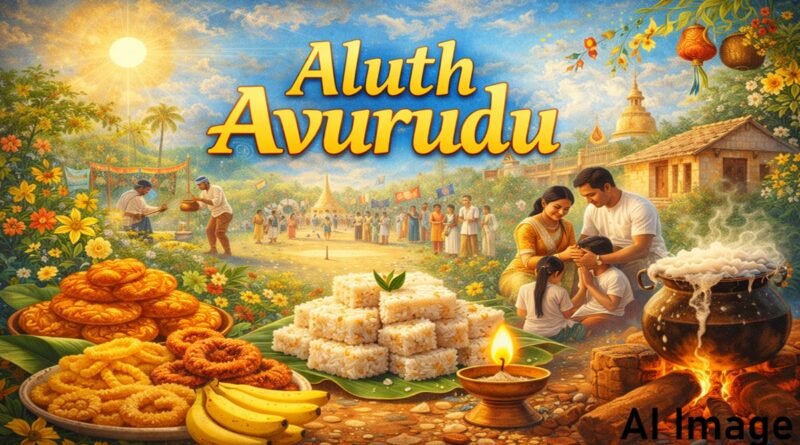
Aluth Avurudu 2026: Date, Traditions, Rituals & Cultural Significance
Aluth Avurudu, the traditional Sinhalese New Year, is one of the most vibrant and culturally rich festivals in Sri Lanka. It marks the solar transition into Aries (Mesha) and celebrates new beginnings, prosperity, and unity.
In 2026, Aluth Avurudu will be celebrated on April 13–14, 2026, with rituals performed according to auspicious timings.
Read this: Sinhalese New Year 2026 (Aluth Avurudu): 100+ Wishes, Quotes, Captions & Greetings
About Aluth Avurudu
Aluth Avurudu (අලුත් අවුරුදු) literally means “New Year” in Sinhala. It is celebrated by Sinhalese Buddhists and also aligns closely with Tamil New Year traditions, making it a shared cultural celebration in Sri Lanka.
This festival is unique because it follows astrological timings (Nekath) rather than just the calendar date.
Aluth Avurudu 2026 Date & Key Timings
- Festival Dates: April 13–14, 2026
- Astronomical Basis: Sun entering Aries (Mesha Sankranti)
- Special Period: Nonagathaya (neutral time between years)
The transition period between the old and new year is considered highly spiritual and symbolic.
Unique Features of Aluth Avurudu
1. Nonagathaya (Neutral Period)
One of the most distinctive aspects of Aluth Avurudu is the Nonagathaya:
- A gap between the old year and the new year
- No work or transactions are performed
- People engage in religious and spiritual activities
It represents a pause for reflection and renewal.
2. Nekath (Auspicious Timings)
Every important activity during Aluth Avurudu is done at a specific auspicious time:
- Lighting the hearth
- Eating the first meal
- Starting work
- Performing financial transactions
These timings are announced officially and followed strictly.
Rituals and Traditions
1. House Cleaning & Preparation
Before the New Year:
- Homes are cleaned thoroughly
- Old items are discarded
- New clothes are prepared
This symbolizes a fresh start.
2. Lighting the Hearth
At an auspicious moment:
- Families light the first fire
- Cook traditional dishes like Kiribath (milk rice)
This represents prosperity and unity.
3. First Meal (Ahara Anubawa)
The first meal is shared with family and includes:
- Kiribath
- Sweetmeats like Kavum and Kokis
- Fruits and traditional sweets
4. Ganu Denu (First Transaction)
A symbolic financial exchange is performed:
- Giving money or gifts
- Represents economic prosperity for the year ahead
5. Seeking Blessings
- Elders bless younger members
- Respect and gratitude are emphasized
6. Oil Anointing Ritual
Known as Hisa Thel Gema:
- Herbal oil is applied to the head
- Conducted under guidance of elders or monks
- Symbolizes health and protection
Cultural Celebrations
Aluth Avurudu is also a time for fun and community bonding:
- Traditional games (Kana Mutti, Kotta Pora)
- Music, dance, and festivities
- Village-level celebrations
Traditional Foods
Food plays a major role in celebrations:
- Kiribath (Milk Rice)
- Kavum (Oil Cakes)
- Kokis (Crispy snacks)
- Aluwa (Sweet dessert)
These dishes symbolize abundance and happiness.
Astrological Importance
Aluth Avurudu is deeply connected to solar astrology:
- Sun enters Aries (Mesha)
- Marks the beginning of a new solar year
- Rituals align with planetary positions
This makes it one of the most scientifically and astrologically aligned festivals.
Connection with Other New Year Festivals
Aluth Avurudu coincides with:
- Pohela Boishakh (Bengali New Year)
- Puthandu (Tamil New Year)
- Vishu (Kerala)
- Baisakhi (Punjab)
All are based on the same solar transition, showing cultural unity across regions.
Spiritual Meaning
Aluth Avurudu emphasizes:
- Letting go of the past
- Embracing positivity
- Strengthening family relationships
- Living in harmony
It is both a cultural and spiritual renewal.
Modern Relevance
Even today, Aluth Avurudu remains important because:
- It preserves Sri Lankan heritage
- Promotes family bonding
- Encourages mindfulness and tradition
- Connects people with nature and time cycles
Conclusion
Aluth Avurudu 2026, celebrated on April 13–14, is more than just a New Year festival—it is a deeply meaningful cultural experience. With its unique Nonagathaya period, precise Nekath timings, and rich traditions, it offers a perfect blend of spirituality, celebration, and social harmony.
It reminds us to pause, reflect, and begin the new year with hope, gratitude, and positivity.
