
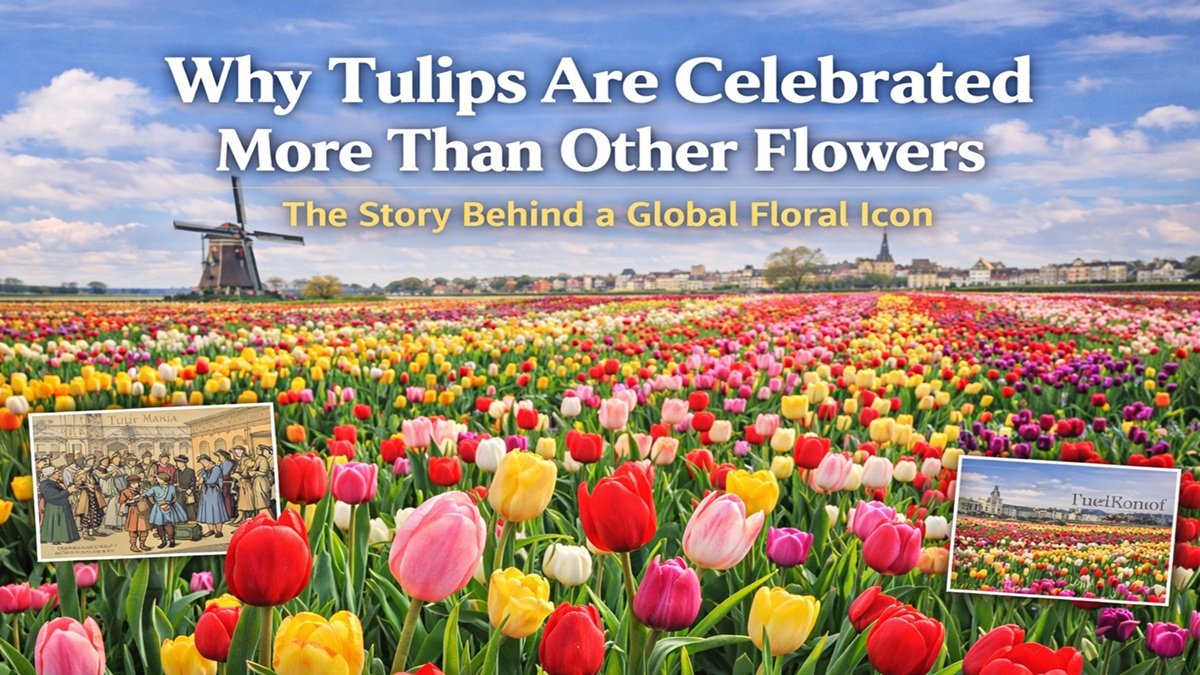
Why Tulips Are Celebrated More Than Other Flowers: The Story Behind a Global Floral Icon
Around the world, countless flower festivals take place every year—rose festivals, lotus celebrations, orchid shows, and sunflower fields all attract admirers. Yet, when it comes to global recognition and large-scale celebration, tulips stand apart. From the Netherlands to international tulip festivals across continents, this single flower enjoys a status that few others can match.
So why do we celebrate tulips more than other flowers? The answer lies in a powerful combination of history, economics, culture, science, and emotion.
Tulips Didn’t Just Decorate History—They Changed It
Tulips are the only flowers in history to trigger a financial revolution. In the early 17th century, the Netherlands experienced Tulip Mania, considered the world’s first recorded speculative economic bubble.
At the height of Tulip Mania:
- A single rare tulip bulb could cost more than a house
- Bulbs were traded like stocks
- Futures contracts existed for flowers
No rose, lily, or orchid has ever influenced economics, trade systems, or financial psychology on this scale. Tulips became more than flowers—they became symbols of human ambition, risk, and desire.
Tulips Became the Heart of Dutch National Identity
Although tulips originated in Central Asia, they found their true home in the Netherlands. Over centuries, Dutch growers perfected tulip cultivation through innovation, selective breeding, and advanced bulb technology.
Today:
- The Netherlands is the world’s largest tulip producer
- Around 3 billion tulips are exported annually
- Tulips are a core part of Dutch branding and tourism
World-famous locations like Keukenhof attract millions of visitors each year. As a result, tulips evolved from imported plants into a national cultural emblem, something no other flower has achieved on a comparable global scale.
Tulips Are Visually Alive—They Move and Change
One of the most fascinating reasons tulips captivate people is their behavior after being cut. Unlike most flowers that remain static, tulips:
- Continue growing in vases
- Bend and twist toward light
- Change posture daily
This natural movement gives the illusion that tulips are dancing, creating an emotional connection between people and the flower. Other flowers may be beautiful, but tulips feel alive, making them far more engaging.
Scarcity Makes Tulips Emotionally Powerful
Tulips bloom for a short and intense season. This limited availability builds anticipation and excitement. When tulips appear, people celebrate—knowing the moment is temporary.
This phenomenon is similar to:
- Cherry blossom season in Japan
- Autumn foliage festivals
Flowers available year-round don’t create the same emotional urgency. Tulips teach people to appreciate beauty that doesn’t last forever, which deepens their symbolic value.
Tulips Unite People Through Shared Celebration
Tulip festivals are designed to be inclusive and communal. Events like National Tulip Day in Amsterdam invite everyone—locals, tourists, families—to gather in public spaces and pick flowers for free.
Tulips become:
- A symbol of unity
- A shared joyful experience
- A connector across cultures and generations
Few other flowers are celebrated in ways that bring entire cities together.
Tulips Represent Renewal and Hope
Blooming at the edge of winter and spring, tulips naturally symbolize:
- New beginnings
- Renewal
- Optimism after hardship
This timing makes them especially meaningful in colder climates, where tulips are the first promise of warmth and color after long winters.
Variety Makes Tulips Universally Appealing
Tulips exist in over 1,000 varieties, offering:
- Almost every color except true blue
- Fringed, parrot, lily-shaped, and double blooms
- Single, bi-colored, and multi-layered forms
This diversity allows tulips to appeal to every taste—classic, modern, bold, or minimal—something few flowers can claim.
Why Not Roses, Lotuses, or Orchids?
While other flowers have strong symbolism:
- Roses represent love
- Lotuses symbolize purity
- Orchids represent luxury
None combine economic history, national identity, seasonal scarcity, emotional impact, and global celebration in the way tulips do.
Tulips sit at the intersection of art, commerce, science, and human emotion.
Read This: National Tulip Day 2026: Amsterdam’s Most Colorful Winter Celebration
Conclusion: Tulips Are More Than Flowers
Tulips are celebrated not because they are prettier than all other flowers—but because they carry stories. Stories of ambition, beauty, unity, innovation, and the fleeting nature of life itself.
That’s why, even as many flower festivals emerge worldwide, tulips remain the most celebrated flower on Earth.
