
When Is Chinese New Year 2026? Date, Zodiac Animal & Spring Festival Traditions
Chinese New Year — also known as the Lunar New Year or Spring Festival — is one of the most important cultural celebrations across China and many parts of East Asia. More than just a calendar change, it represents renewal, family unity and the beginning of a fresh cycle of life. Homes are decorated, families gather after long journeys, and centuries-old customs are celebrated with joy and colour.
When Is Chinese New Year 2026?
In 2026, Chinese New Year falls on Tuesday, February 17, 2026.
Unlike the Gregorian calendar, the festival follows the traditional Chinese lunisolar calendar, meaning the date changes every year. It begins on the first new moon close to the start of spring.
The celebrations last around 15–16 days, ending with the Lantern Festival on March 3, 2026.
Zodiac Animal for 2026 – Year of the Fire Horse
Every Lunar New Year introduces a new animal sign from the 12-year Chinese zodiac cycle. Each sign also combines with one of the five elements (Wood, Fire, Earth, Metal, Water), forming a 60-year cycle.
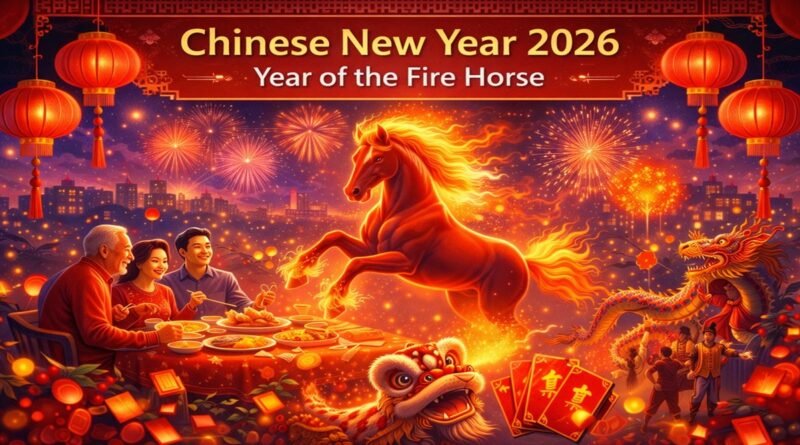
2026 will be the Year of the Fire Horse.
Symbolism of the Horse
The Horse represents:
- Energy and movement
- Independence and freedom
- Confidence and determination
- Adventure and ambition
Meaning of the Fire Element
Fire adds:
- Passion
- Leadership
- Motivation
- Dynamic change
People born in Horse years — such as 1990, 2002 and 2014 — are believed to experience a particularly active and transformative year.
Major Spring Festival Traditions
1. Family Reunion Dinner
The most important moment is the New Year’s Eve reunion meal. No matter how far away they live, family members return home to eat together.
Traditional foods have symbolic meanings:
- Dumplings – wealth and prosperity
- Fish – abundance for the coming year
2. Red Decorations and Good-Luck Symbols
Red is considered the luckiest colour in Chinese culture.
During the festival you will see:
- Red lanterns
- Door couplets
- Paper cuttings
- Red banners
They are believed to ward off bad luck and invite happiness.
3. Lion and Dragon Dances
Public celebrations often feature lion and dragon dances accompanied by drums and cymbals.
These performances symbolically drive away negative energy and welcome prosperity.
4. Red Envelopes (Hongbao)
Elders give children red envelopes filled with money called hongbao.
This tradition represents blessings, protection and good fortune for the year ahead.
5. Fireworks and Lantern Festival
Firecrackers are set off to scare away evil spirits and mark the start of the new year.
The celebration concludes with the Lantern Festival, when glowing lanterns light up the night sky and communities gather for performances and parades.
A Festival Celebrated Worldwide
Although it is a major public holiday in China — known for massive travel as families reunite — Chinese New Year is celebrated globally. Cities across Southeast Asia, Europe, North America and Australia host:
- Cultural parades
- Flower markets
- Traditional food fairs
- Dragon dance performances
It has become a truly international celebration of heritage, family and renewal.
Conclusion
Chinese New Year 2026, beginning on February 17, welcomes the dynamic Year of the Fire Horse — a symbol of passion, courage and forward movement. From reunion dinners to lantern festivals, the celebration reflects deep cultural values of unity, prosperity and hope for a brighter year ahead.
