
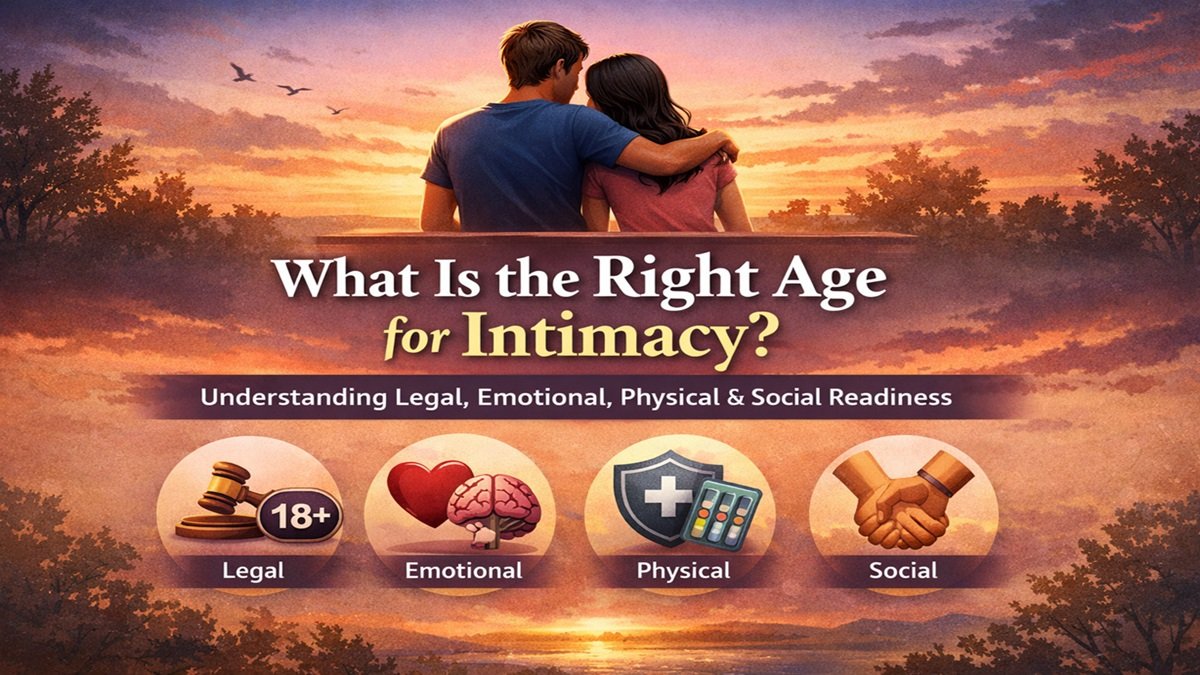
What Is the Right Age for Intimacy?
A Complete Guide to Legal, Emotional, Physical, and Social Readiness
Introduction
The question “What is the right age for intimacy?” is common, natural, and important. As people grow, they experience emotional attraction, curiosity, and physical changes. However, intimacy is not just about age—it involves legal permission, emotional maturity, physical readiness, informed consent, and personal values.
This article explains the topic in a clear, responsible, and educational manner, helping readers make informed and healthy decisions.
Understanding Intimacy
Intimacy is not limited to physical closeness. It includes:
- Emotional intimacy – trust, bonding, and emotional connection
- Mental intimacy – sharing thoughts, opinions, and values
- Physical intimacy – holding hands, hugging, kissing, or sexual relations
Not all forms of intimacy require the same level of readiness.
Legal Age of Consent (India)
What Does the Law Say?
- In India, the legal age of consent is 18 years
- Any sexual activity below 18 years is illegal, even if both individuals agree
- The law exists to protect minors from exploitation and harm
Why This Matters
Legal boundaries are non-negotiable. Understanding them is essential to avoid:
- Legal consequences
- Emotional trauma
- Long-term psychological harm
Legally, intimacy is permitted only after 18 years of age.
Emotional Readiness: The Most Overlooked Factor
Being emotionally ready means:
- Understanding consent (a clear, pressure-free “yes”)
- Being able to say no without fear
- Managing emotional attachment and expectations
- Handling outcomes like emotional bonding or separation
Many people over 18 are still not emotionally ready, and that is completely normal.
Signs of Emotional Readiness
- Mutual respect
- Open communication
- No pressure or manipulation
- Feeling safe and valued
Physical and Biological Readiness
Physical readiness involves:
- Fully developed body
- Awareness of sexual health
- Understanding contraception
- Knowledge of sexually transmitted infections (STIs)
Without education and preparation, physical intimacy can lead to:
- Health risks
- Unplanned pregnancy
- Stress and anxiety
Mental Maturity and Decision-Making
Mental maturity helps a person:
- Think about long-term consequences
- Resist peer pressure
- Make informed decisions
- Respect boundaries (their own and others’)
Intimacy should never be a result of:
- Fear of losing someone
- Social pressure
- Curiosity without understanding
- Influence of media or misinformation
Cultural, Family, and Personal Values
Every individual grows up with different:
- Cultural norms
- Family beliefs
- Religious values
- Personal principles
There is no universal timeline. Choosing to wait is not a weakness, and choosing intimacy responsibly is not wrong.
Common Myths About Intimacy
Myth 1: “Everyone is doing it”
Reality: Many people choose to wait, and many don’t talk about it openly.
Myth 2: “Age automatically means readiness”
Reality: Maturity varies from person to person.
Myth 3: “Waiting means something is wrong”
Reality: Waiting is a personal, valid choice.
Ideal Age: A Practical Summary
- Below 18:
❌ Not legal
❌ Not safe - 18 and above:
✔ Legally allowed
✔ Still requires emotional, mental, and physical readiness
Ideal Situation
Intimacy is healthiest when both partners are:
- Adults
- Emotionally mature
- Well-informed
- Respectful of consent
- Comfortable with responsibility
Importance of Consent
Consent must be:
- Clear
- Voluntary
- Ongoing
- Reversible (can be withdrawn anytime)
Silence, fear, or pressure is not consent.
Why Rushing Can Be Harmful
Rushing into intimacy without readiness can result in:
- Emotional pain
- Regret
- Loss of self-esteem
- Trust issues
- Health risks
There is no deadline for intimacy.
Final Conclusion
There is no fixed “perfect age” for intimacy.
- Legally: After 18 years
- Ideally: When a person is emotionally mature, mentally prepared, physically informed, and personally comfortable
The right time is when you feel safe, respected, informed, and fully willing—without pressure.
