
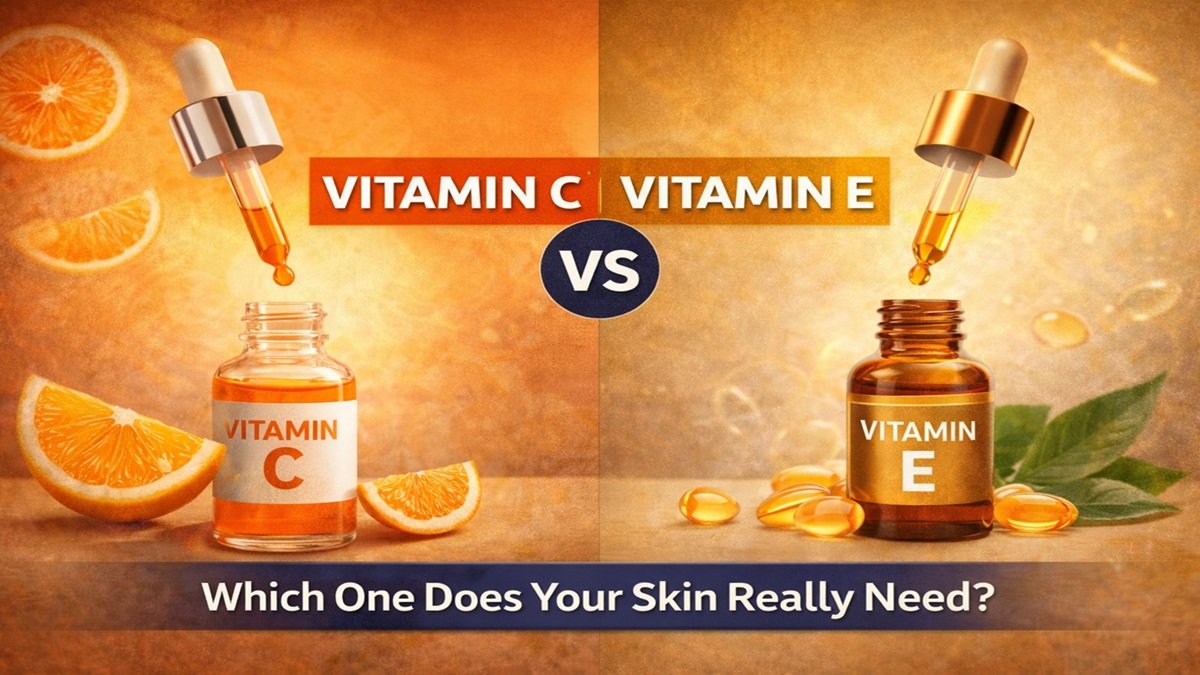
Vitamin C vs Vitamin E: Which One Does Your Skin Really Need — and Why?
In the world of skincare, Vitamin C and Vitamin E are two of the most talked-about ingredients. Both are powerful antioxidants, both promise healthier and younger-looking skin, and both appear in countless serums, creams, and sunscreens. But here’s the real question: do you need Vitamin C, Vitamin E, or both?
The answer depends on your skin type, concerns, lifestyle, and even the climate you live in. This article breaks down what each vitamin does, how they differ, when to use them, and which one your skin truly needs.
Why Antioxidants Matter for Skin
Every day, your skin faces damage from:
- UV radiation
- Pollution and smoke
- Stress and poor lifestyle habits
These factors generate free radicals, unstable molecules that break down collagen, cause pigmentation, accelerate aging, and weaken the skin barrier. Antioxidants neutralize these free radicals—this is where Vitamins C and E shine.
What Vitamin C Does for Your Skin
Vitamin C (also known as ascorbic acid and its derivatives) is a water-soluble antioxidant, meaning it works mainly in the outer layers of the skin.
Key Benefits of Vitamin C
1. Brightens Skin Tone
Vitamin C inhibits melanin production, helping fade dark spots, acne marks, and dullness.
2. Boosts Collagen Production
It plays a direct role in collagen synthesis, improving skin firmness and reducing fine lines.
3. Protects Against Sun Damage
While not a sunscreen, Vitamin C reduces oxidative damage caused by UV exposure.
4. Improves Skin Texture
Regular use makes skin smoother, more even, and visibly radiant.
Best For:
- Dull or tired-looking skin
- Hyperpigmentation and uneven tone
- Early signs of aging
- Oily and acne-prone skin
When to Use:
- Morning, before sunscreen, for maximum antioxidant protection.
What Vitamin E Does for Your Skin
Vitamin E (tocopherol) is a fat-soluble antioxidant, meaning it works deeper within the skin and supports the lipid (oil) barrier.
Key Benefits of Vitamin E
1. Deep Moisturization
Vitamin E strengthens the skin barrier and prevents moisture loss.
2. Repairs Skin Damage
It helps heal damaged skin, making it ideal for dry, sensitive, or compromised skin.
3. Reduces Inflammation
Vitamin E soothes redness, irritation, and sensitivity.
4. Enhances UV Protection
It complements sunscreen by reducing UV-induced skin stress.
Best For:
- Dry and dehydrated skin
- Sensitive or eczema-prone skin
- Post-sun or post-procedure care
- Mature skin
When to Use:
- Nighttime or anytime skin feels dry or irritated.
Vitamin C vs Vitamin E: A Clear Comparison
| Aspect | Vitamin C | Vitamin E |
|---|---|---|
| Solubility | Water-soluble | Fat-soluble |
| Main Function | Brightening & collagen | Moisturizing & repair |
| Skin Layer | Surface-focused | Barrier & deeper layers |
| Best Time | Morning | Night |
| Skin Type | Oily, acne-prone | Dry, sensitive |
| Texture | Lightweight | Rich, nourishing |
Do You Have to Choose One?
No—and that’s the skincare secret most people miss.
Vitamin C + Vitamin E = Power Duo
When used together, Vitamin C and Vitamin E enhance each other’s effectiveness:
- Stronger antioxidant protection
- Better defense against pollution and UV damage
- Improved skin repair and hydration
- Longer stability of Vitamin C in formulations
Many high-quality serums and sunscreens already combine both because together they provide broader skin protection than either alone.
Which One Does Your Skin Really Need?
Choose Vitamin C If:
- Your skin looks dull or uneven
- You struggle with pigmentation or acne marks
- You want brighter, firmer skin
- You spend a lot of time outdoors
Choose Vitamin E If:
- Your skin feels dry, tight, or itchy
- You have sensitive or damaged skin
- You’re dealing with redness or irritation
- Your skin barrier feels weak
Use Both If:
- You want anti-aging + hydration
- You live in polluted or sunny environments
- You want long-term skin health, not quick fixes
How to Use Them Correctly (Without Irritation)
- Start slow, especially with Vitamin C (2–3 times a week initially)
- Always follow Vitamin C with sunscreen
- If layering, apply Vitamin C first, then Vitamin E-based products
- Avoid mixing with strong exfoliating acids at the same time
Final Verdict: Vitamin C or Vitamin E?
There is no one-size-fits-all answer.
- Vitamin C is your go-to for glow, brightness, and collagen.
- Vitamin E is your skin’s comfort blanket—repairing, soothing, and moisturizing.
- Together, they form one of the most effective antioxidant combinations in skincare.
If your goal is healthy, resilient, and future-proof skin, your skin doesn’t need a choice—it needs balance.
