
Thiruvathirai Kali: A Sacred Sweet That Defines Arudra Darshanam
Thiruvathirai Kali is not just a festive dessert—it is a ritual on a plate. Prepared once a year during Arudra Darshanam in the holy Tamil month of Marghazhi (December–January), this traditional sweet captures the spiritual rhythm, seasonal wisdom, and culinary heritage of Tamil Nadu.
Made with roasted rice, moong dal, jaggery, coconut, cardamom, ghee, and cashews, Thiruvathirai Kali delivers a deep, comforting sweetness that feels both nourishing and celebratory. It is always paired with Thiruvathirai Ezhu Kari Kootu, a multi-vegetable savory stew, creating a symbolic balance of sweet and earthy flavors—just like life itself.
Why Is Arudra Darshanam Spiritually Important?
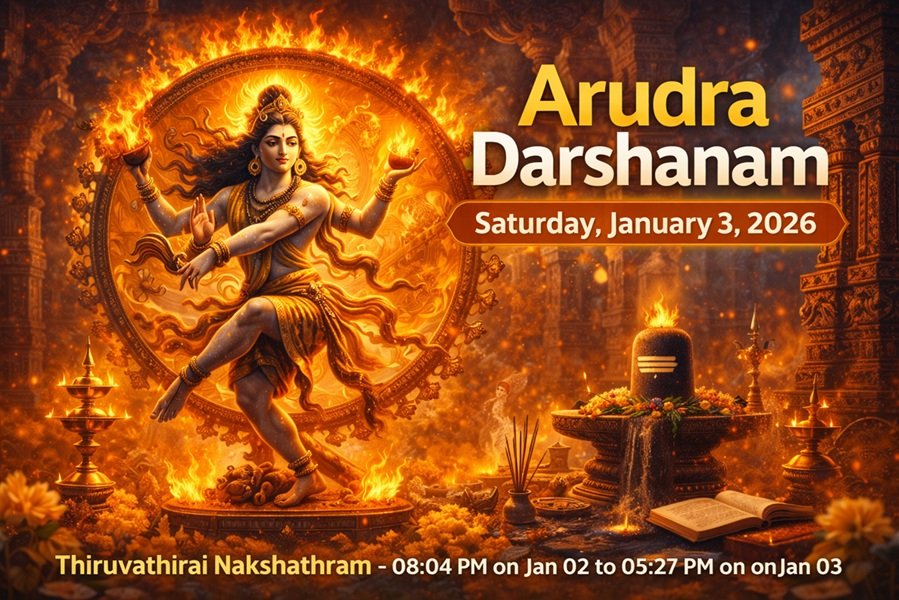
Arudra Nakshatra, known as Thiruvathirai in Tamil, is the birth star of Lord Shiva in his Nataraja form—the cosmic dancer who governs creation, preservation, and dissolution. On this day, devotees believe the universe itself vibrates to the rhythm of Shiva’s Ananda Tandava.
Arudra Darshanam holds exceptional importance in Shaivism and is observed with deep devotion across Tamil Nadu, especially at the sacred Chidambaram Nataraja Temple, where Lord Shiva is worshipped in his formless cosmic state.
Arudra Darshanam Date & Timings (2026)
In 2026, Arudra Darshanam will be observed on January 3.
Thiruvathirai Nakshatra (Marghazhi Masam):
- Begins: 8:04 PM, January 2, 2026
- Ends: 5:27 PM, January 3, 2026
How Is Arudra Darshanam Observed?
The festival blends temple grandeur with quiet domestic devotion:
- At Chidambaram, elaborate all-night abhishekam is performed using vibhuti, milk, curd, honey, flowers, and sacred waters
- Devotees observe a day-long fast, breaking it only after moonrise
- Homes are decorated with intricate kolam designs and oil lamps
- Women prepare Thiruvathirai Kali as a sacred offering (naivedyam)
The day reflects discipline, purity, and surrender to cosmic order.
Thiruvathirai Kali: Meaning Beyond Taste
This dish is intentionally simple yet profound:
- Rice & moong dal represent sustenance and humility
- Jaggery symbolises sweetness earned through patience
- Ghee & nuts signify abundance and divine grace
Eating Thiruvathirai Kali is believed to bring harmony between body, mind, and spirit.
Traditional Recipe: Thiruvathirai Kali
Ingredients
- Raw rice – 1 cup
- Moong dal – 1 tablespoon
- Water – 1.5 cups
For Jaggery Syrup
- Powdered jaggery – 1 cup
- Grated coconut – ¼ cup
- Cardamom powder – ½ tsp
- Ghee – 2–4 tbsp
- Cashew nuts – 4–6
- Water – as needed
Preparation Method
- Dry roast moong dal until aromatic and golden; set aside
- Dry roast raw rice lightly; cool both ingredients
- Grind rice and dal together into a coarse powder
- Cook the mixture with water until soft and well blended
Jaggery Syrup
- Melt jaggery with water on medium heat
- Strain to remove impurities
- Add coconut and cardamom; boil briefly
Combine the cooked rice mixture with jaggery syrup, mix thoroughly, and finish with ghee-roasted cashews.
Thiruvathirai Ezhu Kari Kootu (Seven-Vegetable Stew)
Ezhu Kari Kootu is made only with traditional native vegetables (Naatu Kai Kari) such as:
- Yam, pumpkin, ash gourd
- Broad beans, cluster beans
- Raw banana, sweet potato, field beans
Simple Method
- Pressure-cook moong dal with chopped vegetables and tomatoes
- Grind coconut, cumin seeds, and green chilli into a paste
- Add the paste to the cooked vegetables
- Simmer briefly and season traditionally
The result is a nourishing, sattvic dish that perfectly complements the sweetness of Thiruvathirai Kali.
Final Thought
Thiruvathirai Kali is not about indulgence—it is about intention. Cooked once a year, eaten mindfully, and shared reverently, it reminds us that food can be prayer, and tradition can be timeless.
In every spoonful lies devotion, balance, and the silent rhythm of Shiva’s cosmic dance.
