
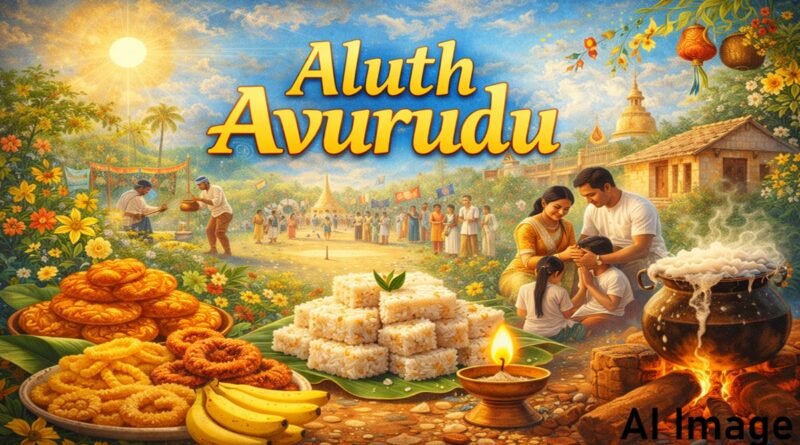
Sinhalese New Year 2026 (Aluth Avurudu): Date, Traditions, Rituals & Unique Significance
The Sinhalese New Year, also known as Aluth Avurudu, is one of the most important cultural festivals in Sri Lanka. It marks the transition of the Sun from Pisces (Meena) to Aries (Mesha), similar to other South and Southeast Asian solar new year traditions.
In 2026, Sinhalese New Year will be celebrated on April 13–14, 2026, with specific rituals performed at astrologically determined times.
Read this: Sinhalese New Year 2026 (Aluth Avurudu): 100+ Wishes, Quotes, Captions & Greetings
About Sinhalese New Year
Sinhalese New Year is a unique blend of astrology, culture, and tradition. It is celebrated by both Sinhalese Buddhists and Tamil Hindus (as Tamil New Year), making it a unifying national festival in Sri Lanka.
Unlike January 1 New Year, this festival is deeply tied to solar movements and auspicious timings (Nekath).
Sinhalese New Year 2026 Date & Key Timing
- Festival Period: April 13–14, 2026
- Based on: Sun’s transition into Aries (Mesha Sankranti)
- Special Feature: Nonagathaya (neutral period between old and new year)
The exact rituals are performed according to astrological timings, not just the calendar date.
What Makes Sinhalese New Year Unique?
1. Nonagathaya (Neutral Time)
One of the most unique aspects is the Nonagathaya period, where:
- Old year ends
- New year begins
- People stop all work
- Time is dedicated to religious activities
This “pause” between years symbolizes spiritual cleansing and reset.
2. Nekath (Auspicious Timings)
Unlike most festivals, every activity is done at a specific time:
- Lighting the hearth
- First meal (Kiribath – milk rice)
- Starting work
- First transaction
These timings are announced officially every year.
Rituals and Traditions
1. Cleaning & Preparation
Before the new year:
- Homes are cleaned
- Old items are discarded
- New clothes are prepared
This symbolizes leaving behind negativity.
2. Lighting the Hearth (Lipa Gini Melaweema)
At an auspicious time:
- Families light the first fire
- Cook traditional dishes like Kiribath (milk rice)
This represents prosperity and unity.
3. First Meal
The first meal is eaten together as a family:
- Milk rice
- Sweetmeats like Kavum, Kokis
- Bananas and jaggery
4. Ganu Denu (First Transaction)
Families perform a symbolic financial transaction:
- Giving money or gifts
- Represents prosperity and economic growth
5. Elders’ Blessings
Younger members:
- Bow to elders
- Receive blessings and sometimes gifts
6. Anointing Oil (Hisa Thel Gema)
A traditional ritual where:
- Herbal oil is applied on the head
- Conducted under guidance of elders or monks
- Symbolizes health and protection
Cultural Activities & Games
After rituals, celebrations include:
- Traditional games (Kana Mutti, Kotta Pora)
- Music and dance
- Community gatherings
These activities strengthen family and social bonds.
Food & Festive Dishes
Sinhalese New Year is incomplete without its rich cuisine:
- Kiribath (Milk Rice)
- Kavum (Oil Cakes)
- Kokis (Crispy snack)
- Aluwa (Sweet confection)
Food represents abundance and joy.
Astrological Importance
The festival is entirely based on solar astrology:
- Sun enters Aries (Mesha)
- Marks the beginning of a new solar cycle
- Each ritual aligns with planetary positions
This makes Sinhalese New Year one of the most astronomically structured festivals.
Connection with Other Festivals
Sinhalese New Year is part of a larger group of regional celebrations:
- Pohela Boishakh (Bengali New Year)
- Puthandu (Tamil New Year)
- Vishu (Kerala)
- Baisakhi (Punjab)
All are linked to the same solar transition, showing cultural unity across regions.
Spiritual Significance
This festival emphasizes:
- Letting go of past negativity
- Starting fresh with positivity
- Respecting elders and traditions
- Strengthening family bonds
It is not just a celebration, but a complete lifestyle reset.
Modern Relevance
Even in today’s fast-paced world, Sinhalese New Year remains important because:
- It preserves cultural heritage
- Promotes family unity
- Encourages mindfulness and tradition
- Connects people with nature and time cycles
Conclusion
Sinhalese New Year 2026 (Aluth Avurudu) is a deeply meaningful festival that goes beyond celebration. With its unique Nonagathaya period, precise astrological timings, and rich traditions, it offers a rare blend of spirituality, culture, and social harmony.
Celebrated on April 13–14, 2026, it reminds us to pause, reflect, and begin anew with hope, positivity, and gratitude.
