
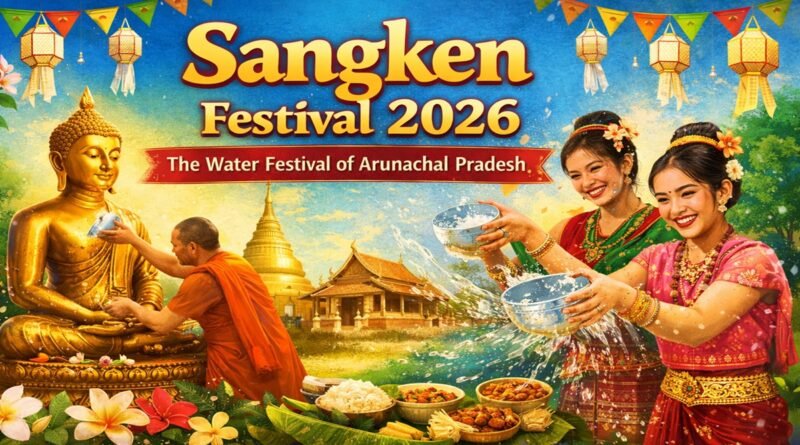
Sangken Festival 2026: The Water Festival of Arunachal Pradesh – Traditions, Significance, Rituals & Celebration Guide
Introduction
The Sangken Festival 2026 is one of the most vibrant and spiritually significant festivals celebrated in Northeast India, especially in Arunachal Pradesh. Observed mainly by the Khamti, Singpho, and Theravada Buddhist communities, Sangken marks the traditional New Year and symbolizes purification, renewal, and peace.
Celebrated annually around 13–15 April, Sangken coincides with similar Southeast Asian water festivals like Songkran (Thailand) and Thingyan (Myanmar), reflecting deep cultural and religious connections.
What is Sangken Festival?
Sangken is a Buddhist water festival that celebrates the New Year with rituals centered around cleansing, forgiveness, and renewal.
The word “Sangken” literally refers to the act of sprinkling water, symbolizing:
- Washing away past sins
- Purifying the soul
- Welcoming a fresh beginning
People splash water on each other in a joyful atmosphere, similar to Holi—but with a spiritual and peaceful essence.
Sangken Festival 2026 Date
- Start Date: 13 April 2026
- End Date: 15 April 2026
The festival spans three days, with each day having its own rituals and cultural importance.
Historical & Cultural Significance
Sangken has its roots in Theravada Buddhism, widely practiced in parts of Northeast India and Southeast Asia.
It is deeply connected to:
- Buddhism teachings
- The concept of renewal and impermanence
- Respect for elders and monks
The festival reinforces:
- Community bonding
- Spiritual growth
- Cultural identity of tribes like the Khamti and Singpho
Rituals and Traditions of Sangken
1. Bathing of Buddha Statues
One of the most sacred rituals is the ceremonial bathing of Buddha idols.
- Statues are brought out of monasteries
- Devotees pour clean water over them
- Fragrant flowers and perfumes are used
This ritual symbolizes purification and respect for the Buddha.
2. Water Sprinkling Ceremony
People sprinkle water on each other to:
- Wash away negativity
- Bless one another
- Celebrate joyfully
Unlike aggressive water fights, Sangken maintains a calm and respectful environment.
3. Monastery Visits & Prayers
Devotees visit monasteries to:
- Offer prayers
- Donate food and clothes
- Seek blessings from monks
It is a time for spiritual reflection and gratitude.
4. Community Feasts
Families and communities come together to:
- Prepare traditional dishes
- Share meals
- Celebrate unity
Food plays a key role in strengthening social bonds.
Where is Sangken Celebrated?
Sangken is mainly celebrated in:
- Namsai district
- Changlang district
- Parts of Lohit region
These areas are cultural hubs of Theravada Buddhism in India.
Similar Festivals Around the World
Sangken is part of a larger family of water festivals across Asia:
- Songkran – Thailand’s New Year water festival
- Thingyan – Myanmar’s biggest festival
- Laos and Cambodia also celebrate similar traditions
These festivals share a common theme:
Water as a symbol of purification and renewal
Why Sangken Festival is Unique
- Deeply spiritual, not just celebratory
- Focuses on peace, purity, and discipline
- Strong connection with Buddhist philosophy
- Combines rituals + joy + community bonding
Travel Guide for Sangken Festival 2026
Best Place to Experience
- Namsai (Arunachal Pradesh) – Most vibrant celebrations
How to Reach
- Nearest airport: Dibrugarh (Assam)
- Road connectivity available to Namsai
Tips for Visitors
- Respect local customs
- Wear modest clothing
- Participate gently in water rituals
- Try local cuisine
Conclusion
The Sangken Festival 2026 is more than just a celebration—it is a spiritual journey of renewal, peace, and cultural pride. Rooted in Buddhist traditions, it beautifully blends rituals, joy, and community harmony.
Whether you’re a traveler, cultural enthusiast, or spiritual seeker, Sangken offers a unique and meaningful experience that reflects the rich heritage of Northeast India.
