
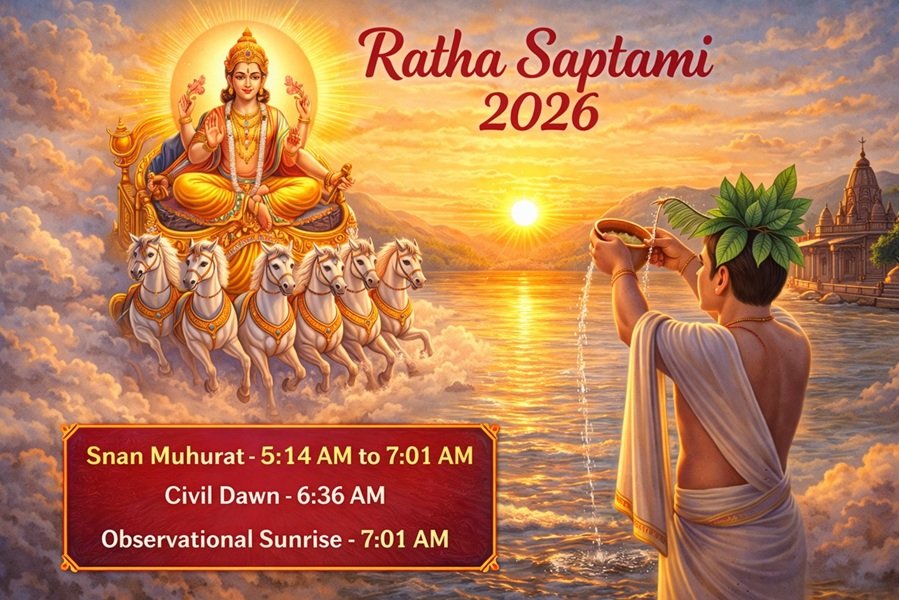
Ratha Saptami 2026: Date, Snan Muhurat, Sunrise Time, Tithi, Rituals & Significance
Ratha Saptami, also known as Surya Jayanti or Magha Saptami, will be observed on Sunday, January 25, 2026. This sacred Hindu festival is dedicated to Surya Dev (the Sun God) and symbolises the Sun’s divine chariot beginning its northward journey with renewed strength and brilliance.
Ratha Saptami holds immense spiritual, astronomical, and health significance and is considered one of the most auspicious days to worship the Sun God.
Ratha Saptami 2026 Date and Time Details
- Festival: Ratha Saptami
- Day: Sunday
- Date: January 25, 2026
Important Timings on Ratha Saptami 2026
- Saptami Tithi Begins:
12:39 AM on January 25, 2026 - Saptami Tithi Ends:
11:10 PM on January 25, 2026 - Snan Muhurat on Ratha Saptami:
05:14 AM to 07:01 AM - Snan Duration:
01 Hour 46 Minutes - Civil Dawn:
06:36 AM - Observational Sunrise:
07:01 AM
These timings make early morning rituals especially significant on this day.
Read This: Ratha Saptami 2026 Wishes, Captions & Quotes: 50+ Messages to Celebrate Surya Dev
What is Ratha Saptami?
Ratha Saptami marks the day when Surya Dev rides his divine chariot (Ratha) drawn by seven horses, representing:
- Seven days of the week
- Seven colours of light
- Seven chakras in the human body
The festival is believed to commemorate the symbolic turning point of the Sun toward the northern hemisphere, bringing warmth, growth, and vitality.
Spiritual Significance of Ratha Saptami
Ratha Saptami is considered:
- The birthday of Surya Dev by many traditions
- A highly auspicious day equal in merit to Makara Sankranti
- A powerful occasion for health, longevity, and spiritual purification
According to scriptures, worshipping the Sun on Ratha Saptami helps:
- Remove sins
- Cure illnesses
- Improve vitality and mental clarity
- Bring prosperity and success
Ratha Saptami Snan Muhurat 2026
Taking a holy bath during the Snan Muhurat is one of the most important rituals of Ratha Saptami.
Snan Timing
- 05:14 AM to 07:01 AM
Ritual Practice
- Bath is taken at dawn, preferably before sunrise
- People bathe in rivers, ponds, or at home using sacred water
- Traditionally, Arka (Calotropis) leaves are placed on the head and shoulders during the bath
The sacred bath is believed to:
- Purify the body and soul
- Remove past karmic debts
- Protect against diseases
Importance of Sunrise on Ratha Saptami
The observational sunrise at 07:01 AM holds special importance because:
- Surya Dev is worshipped at the time of sunrise
- Devotees offer Arghya (water offering) while facing the rising Sun
- Mantras like Aditya Hridayam and Gayatri Mantra are chanted
The period around sunrise is considered the most spiritually charged time of the day.
Rituals and Traditions of Ratha Saptami
1. Surya Arghya
Devotees offer water mixed with red flowers and rice to the rising Sun.
2. Surya Puja
- Lighting lamps
- Chanting Surya mantras
- Offering fruits, sweets, and flowers
3. Fasting (Vrat)
Many observe a partial or full fast to seek health and longevity.
4. Charity (Daan)
Donations of food, clothes, and money are considered highly auspicious.
Health and Ayurvedic Significance
Ratha Saptami is also linked to:
- Seasonal transition from winter to spring
- Strengthening immunity
- Improving blood circulation and digestion
Early morning bathing and Sun exposure are known to activate metabolism and mental alertness.
Ratha Saptami in Different Regions of India
- Andhra Pradesh & Telangana: Celebrated grandly with Surya worship
- Karnataka: Known as Ratha Sapthami with temple rituals
- Tamil Nadu: Observed with Surya Puja and sacred baths
- Odisha & Maharashtra: Marked by fasting and charity
Mythological Background of Ratha Saptami
According to legend, King Yashovarma’s son was cured of a fatal disease after observing Ratha Saptami rituals, highlighting the festival’s healing powers. Another belief states that Surya Dev granted salvation to devotees who worshipped Him on this day.
Why Ratha Saptami is Called the “Mini Makara Sankranti”
Ratha Saptami is often called a Mini Makara Sankranti because:
- Both festivals honour Surya Dev
- Both mark seasonal transitions
- Both emphasize purification and renewal
Conclusion
Ratha Saptami 2026, observed on Sunday, January 25, is a deeply auspicious festival dedicated to the Sun God. With its sacred Snan Muhurat from 05:14 AM to 07:01 AM, powerful sunrise worship, and spiritual significance, the day offers devotees a chance to seek health, prosperity, and divine blessings.
By observing Ratha Saptami rituals with devotion, one invites light, vitality, and positive energy into life—just as Surya Dev illuminates the world each day.
