
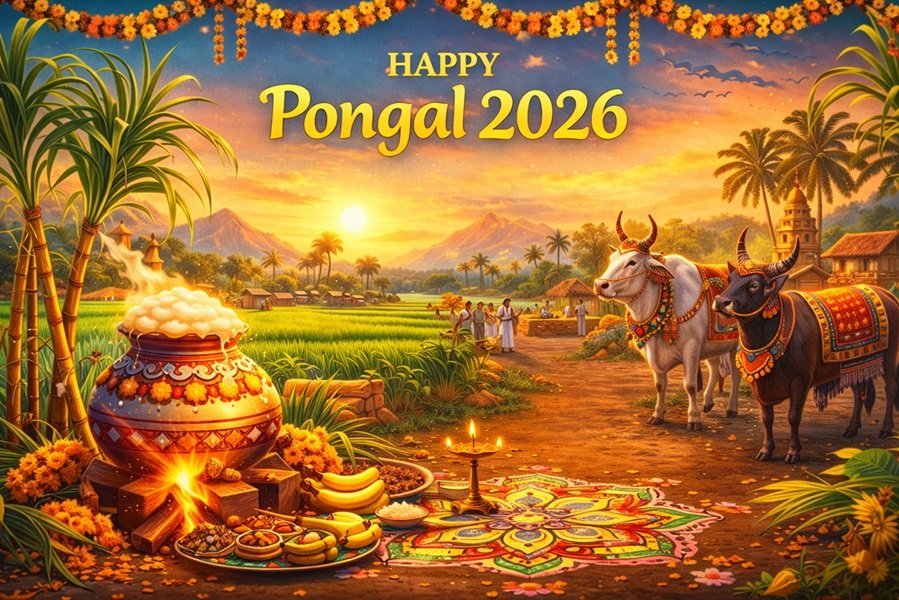
Pongal Festival 2026: Date, Significance, Rituals, and Celebrations of Tamil Nadu’s Harvest Festival
Pongal Festival 2026 is one of the most important and widely celebrated festivals in South India, especially in Tamil Nadu. Deeply rooted in agrarian culture, Pongal is a thanksgiving festival dedicated to nature, the Sun God, cattle, and farmers, marking the end of the winter solstice and the beginning of a new harvest cycle.
Celebrated with devotion, joy, and traditional fervor, Pongal reflects gratitude for prosperity, food, and life itself.
Pongal Festival 2026: Date and Duration
In 2026, Pongal will be celebrated over four days, beginning in mid-January:
- Bhogi Pongal – Wednesday, January 14, 2026
- Thai Pongal (Surya Pongal) – Thursday, January 15, 2026
- Mattu Pongal – Friday, January 16, 2026
- Kaanum Pongal – Saturday, January 17, 2026
The festival coincides with the Sun’s transit into Makara (Capricorn), signaling the start of the Tamil month Thai, which is considered highly auspicious.
Why Pongal Is Celebrated
Pongal is essentially a harvest festival, observed after farmers reap crops like rice, sugarcane, and turmeric. The word “Pongal” means “to boil over”, symbolizing abundance, prosperity, and overflowing happiness.
The festival honors:
- Surya Dev (Sun God) for energy and life
- Mother Earth for fertility
- Cattle for agricultural support
- Farmers for their hard work
Significance of Pongal Festival 2026
Pongal is more than a religious event; it is a cultural celebration of harmony between humans and nature.
- Represents gratitude and sustainability
- Strengthens family and community bonds
- Marks the end of the inauspicious period of Margazhi
- Considered a favorable time for new beginnings
The Tamil saying “Thai Pirandhal Vazhi Pirakkum” (With the birth of Thai month, new paths open) reflects the optimism associated with Pongal.
Four Days of Pongal: Meaning and Rituals
1. Bhogi Pongal – Letting Go of the Old
Bhogi Pongal marks the first day of the festival and is dedicated to renewal.
Key rituals:
- Discarding old household items
- Lighting the Bhogi bonfire
- Cleaning and decorating homes
It symbolizes leaving behind negativity and welcoming positive change.
2. Thai Pongal – The Main Festival Day
Thai Pongal is the most important day and is dedicated to the Sun God.
Major traditions include:
- Cooking Pongal dish in clay pots
- Allowing milk and rice to boil over (a sign of prosperity)
- Offering prayers to the Sun
Families chant “Pongalo Pongal” as the dish overflows, expressing joy and gratitude.
3. Mattu Pongal – Honoring Cattle
Mattu Pongal celebrates cows and bulls, recognizing their role in farming.
Common practices:
- Bathing and decorating cattle
- Applying turmeric and kumkum
- Feeding special Pongal offerings
In rural areas, traditional sports like Jallikattu are also held on this day.
4. Kaanum Pongal – Family and Social Bonding
The final day focuses on:
- Family outings
- Visiting relatives and friends
- Picnics and cultural gatherings
Women often prepare rice balls and offer them to birds as a symbol of harmony with nature.
Traditional Pongal Dishes
Food plays a central role in Pongal celebrations.
Popular dishes include:
- Sakkarai Pongal (sweet rice with jaggery)
- Ven Pongal (savory rice with ghee and pepper)
- Sugarcane, coconut, and bananas
All dishes are prepared using freshly harvested ingredients.
Pongal Decorations and Traditions
Homes are beautifully decorated with:
- Kolam (Rangoli) designs
- Mango leaves and turmeric plants
- Colorful clay pots
Traditional attire such as veshti, saree, and pavadai adds to the festive charm.
Pongal Festival 2026 Across India and the World
While Pongal is primarily a Tamil festival, similar harvest festivals are celebrated across India:
- Makar Sankranti – North India
- Magh Bihu – Assam
- Lohri – Punjab
- Uttarayan – Gujarat
Tamil communities worldwide—Sri Lanka, Malaysia, Singapore, the US, and the Gulf countries—also celebrate Pongal with great enthusiasm.
Modern Relevance of Pongal
In today’s fast-paced world, Pongal reminds us of:
- Sustainable living
- Respect for farmers
- Gratitude toward natural resources
Many schools, offices, and urban communities now celebrate Pongal through cultural programs and eco-friendly practices.
Conclusion
Pongal Festival 2026 is a beautiful celebration of gratitude, prosperity, and tradition. It connects people to their roots while spreading messages of harmony, respect for nature, and shared joy. As families gather around the Pongal pot and chant in unison, the festival continues to symbolize hope, abundance, and renewal.
