
Pongal 2026 Correct Dates: Full Calendar List, Rituals, and Significance
Pongal is one of the most cherished harvest festivals of South India, celebrated with immense joy and devotion by Tamil communities across India and around the world. Observed every year in mid-January, Pongal coincides with Makar Sankranti, marking the Sun’s northward journey and the beginning of the Tamil month Thai, which is considered highly auspicious.
Deeply rooted in gratitude, Pongal honours nature, farmers, cattle, and Surya (the Sun God), acknowledging their vital role in sustaining agriculture and life. In 2026, Pongal will be celebrated over four days, each carrying unique rituals and cultural importance.
Pongal 2026 Exact Dates and Full Calendar List
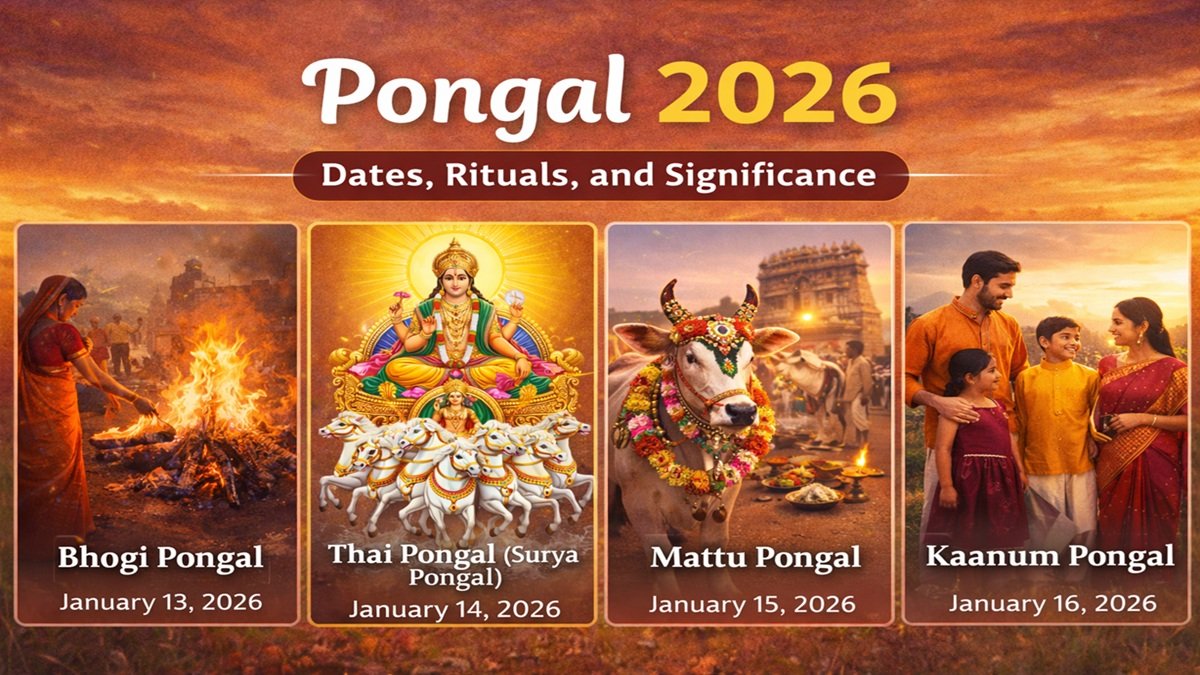
According to the Hindu solar calendar and traditional Panchang calculations, Pongal 2026 will be celebrated from January 13 to January 16. Below is the complete day-wise calendar:
Bhogi Pongal – Tuesday, January 13, 2026
Bhogi Pongal marks the beginning of the festival and is associated with cleansing and renewal. On this day:
- Homes are thoroughly cleaned
- Old and unused items are discarded
- Bonfires are lit early in the morning
This ritual symbolises letting go of negativity and welcoming new beginnings, prosperity, and positivity into the household.
Thai Pongal (Surya Pongal) – Wednesday, January 14, 2026
Thai Pongal is the most important day of the festival. It celebrates the Sun’s transition into Capricorn (Makara Rashi).
On this day:
- Families prepare the traditional dish Pongal using freshly harvested rice, milk, and jaggery
- The dish is cooked in a decorated clay pot
- As the milk overflows, people chant “Pongalo Pongal”, symbolising abundance and good fortune
The prepared Pongal is first offered to Surya and then shared with family, neighbours, and friends.
Mattu Pongal – Thursday, January 15, 2026
Mattu Pongal is dedicated to cattle, which play an essential role in agriculture and rural life.
Rituals include:
- Bathing and decorating cows and bulls
- Adorning them with garlands, bells, and colourful markings
- Offering special food as a sign of gratitude
In some regions of Tamil Nadu, traditional events such as Jallikattu are also organised on this day.
Kaanum Pongal – Friday, January 16, 2026
The final day of Pongal focuses on social bonding and leisure.
On Kaanum Pongal:
- Families visit relatives and friends
- People go on outings or picnics
- Meals are shared together
It is a day dedicated to strengthening family ties and community relationships after days of rituals and thanksgiving.
Pongal 2026 Auspicious Timings
Here are the key auspicious timings for Pongal 2026, especially relevant for Thai Pongal rituals:
- Sankranti Moment: 3:13 PM (January 14)
- Brahma Muhurat: 5:27 AM – 6:21 AM
- Pratah Sandhya: 5:54 AM – 7:15 AM
- Vijaya Muhurat: 2:15 PM – 2:57 PM
- Amrit Kalam: 3:23 PM – 5:10 PM
- Nishita Muhurat: 12:03 AM – 12:57 AM (January 15)
These timings are considered ideal for performing prayers, cooking Pongal, and offering gratitude to the Sun God.
Read This: Pongal Kolam Designs 2026: Easy Rangoli Designs You Can Make To Celebrate This Festival
Pongal 2026 Rituals
The central ritual of Pongal involves cooking freshly harvested rice with milk and jaggery in a beautifully decorated clay pot. As the milk rises and spills over—a moment known as “Pongal”—families joyfully chant “Pongalo Pongal”, welcoming prosperity and abundance.
The dish is first offered to Surya and later shared with loved ones and neighbours, reinforcing the values of gratitude, sharing, and togetherness.
Why Pongal Is Celebrated
The word “Pongal” is derived from the Tamil word pongu, which means “to overflow.” This represents abundance, prosperity, and overflowing happiness.
Beyond rituals, Pongal celebrates:
- Harmony between humans and nature
- Gratitude towards the Sun, rain, soil, crops, and animals
- The hard work of farmers and the agricultural cycle
Pongal is not just a festival—it is a reminder to live in balance with nature and appreciate the forces that sustain life.
