
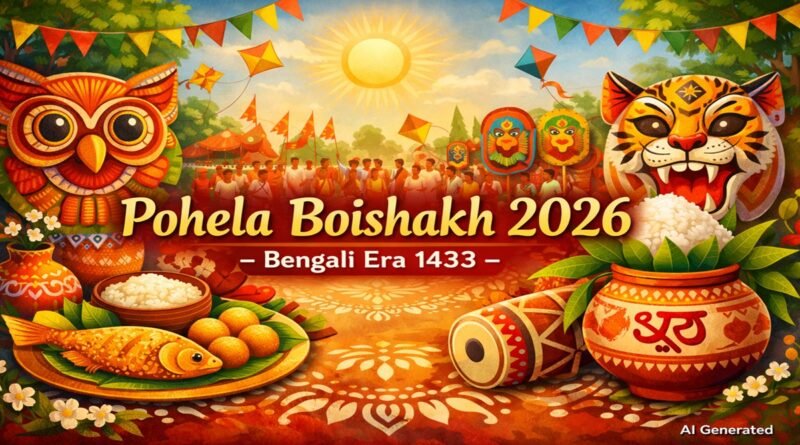
Pohela Boishakh 2026: Date, Sankranti Moment, Significance and Celebrations
Pohela Boishakh, also known as Bengali New Year, marks the beginning of the traditional Bengali calendar. In 2026, this vibrant festival will be celebrated on Wednesday, April 15, 2026, ushering in Bengali Era 1433 with joy, cultural pride, and festive enthusiasm across West Bengal, Bangladesh, and Bengali communities worldwide.
Sankranti Moment and Calendar Details
- Sankranti Moment (Solar Transition): 09:39 AM, April 14, 2026
- Pohela Boishakh Celebration Date: April 15, 2026
- Bengali Year Begins: 1433
The Sankranti moment marks the Sun’s transition into the zodiac sign of Aries (Mesha), which is the astronomical basis of the Bengali calendar. The day following this transition is celebrated as Pohela Boishakh.
Read This: Pohela Boishakh 2026: Bengali Wishes, Greetings, Captions & Quotes (100+ বাংলা শুভেচ্ছা)
What is Pohela Boishakh?
Pohela Boishakh is the first day of the Bengali month “Boishakh” and symbolizes new beginnings, prosperity, and cultural unity. The festival is deeply rooted in agrarian traditions and was historically associated with the collection of taxes during the Mughal era under Emperor Akbar.
Today, it is a grand cultural celebration marked by:
- Traditional music and dance
- Colorful processions
- Special foods and sweets
- Cultural fairs and gatherings
Historical Background
The Bengali calendar (Bangabda) was introduced during the reign of Mughal Emperor Akbar to align the lunar Islamic calendar with the solar agricultural cycle. This made tax collection easier for farmers, who could pay after harvest season.
Over time, the day evolved into a cultural festival celebrating Bengali heritage, rather than just a fiscal event.
Significance of Pohela Boishakh
1. New Beginnings
The festival symbolizes a fresh start. People clean their homes, wear new clothes, and begin new ventures.
2. Cultural Identity
It is one of the strongest expressions of Bengali identity, celebrated irrespective of religion.
3. Economic Importance
Businesses open new accounting books known as “Haal Khata,” inviting customers and offering sweets.
How Pohela Boishakh is Celebrated
1. Traditional Attire
People dress in:
- Women: White sarees with red borders
- Men: Kurta-pajama or dhoti
2. Cultural Processions
Grand rallies like “Mangal Shobhajatra” (especially in Bangladesh) showcase art, masks, and cultural themes.
3. Music and Dance
Songs by Rabindranath Tagore and folk performances dominate the celebrations.
4. Food and Festivities
Popular dishes include:
- Panta Bhat (fermented rice)
- Hilsa fish (Ilish)
- Mishti (sweets)
Pohela Boishakh in India vs Bangladesh
In West Bengal (India)
- Celebrated as a cultural and social festival
- Businesses perform Haal Khata rituals
- Temples and homes hold pujas
In Bangladesh
- National holiday
- Massive public celebrations
- UNESCO-recognized cultural heritage events
Astrological Importance of Sankranti
The Sankranti moment (09:39 AM, April 14, 2026) marks the Sun entering Aries, considered highly auspicious in Vedic astrology. It signifies:
- Start of a new solar cycle
- Favorable time for new ventures
- Renewal of cosmic energy
Modern Relevance
In today’s fast-paced digital world, Pohela Boishakh still holds strong relevance:
- Promotes cultural unity
- Encourages traditional arts
- Strengthens community bonds
- Supports local businesses and artisans
Conclusion
Pohela Boishakh 2026 is more than just a New Year celebration—it is a vibrant expression of Bengali culture, history, and identity. With the Sankranti moment on April 14, 2026, at 09:39 AM, the arrival of Bengali Era 1433 brings hope, prosperity, and new opportunities.
