
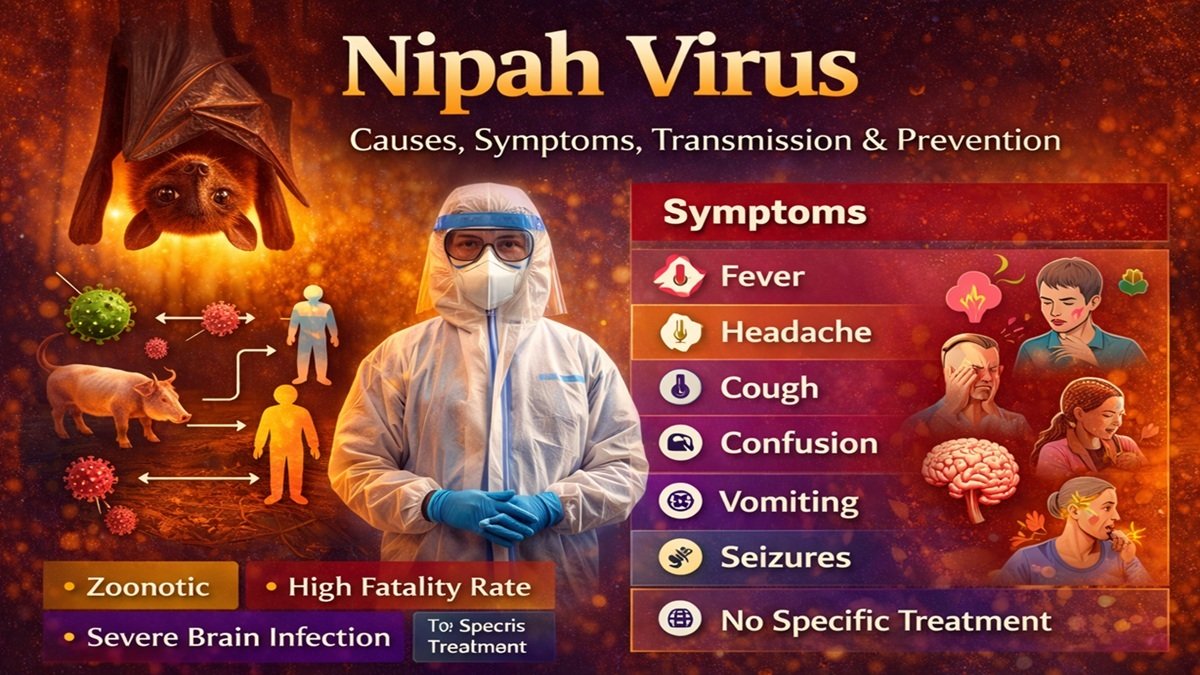
Nipah Virus: Causes, Symptoms, Transmission, Prevention, and Treatment (Complete Guide)
The Nipah virus (NiV) is one of the deadliest zoonotic viruses known to humans. With a high fatality rate and the potential to cause outbreaks, Nipah virus has emerged as a serious public health concern, especially in South and Southeast Asia, including India.
This long, detailed, and SEO-friendly article explains everything you need to know about the Nipah virus—its origin, symptoms, transmission, diagnosis, treatment, prevention, and why it is considered a global health threat.
What Is the Nipah Virus?
The Nipah virus (NiV) is a zoonotic virus, meaning it spreads from animals to humans. It belongs to the Henipavirus genus of the Paramyxoviridae family.
First identified in 1998–1999 during an outbreak in Malaysia, the virus has since caused multiple outbreaks in countries like India, Bangladesh, and Malaysia.
Why Is Nipah Virus Dangerous?
- High fatality rate (40%–75%)
- No specific antiviral cure
- Human-to-human transmission possible
- Causes severe brain inflammation (encephalitis)
Origin and Natural Reservoir of Nipah Virus
Natural Host
The fruit bat (Pteropus species), also known as the flying fox, is the natural reservoir of the Nipah virus. These bats carry the virus without showing symptoms.
Intermediate Hosts
In some outbreaks:
- Pigs acted as intermediate hosts (Malaysia)
- Humans got infected through close contact with animals or contaminated food
How Does Nipah Virus Spread?
Nipah virus spreads through direct or indirect contact with infected animals or humans.
Modes of Transmission
- Animal to Human
- Consuming fruits or fruit products contaminated with bat saliva or urine
- Direct contact with infected pigs or bats
- Human to Human
- Close contact with infected patients
- Exposure to respiratory secretions, saliva, blood, or body fluids
- Common in caregivers and healthcare workers
- Foodborne Transmission
- Drinking raw date palm sap contaminated by bats (common in Bangladesh)
Symptoms of Nipah Virus Infection
Symptoms usually appear 4–14 days after exposure, but incubation can extend up to 45 days.
Early Symptoms
- Fever
- Headache
- Muscle pain
- Sore throat
- Vomiting
- Fatigue
Severe Symptoms
- Dizziness
- Drowsiness
- Confusion
- Altered consciousness
- Seizures
- Acute encephalitis (brain inflammation)
Critical Complications
- Respiratory distress
- Coma within 24–48 hours
- Long-term neurological problems in survivors
Nipah Virus Mortality Rate
The case fatality rate varies by outbreak:
- Average: 40%–75%
- Some outbreaks reported fatality rates above 80%
Survivors may suffer from:
- Memory loss
- Personality changes
- Seizure disorders
Nipah Virus in India
India has experienced multiple Nipah outbreaks, primarily in Kerala.
Notable Nipah Outbreaks in India
- 2018 – Kerala: First major outbreak, high mortality
- 2019 – Kerala: Isolated case, contained quickly
- 2021 – Kerala: Single confirmed case
- 2023–2024 – Kerala: Recurrent outbreaks, rapid containment
Kerala’s public health response has been globally recognized for:
- Early detection
- Contact tracing
- Strict isolation protocols
Diagnosis of Nipah Virus
Nipah virus diagnosis is complex and requires high-level biosafety laboratories.
Diagnostic Tests
- RT-PCR (real-time polymerase chain reaction)
- ELISA antibody tests
- Virus isolation (specialized labs)
Samples are collected from:
- Throat and nasal swabs
- Blood
- Urine
- Cerebrospinal fluid (CSF)
Treatment of Nipah Virus
Is There a Cure for Nipah Virus?
❌ No specific antiviral treatment or vaccine is currently approved for Nipah virus.
Current Treatment Approach
- Supportive care
- Intensive monitoring
- Ventilator support if needed
- Treatment of complications (seizures, respiratory failure)
Some experimental treatments (like monoclonal antibodies) are under research but not yet widely available.
Prevention of Nipah Virus Infection
Prevention is currently the most effective strategy against Nipah virus.
Public Prevention Measures
- Avoid eating fallen or partially eaten fruits
- Do not consume raw date palm sap
- Wash fruits thoroughly before eating
- Avoid contact with bats and sick animals
Healthcare Safety Measures
- Use personal protective equipment (PPE)
- Isolate suspected patients immediately
- Strict infection control in hospitals
- Contact tracing and quarantine
Nipah Virus vs Other Viral Diseases
| Feature | Nipah Virus | COVID-19 | Ebola |
|---|---|---|---|
| Transmission | Animal + Human | Human | Human |
| Fatality Rate | Very High | Low–Moderate | Very High |
| Vaccine Available | ❌ No | ✅ Yes | ✅ Limited |
| Outbreak Frequency | Rare | Global | Sporadic |
Why Nipah Virus Is a Global Health Threat
The World Health Organization (WHO) has listed Nipah virus as a priority pathogen due to:
- High fatality rate
- Potential for mutation
- Lack of treatment and vaccine
- Ability to cause human-to-human spread
Experts warn that future pandemics could emerge from zoonotic viruses like Nipah.
Long-Term Impact on Survivors
Survivors may experience:
- Chronic neurological disorders
- Cognitive impairment
- Depression and anxiety
- Reduced quality of life
This makes Nipah virus not just deadly but life-altering.
Myths and Facts About Nipah Virus
❌ Myth: Nipah spreads through air like flu
✅ Fact: It spreads through close contact and bodily fluids
❌ Myth: All bats spread Nipah
✅ Fact: Only certain fruit bat species carry the virus
❌ Myth: Nipah is common
✅ Fact: Outbreaks are rare but severe
Conclusion
The Nipah virus is a rare but extremely dangerous infection with a high fatality rate and no specific cure. While outbreaks are limited, the virus poses a serious threat due to its zoonotic nature and ability to spread between humans.
Early detection, public awareness, strict isolation, and preventive measures remain the strongest defense against Nipah virus outbreaks.
Staying informed, avoiding risky food practices, and supporting strong public health systems are essential to preventing future outbreaks.
