
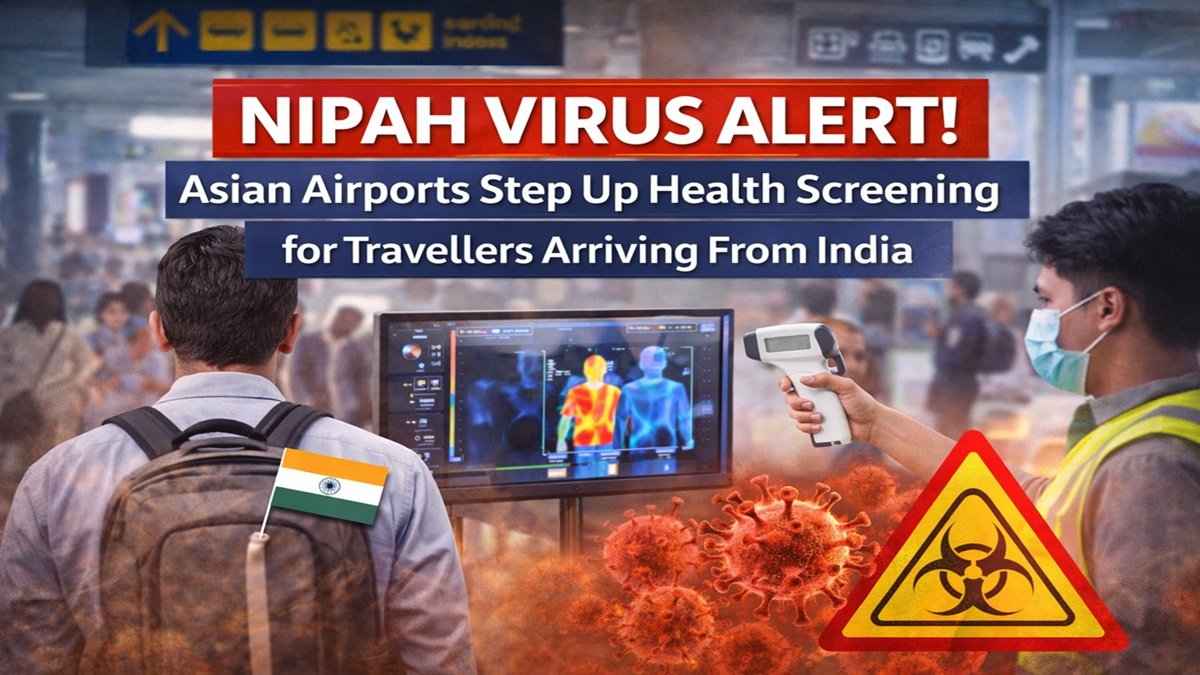
Nipah Virus Alert: Asian Airports Tighten Health Screening for Travellers Arriving from India
Asian airports are once again shifting into precautionary health mode. Thermal scanners, health declaration forms, and advisory notices have reappeared for passengers arriving from India. This time, however, the concern is not COVID-19. The renewed vigilance follows a confirmed Nipah virus outbreak in West Bengal, prompting health authorities across Asia to step up surveillance measures.
Officials stress that there is no cause for panic, but there is clear justification for caution. The Nipah virus is rare, but its history of high fatality and limited treatment options makes early detection and containment essential.
What Triggered the Alert?
The current alert was triggered by five confirmed cases of Nipah virus infection in West Bengal, most of them involving healthcare workers who were exposed while treating patients. According to Indian health authorities, one nurse remains in critical condition, while 100 to 200 close contacts are being actively traced and monitored.
Senior public health expert Dr. Narendra Kumar Arora, President of AIIMS Bilaspur, confirmed the outbreak and highlighted that Nipah virus has historically shown a fatality rate ranging from 40% to 75%, depending on how quickly cases are identified and managed.
Indian officials have reiterated that the situation is under control, with hospitals enforcing strict infection-prevention protocols, isolation procedures, and surveillance mechanisms to prevent further spread.
Why Other Asian Countries Are on Alert
While Nipah virus does not spread as easily as respiratory viruses like COVID-19, it raises red flags for governments because of two critical factors:
- High mortality rate
- Absence of a specific vaccine or antiviral treatment
As a precautionary response, several Asian countries have reintroduced screening measures for travellers arriving from India. These include nations such as Thailand, Nepal, and Taiwan, with China also confirming that it is closely monitoring the situation, even though no cases have been reported there so far.
Common measures at airports include:
- Temperature screening and visual health assessments
- Mandatory health declaration forms
- Monitoring for respiratory or neurological symptoms
These steps are largely preventive, especially as peak travel periods approach across the region.
What Is Nipah Virus and How Does It Spread?
Nipah virus is a zoonotic infection, meaning it spreads from animals to humans. Its natural hosts are fruit bats, particularly those of the Pteropus species.
Human infections can occur through:
- Consumption of food contaminated by bat saliva or urine (such as exposed fruits)
- Direct contact with infected animals
- Close contact with infected individuals, especially in healthcare or caregiving settings
Unlike COVID-19, Nipah virus does not spread efficiently through casual airborne contact, which significantly reduces the risk of large-scale community transmission.
Symptoms to Watch Out For
Early symptoms of Nipah infection are often non-specific, which makes early vigilance important. These may include:
- Fever
- Headache
- Fatigue
- Muscle pain
In severe cases, the disease can progress to:
- Respiratory distress
- Encephalitis (inflammation of the brain)
It is these neurological complications that make Nipah particularly dangerous.
Is There a Vaccine or Treatment?
At present, there is no approved vaccine or specific antiviral drug for Nipah virus. Treatment is largely supportive and focuses on:
- Managing symptoms
- Maintaining hydration
- Providing respiratory or intensive care support when needed
Because of its high fatality rate and limited medical countermeasures, the virus is listed by the World Health Organization as a priority pathogen with epidemic potential.
What This Means for Travellers and the Public
For the general public and most travellers, the immediate risk remains low. Airport screenings are not diagnostic tools; rather, they serve as early warning systems to quickly identify symptomatic individuals and reduce the risk of cross-border spread.
Health authorities advise travellers to:
- Monitor their health after travel
- Seek medical attention promptly if symptoms develop
- Inform healthcare providers about recent travel history, especially to affected areas
Vigilance Without Panic: Why the Current Response Matters
India has faced Nipah outbreaks before, particularly in Kerala, and has successfully contained them through rapid contact tracing, hospital infection control, and public cooperation.
The current measures reflect lessons learned, not a sign of escalation. Heightened airport screening, transparent communication, and regional coordination are exactly how modern public health systems are designed to respond.
The Bottom Line
The Nipah virus outbreak in West Bengal is serious, but it is being closely monitored and actively managed. The renewed screening measures at Asian airports highlight how interconnected global health has become—and how quickly systems now react to emerging risks.
For the public, the message is clear:
Stay informed, avoid misinformation, and rely on verified health updates.
Awareness, not alarm, remains the strongest defence.
