
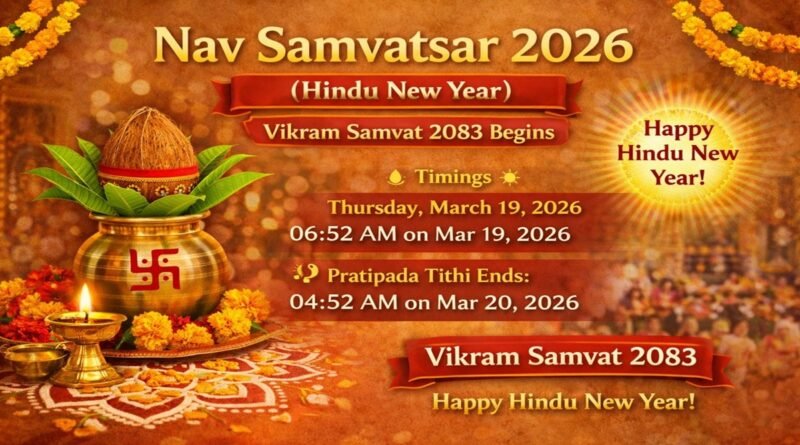
Nav Samvatsar (Hindu New Year) 2026: Date, Muhurat, Significance
Introduction
Nav Samvatsar, also known as Hindu New Year or Nutan Varsh Prarambha, marks the beginning of a new year in the traditional Hindu calendar. This auspicious day is celebrated across India in different forms such as Gudi Padwa, Ugadi, and Navreh.
In 2026, Nav Samvatsar will be celebrated on:
👉 Thursday, March 19, 2026
This day also marks the beginning of:
👉 Vikram Samvat 2083
Nav Samvatsar 2026: Date and Tithi
Important Timings:
- Festival Date: Thursday, March 19, 2026
- Pratipada Tithi Begins: 06:52 AM on March 19, 2026
- Pratipada Tithi Ends: 04:52 AM on March 20, 2026
👉 This day falls on Chaitra Shukla Pratipada, the first day of the Hindu lunar calendar.
What is Nav Samvatsar?
- Nav = New
- Samvatsar = Year
👉 Nav Samvatsar means the beginning of a new year cycle in Hindu tradition.
It is considered a highly auspicious day for:
- New beginnings
- Spiritual practices
- Business and financial decisions
Vikram Samvat 2083 Begins
Nav Samvatsar 2026 marks the start of:
👉 Vikram Samvat 2083
About Vikram Samvat:
- Started by King Vikramaditya
- One of the oldest calendars in India
- Widely used in North and Western India
👉 It is approximately 57 years ahead of the Gregorian calendar.
Mythological Significance
1. Creation of the Universe
According to Hindu belief, Lord Brahma created the universe on this day.
👉 Therefore, it is considered the first day of creation (Srishti Aarambh).
2. Beginning of Time Cycle
Nav Samvatsar symbolizes:
- Start of a new cosmic cycle
- Renewal of energy and life
3. Connection with Lord Vishnu
It is also believed that Lord Vishnu began his cycle of creation and preservation on this day.
Spiritual Importance
- One of the most auspicious days in Hindu calendar
- Ideal for:
- Starting new business
- Buying property
- Beginning spiritual practices
👉 No special muhurat required — the entire day is शुभ (auspicious).
Rituals and Traditions
🏠 1. House Cleaning and Decoration
- Homes are cleaned thoroughly
- Entrance decorated with:
- Rangoli
- Mango leaves (toran)
- Flowers
🙏 2. Puja and Kalash Sthapana
- Kalash (sacred pot) is स्थापित (installed)
- पूजा performed with devotion
- Prayers offered for prosperity and happiness
🍃 3. Consumption of Neem and Jaggery
- Eating neem and jaggery mixture
👉 Symbolizes: - Sweet and bitter experiences of life
👨👩👧👦 4. Social and Cultural Activities
- Wearing new clothes
- Visiting temples
- Exchanging greetings
- Community celebrations
Regional Celebrations Across India
Nav Samvatsar is celebrated in different forms:
| Region | Festival Name |
|---|---|
| Maharashtra | Gudi Padwa |
| Andhra Pradesh / Telangana | Ugadi |
| Karnataka | Yugadi |
| Kashmir | Navreh |
Scientific and Seasonal Importance
- Marks the beginning of spring season (Vasant Ritu)
- Symbolizes:
- Renewal of nature
- Start of agricultural cycle
Why Nav Samvatsar 2026 is Special
- Beginning of Vikram Samvat 2083
- Falls during a powerful spiritual period (Navratri)
- Ideal time for fresh starts and goal setting
Conclusion
Nav Samvatsar 2026 is not just a calendar change—it is a celebration of new beginnings, positivity, and spiritual growth. As Vikram Samvat 2083 begins, it brings an opportunity to start life afresh with renewed energy and hope.
👉 Celebrate this day with devotion, positivity, and gratitude.
Happy Hindu New Year 2026!
