
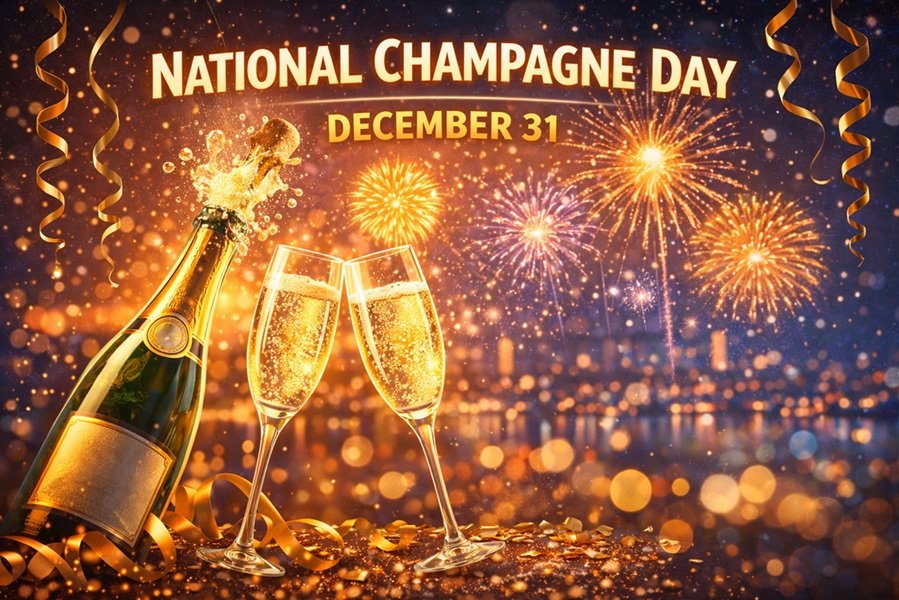
National Champagne Day – December 31
History, Significance, Traditions, and the Sparkle Behind the Celebration
Introduction
Few things symbolize celebration, luxury, and new beginnings quite like a glass of champagne. Observed every year on December 31, National Champagne Day perfectly aligns with New Year’s Eve, a moment when the world comes together to toast the end of one chapter and the beginning of another.
From elegant parties and midnight countdowns to quiet reflections and joyful reunions, champagne has become an inseparable part of year-end celebrations. National Champagne Day honors not just a drink, but a centuries-old tradition rooted in craftsmanship, culture, and celebration.
What Is National Champagne Day?
National Champagne Day, celebrated annually on December 31, is dedicated to recognizing and enjoying champagne, the world-famous sparkling wine known for its fine bubbles, crisp taste, and celebratory charm.
The day encourages people to:
- Learn about the history of champagne
- Appreciate its craftsmanship
- Celebrate responsibly
- Toast special moments and milestones
It is a day that blends culture, history, and festivity into one sparkling experience.
Why Is National Champagne Day Celebrated on December 31?
December 31 is universally associated with:
- Celebration
- Reflection
- New beginnings
- Midnight toasts
Champagne has long been the drink of choice for New Year’s Eve, making December 31 the most fitting date to honor it. The iconic sound of popping corks at midnight has become a global symbol of hope, joy, and renewal.
What Is Champagne?
Champagne is a sparkling wine that comes exclusively from the Champagne region of France. Only sparkling wine produced in this region using specific methods can legally be called champagne.
Key characteristics:
- Made primarily from Chardonnay, Pinot Noir, and Pinot Meunier grapes
- Produced using the traditional méthode champenoise
- Known for fine bubbles and balanced acidity
Sparkling wines from other regions may be delicious, but true champagne is protected by strict geographical and production standards.
History of Champagne
Early Beginnings
Wine has been produced in the Champagne region since Roman times. However, early wines were still and not sparkling.
The Sparkling Discovery
The signature bubbles of champagne were initially considered a flaw. Over time, winemakers learned to control the fermentation process, transforming this “mistake” into a prized feature.
Rise to Royalty
By the 17th and 18th centuries:
- Champagne became popular among French royalty
- It gained prestige across Europe
- It became associated with luxury and celebration
By the modern era, champagne had become a global symbol of success and festivity.
Why Champagne Became a Celebration Drink
Champagne’s association with celebration comes from:
- Its rarity and cost
- Its lively bubbles symbolizing joy
- Its use in royal ceremonies and victories
Over time, it became the drink of:
- Weddings
- Anniversaries
- Sporting victories
- New Year celebrations
National Champagne Day celebrates this legacy.
Champagne and New Year’s Eve Traditions
On December 31:
- Champagne corks pop at midnight
- Glasses are raised in toasts
- Wishes are shared for the coming year
The act of drinking champagne at midnight is symbolic of:
- Letting go of the past
- Welcoming hope and renewal
- Sharing joy with loved ones
This tradition has become deeply ingrained across cultures.
How Champagne Is Made
Champagne production follows a meticulous process:
- Harvesting grapes
- Primary fermentation
- Blending
- Secondary fermentation in the bottle
- Aging
- Removal of sediment
- Final corking
This process can take several years, contributing to champagne’s complexity and value.
Types of Champagne
Champagne comes in various styles, including:
- Brut
- Extra Brut
- Sec
- Demi-Sec
- Rosé
Each type offers a different balance of sweetness and acidity, allowing people to choose based on personal preference.
Fun Facts About Champagne
- A champagne bottle contains millions of bubbles
- The pressure inside a bottle is higher than a car tire
- Champagne corks can travel surprisingly fast when popped
- The flute glass was designed to preserve bubbles
These facts add to the charm celebrated on National Champagne Day.
How National Champagne Day Is Celebrated
1. Midnight Toasts
The most popular way to celebrate is raising a glass at midnight.
2. Champagne Tastings
Many people explore different styles and flavors.
3. Pairing Champagne with Food
Champagne pairs well with:
- Cheese
- Seafood
- Desserts
- Light appetizers
4. Learning About Champagne
Some celebrate by learning about its history and production.
Responsible Celebration
While champagne is associated with joy, National Champagne Day also promotes:
- Responsible consumption
- Moderation
- Safety
Celebration should always prioritize well-being.
Cultural and Symbolic Meaning of Champagne
Champagne represents:
- Achievement
- Elegance
- New beginnings
- Shared happiness
Its symbolism makes it more than just a drink—it becomes part of meaningful moments.
National Champagne Day in Modern Times
Today, National Champagne Day is celebrated through:
- Social media posts
- New Year countdowns
- Special events and dinners
- Family gatherings
It continues to evolve while preserving its classic charm.
Why National Champagne Day Matters
This day reminds us that:
- Celebrations bring people together
- Traditions create shared memories
- Life’s milestones deserve recognition
In a fast-paced world, National Champagne Day invites us to pause, toast, and appreciate the moment.
Read This: Leap Second Time Adjustment Day – December 31
Conclusion
National Champagne Day – December 31 is a sparkling tribute to celebration, tradition, and new beginnings. As the final moments of the year unfold, champagne becomes a symbol of hope, joy, and continuity—linking the past with the promise of the future.
Whether enjoyed at a grand party or a quiet gathering, the simple act of raising a glass on this day carries centuries of history and heartfelt meaning. As the clock strikes midnight, National Champagne Day reminds us to celebrate life’s moments—one toast at a time.
