
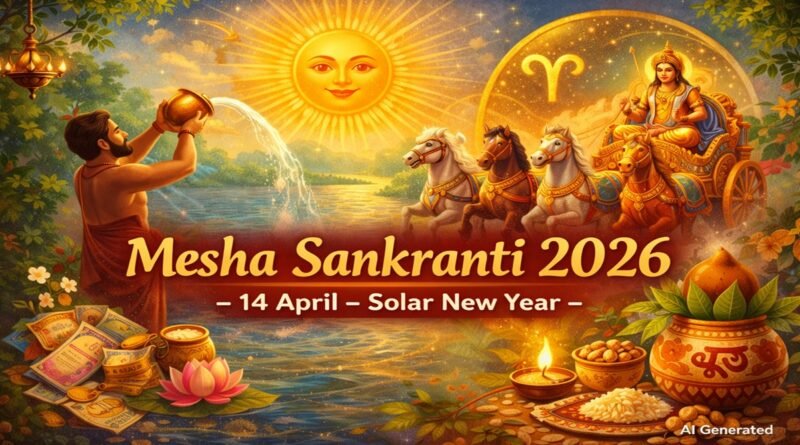
Mesha Sankranti 2026: Date, Punya Kala, Muhurta, Phalam & Significance
Mesha Sankranti is one of the most important solar transitions in the Hindu calendar, marking the Sun’s entry into Aries (Mesha Rashi). In 2026, this auspicious event falls on Tuesday, April 14, 2026, and also coincides with the Solar New Year celebrated in various parts of India.
About Mesha Sankranti
Mesha Sankranti signifies the beginning of a new solar cycle and is considered highly auspicious in Vedic astrology. It is associated with:
- New beginnings
- Seasonal transition (spring to summer)
- Agricultural importance
- Regional New Year festivals like Pohela Boishakh, Puthandu, and Vishu
Read Also: Pohela Boishakh 2026: Date, Sankranti Moment, Significance and Celebrations
Mesha Sankranti 2026 Date & Time
- Date: Tuesday, April 14, 2026
- Sankranti Moment: 09:39 AM
- Transit: Sun enters Aries (Mesha Rashi)
This moment is astrologically significant as it marks the start of Surya’s exaltation phase.
Mesha Sankranti Punya Kala & Maha Punya Kala
Punya Kala (Most Auspicious Time for Rituals)
- Time: 05:57 AM to 01:55 PM
- Duration: 07 Hours 58 Minutes
Maha Punya Kala (Highly Sacred Window)
- Time: 07:30 AM to 11:47 AM
- Duration: 04 Hours 16 Minutes
These time periods are considered ideal for:
- Charity (दान)
- Holy bath (स्नान)
- पूजा and spiritual practices
Mesha Sankranti Muhurta Details
- Day: Tuesday (मंगलवार)
- Karana: Kaulava
- Moonsign (Rashi): Kumbha (Aquarius)
- Nakshatra: Shatabhisha (Chara)
- Sankranti Ghati: 9 (Dinamana)
These elements are used in Vedic astrology to determine the nature and impact of the Sankranti.
Mesha Sankranti Phalam (Predictions & Effects)
Based on traditional Panchang calculations, the following results (Phalam) are indicated:
1. Economic Impact
- Commodity prices may increase
- Inflationary pressure likely
2. Social & Political Effects
- Conflicts among nations may rise
- Social unrest or instability possible
3. Health Concerns
- Increase in cough, cold, and seasonal illnesses
4. Agriculture & Climate
- Possibility of reduced rainfall
- Risk of drought-like conditions and famine
5. Symbolic Interpretation
- “Good for thieves” indicates increased caution needed in financial/security matters
Religious & Spiritual Significance
Mesha Sankranti is considered one of the most पुण्य (meritorious) times in Hindu tradition.
Key Rituals:
- Holy Bath (Snan): Especially in rivers like Ganga
- दान (Charity): Food, clothes, and money donation
- Surya Puja: Offering water (Arghya) to Sun God
- Fasting & Meditation
Solar New Year Celebrations Across India
Mesha Sankranti also marks the Solar New Year in different regions:
- West Bengal: Pohela Boishakh
- Tamil Nadu: Puthandu
- Kerala: Vishu
- Assam: Rongali Bihu
- Punjab: Vaisakhi
Despite different names, all celebrate the same astronomical event—the Sun entering Aries.
Astrological Importance of Aries Transition
The Sun is considered exalted in Aries, making this transition extremely powerful.
Effects of Sun in Aries:
- Increased energy and leadership
- Strong decision-making ability
- New opportunities and initiatives
- Spiritual awakening
Scientific Perspective
From an astronomical viewpoint, Mesha Sankranti represents:
- The Sun crossing the celestial equator region toward Aries
- Alignment with Earth’s seasonal cycle
- Beginning of agricultural activities in many regions
Do’s and Don’ts on Mesha Sankranti
Do’s:
- Take early morning bath
- Donate food and essentials
- Perform Surya Arghya
- Start new ventures
Don’ts:
- Avoid negative thoughts
- Avoid conflicts or arguments
- Do not ignore charity
Conclusion
Mesha Sankranti 2026 is not just an astrological event—it is a powerful spiritual and cultural milestone. Falling on April 14, 2026, with the Sankranti moment at 09:39 AM, it marks the beginning of a new solar year and brings opportunities for renewal, growth, and spiritual upliftment.
While the Phalam suggests challenges like rising costs, health issues, and possible conflicts, it also reminds us to stay prepared, spiritually grounded, and socially responsible.
