
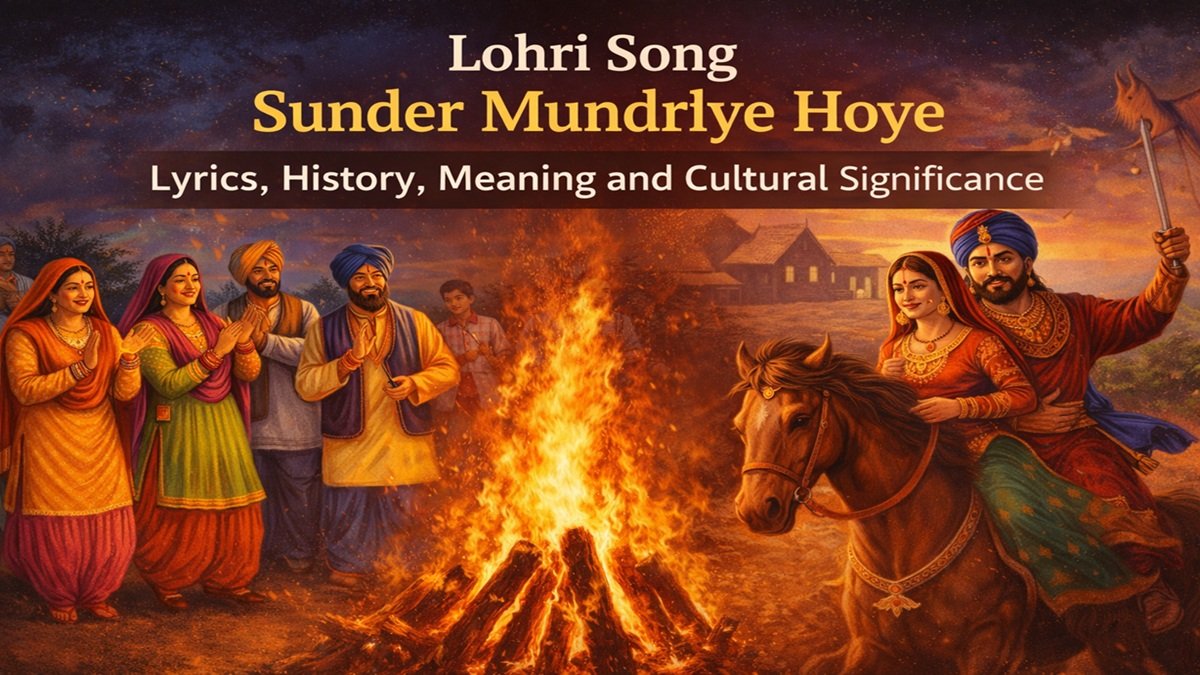
Lohri Song Sunder Mundriye Hoye: Lyrics, History, Meaning and Cultural Significance
The vibrant folk culture of Punjab comes alive every year with the soulful and rhythmic Lohri song “Sunder Mundriye Hoye”. Sung around the bonfire during Lohri celebrations, this traditional Punjabi folk song is deeply rooted in history, folklore, and community bonding.
As Lohri 2026 approaches, the song once again echoes across villages and cities, connecting generations through its powerful storytelling and festive spirit. Let us explore the history, lyrics, meaning, and cultural importance of this iconic Lohri anthem.
Sunder Mundriye Hoye: A Traditional Lohri Folk Song
“Sunder Mundriye Hoye” is not just a song; it is a living oral tradition of Punjab. Sung in a call-and-response style, the song brings together families, children, and elders around the Lohri fire.
The lyrics narrate a heroic folk tale while blessing families with prosperity, long life, and happiness—values central to the Lohri festival.
History of Lohri Song Sunder Mundriye Hoye
The origins of “Sunder Mundriye Hoye” trace back to the rural heartlands of Punjab. The song is inspired by the legendary Punjabi folk hero Dulla Bhatti, often described as the “Robin Hood of Punjab.”
According to folklore, Dulla Bhatti was known for:
- Resisting oppressive landlords
- Protecting the poor and helpless
- Helping young girls get married with dignity
The song tells the story of a beautiful girl named Sunder, whom Dulla Bhatti supports and gets married like a guardian. Over time, this narrative became symbolic of justice, generosity, and social responsibility.
As Lohri celebrations evolved, the song transformed into an essential Lohri anthem, sung year after year with slight regional variations, yet retaining its original soul.
Lohri Song Sunder Mundriye Hoye Lyrics
Below are the traditional lyrics commonly sung during Lohri:
Sundar Mundariye Hoye
Tera Kaun Vichaara Hoye
Dulla Bhatti Wala Hoye
Dulle Di Dhee Vyahi Hoye
Ser Shakkar Payee Hoye
Kudee Da Laal Pataaka Hoye
Kudee Da Saaloo Paata Hoye
Saaloo Kaun Samete Hoye
Maame Choori Kuttee Hoye
Jimeendaraan Luttee Hoye
Jameendaar Sudhae Hoye
Gin Gin Pole Lae Hoye
Ik Pola Ghat Gaya Hoye
Zameendaar Vohatee Le Ke Nas Gaya Hoye
Ik Pola Hor Aaya Hoye
Zameendaar Vohatee Le Ke Daud Aaya Hoye
Sipaahee Pher Ke Le Gaya Hoye
Sipaahee Noon Maaree Itt Hoye
Bhaaven Ro Te Bhaaven Pitt Hoye
Saahanoon De Lohadee Hoye
Teree Jeeve Jodee Hoye
Saahanoon De Daane
Tere Jee Nyaane
Meaning of Sunder Mundriye Hoye Lyrics
The song praises Dulla Bhatti’s courage and kindness, portraying him as a protector of social values. Here is a simplified explanation of its meaning:
- “Sundar Mundariye” refers to a beautiful girl in need of support
- Dulla Bhatti stands by her and arranges her marriage
- He gifts sugar and clothes, symbolizing care and responsibility
- The story highlights injustice by landlords and resistance against oppression
- The final lines are blessings, wishing prosperity, long life, and healthy children
Overall, the song combines storytelling, social commentary, and festive blessings.
Cultural Significance of the Song During Lohri
“Sunder Mundriye Hoye” holds a special place in Lohri celebrations because it represents:
- Gratitude for harvest and abundance
- Respect for folk heroes and cultural memory
- Community bonding around the bonfire
- Blessings for newlyweds and children
Children traditionally go door-to-door singing this song, receiving peanuts, popcorn, and sweets, reinforcing the spirit of sharing and togetherness.
Why Sunder Mundriye Hoye Is Still Popular Today
Despite changing times, this Lohri song remains relevant because:
- It preserves Punjabi folklore
- It promotes social justice and generosity
- It is easy to sing and remember
- It emotionally connects people to their roots
Modern Lohri celebrations, both in India and abroad, continue to feature this song as the heart of the festival.
Conclusion
The Lohri song “Sunder Mundriye Hoye” is more than a festive chant—it is a cultural legacy passed down through generations. Its powerful narrative of Dulla Bhatti, its meaningful lyrics, and its association with Lohri make it timeless.
As Lohri 2026 approaches, singing this song around the bonfire is a way of honoring tradition, celebrating unity, and passing forward Punjab’s rich folk heritage.
