
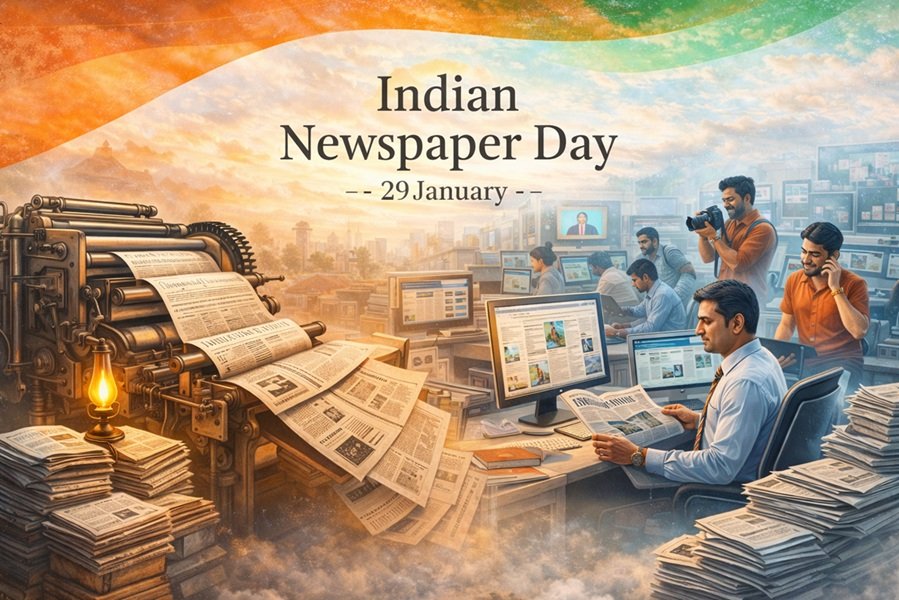
Indian Newspaper Day
History, Significance, and the Role of Newspapers in Indian Democracy
Indian Newspaper Day is observed every year on 29 January to commemorate the publication of Hicky’s Bengal Gazette, India’s first printed newspaper. The day celebrates the long journey of Indian journalism and recognizes the vital role newspapers play in shaping public opinion, spreading awareness, and strengthening democracy.
What is Indian Newspaper Day?
Indian Newspaper Day marks the beginning of print journalism in India. On 29 January 1780, James Augustus Hicky published Hicky’s Bengal Gazette in Calcutta (now Kolkata). This historic publication laid the foundation of modern journalism in India and introduced the concept of free expression through the printed word.
History of Indian Newspaper Day
The late 18th century saw the rise of print culture in colonial India. Hicky’s Bengal Gazette was a weekly newspaper that boldly reported social, political, and administrative matters. Despite facing censorship, legal action, and eventual shutdown by the British authorities, the newspaper set an early example of press freedom and fearless journalism.
Following this, many newspapers emerged across India, especially during the 19th and early 20th centuries, playing a crucial role in:
- Spreading political awareness
- Mobilizing public opinion
- Supporting the Indian freedom movement
Indian Newspaper Day honors this legacy of courage and truth.
Significance of Indian Newspaper Day
Indian Newspaper Day is significant for several reasons:
1. Celebration of Press Freedom
The day highlights the importance of a free and independent press in a democratic society.
2. Role in India’s Freedom Struggle
Newspapers like Kesari, Amrita Bazar Patrika, and The Hindu helped awaken national consciousness and unite people against colonial rule.
3. Voice of the People
Newspapers act as a bridge between citizens and the government by highlighting issues, concerns, and ground realities.
4. Promotion of Awareness and Education
From politics and economics to science and culture, newspapers educate society and promote informed decision-making.
Evolution of Newspapers in India
Indian journalism has evolved significantly over the centuries:
- Colonial Era: Newspapers became tools of resistance and reform
- Post-Independence: Focus shifted to nation-building and development
- Modern Era: Integration of print with digital platforms
Despite the rise of digital media, newspapers continue to be trusted sources of verified and in-depth information.
Importance of Newspapers in Modern India
Even in the digital age, newspapers remain relevant because they offer:
- Credible and fact-checked news
- In-depth analysis and editorials
- Regional and vernacular coverage
- A permanent written record of events
They play a crucial role in combating misinformation and promoting responsible journalism.
How Indian Newspaper Day Is Observed
Indian Newspaper Day is marked through:
- Journalism seminars and discussions
- Media ethics and press freedom debates
- Special newspaper editions and articles
- Recognition of journalists and editors
- Educational programs in schools and colleges
These activities emphasize the responsibility that comes with press freedom.
Indian Newspaper Day and Democracy
A strong democracy depends on an informed citizenry. Newspapers help:
- Hold authorities accountable
- Encourage transparency
- Protect democratic values
Indian Newspaper Day serves as a reminder that freedom of the press must be protected and used responsibly.
Conclusion
Indian Newspaper Day, observed on 29 January, honors the birth of Indian print journalism and the enduring power of newspapers in society. From Hicky’s Bengal Gazette to today’s modern dailies, newspapers have remained essential to democracy, truth, and public awareness. The day inspires journalists and readers alike to uphold the values of integrity, courage, and free expression.
