
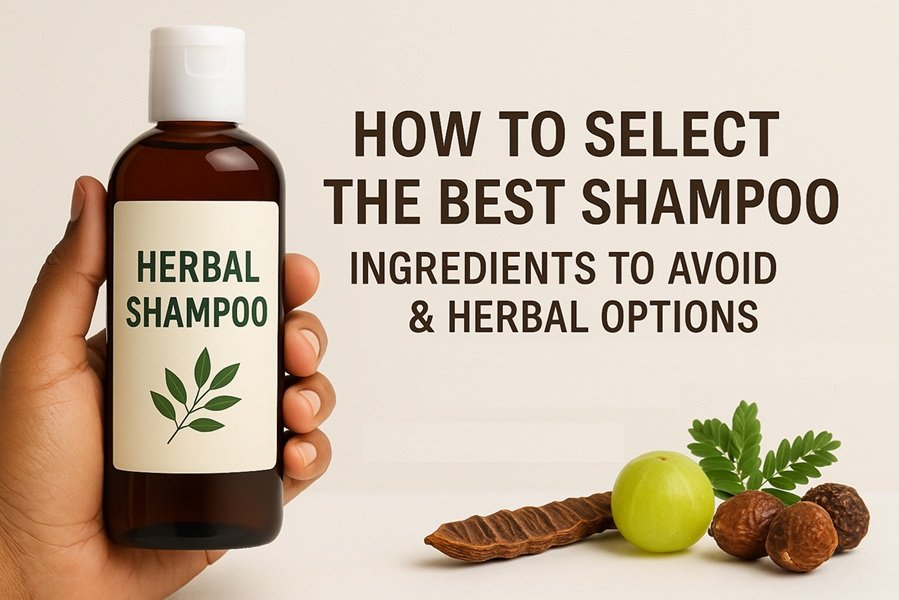
How to Select the Best Shampoo: Ingredients to Avoid and Herbal Options for Healthy Hair
Introduction
Choosing the best shampoo goes beyond scent or marketing claims—it’s about science, scalp health, and awareness. Your shampoo should cleanse effectively, maintain natural oils, and support long-term hair strength. Many commercial shampoos contain harsh ingredients that can cause dryness, irritation, or even hair loss over time. This article will guide you step-by-step on how to select the best shampoo, which chemicals to avoid, what herbal alternatives are effective, and how to match products to your hair and scalp type.
Why Shampoo Selection Matters
Our scalp is living skin that produces natural sebum to protect hair strands. When harsh cleansers strip these oils, hair becomes brittle, frizzy, and prone to damage. Conversely, excess oil and dirt can clog follicles, leading to dandruff and hair fall. Therefore, shampoo selection is about balance—choosing a formula that gently cleans without stripping or coating hair with heavy residues. In India, climatic variations—humidity, dust, and hard water—further complicate hair care, making ingredient awareness essential.
Decoding Shampoo Ingredients
Each shampoo bottle lists its ingredients under the INCI (International Nomenclature of Cosmetic Ingredients) format. Understanding these can empower you to make informed choices.
Major Components:
- Surfactants: These are cleaning agents that remove dirt and oil. Example: Sodium Lauryl Sulfate (SLS), Sodium Laureth Sulfate (SLES).
- Conditioning Agents: Substances like silicones or quaternary compounds that make hair smooth.
- Preservatives: Extend shelf life by preventing bacterial growth.
- Fragrance and Colorants: Add appeal but can cause allergies.
- Botanical Extracts: Herbal additions that offer nourishment.
Reading the label helps you distinguish between marketing gimmicks and genuinely safe formulations.
Chemicals to Avoid in Shampoos
Many commercial shampoos use synthetic ingredients that may provide temporary results but harm your scalp long-term. Here are the major offenders:
1. Sulfates (SLS, SLES, ALS)
These detergents create a rich lather but strip essential oils, cause frizz, and fade color. Overuse can also lead to scalp sensitivity.
2. Parabens (Methylparaben, Propylparaben, Butylparaben)
Used to prevent microbial growth but known to mimic estrogen. Long-term exposure may disrupt hormonal balance.
3. Formaldehyde & Formaldehyde-Releasing Agents
Some cheap shampoos contain DMDM Hydantoin or Quaternium-15, which release formaldehyde over time. These are potential carcinogens and irritants.
4. Silicones (Dimethicone, Cyclopentasiloxane)
They coat the hair to make it appear shiny but eventually cause buildup, blocking moisture and nutrients from penetrating the hair shaft.
5. PEGs and Ethoxylated Compounds
These are emulsifiers that can contain harmful contaminants like 1,4-Dioxane, a potential carcinogen.
6. Synthetic Fragrances
A single “fragrance” can contain dozens of undisclosed chemicals. These can cause allergies, migraines, or skin irritation.
7. Triclosan & Isothiazolinones
Used for antibacterial purposes but linked to endocrine disruption and allergic reactions.
Safe and Beneficial Shampoo Ingredients
To ensure long-term scalp health, look for shampoos containing mild, plant-derived ingredients and nourishing natural extracts.
Gentle Surfactants:
- Coco-Glucoside – coconut and fruit sugar-derived cleanser.
- Sodium Cocoyl Glutamate – amino acid-based surfactant, gentle yet effective.
- Decyl Glucoside – plant-based alternative to SLS/SLES.
Natural Moisturizers:
- Aloe Vera – hydrates scalp and repairs damage.
- Shea Butter & Cocoa Butter – restore moisture balance.
- Glycerin – natural humectant that attracts water.
- Argan and Jojoba Oils – smoothen and strengthen hair fibers.
Herbal and Ayurvedic Extracts:
- Amla (Indian Gooseberry) – rich in Vitamin C, boosts shine and prevents premature graying.
- Shikakai (Acacia concinna) – natural cleanser, strengthens roots.
- Reetha (Soapnut) – gentle foaming, chemical-free cleansing.
- Bhringraj – improves blood circulation to scalp, promotes growth.
- Brahmi and Hibiscus – cool scalp, reduce dandruff and hair fall.
Medicinal Plant Additions:
- Neem and Tea Tree Oil – antifungal, good for dandruff.
- Tulsi and Rosemary – soothe irritation and stimulate follicles.
Step-by-Step: How to Choose the Right Shampoo for You
- Identify Your Hair Type: Is your hair dry, oily, normal, curly, or chemically treated?
- Understand Scalp Condition: Dandruff, sensitivity, or product buildup require specific solutions.
- Check Ingredient Labels: Look for gentle cleansers and avoid harsh chemicals.
- Consider Frequency of Use: Daily shampoos should be mild, while occasional clarifying shampoos can be stronger.
- Test Before Long-Term Use: Try for 3–4 washes before deciding if it suits your scalp.
- Complement with Conditioner: Always pair with a compatible conditioner or serum to maintain hydration.
- Adapt to Season: In humid months, prefer lightweight shampoos; in winters, use nourishing ones.
Top Herbal and Ayurvedic Shampoos in India
Here are some trusted options you can recommend or review on BharatArticles.com:
| Brand | Key Ingredients | Best For | Approx. Price (₹) |
|---|---|---|---|
| Indulekha Bringha Shampoo | Bhringraj, Aloe Vera, Amla | Hair fall control | 120 |
| Khadi Natural Hair Cleanser | Amla, Brahmi, Reetha | Normal to oily scalp | 160 |
| Just Herbs Hair Fall Shampoo | Hibiscus, Neem, Henna | Dandruff & hair fall | 150 |
| Havintha Natural Shampoo | Amla, Reetha, Shikakai | Daily mild cleansing | 230 |
| Himalaya Anti Hair Fall | Palasha, Bhringraj | Everyday use | 65 |
| Forest Essentials Hair Cleanser | Coconut Milk, Reetha | Luxury herbal care | 1450 |
| Biotique Bio Green Apple | Green Apple, Centella | Oily scalp | 120 |
Tips to Maintain Healthy Hair
- Avoid overwashing—2–3 times a week is ideal for most.
- Rinse with cool or lukewarm water, not hot.
- Use a wide-tooth comb to detangle wet hair.
- Protect your scalp from pollution and UV exposure.
- Oil your scalp once a week with coconut or castor oil before shampooing.
- Trim regularly to prevent split ends.
- Use silk pillowcases to reduce friction.
Herbal vs Chemical Shampoos: The Truth
Herbal shampoos are generally milder, eco-friendly, and free of harmful detergents. However, they may lather less and take longer to show visible results. Chemical shampoos, on the other hand, offer instant smoothness but often coat hair with synthetic films that mask true health. The ideal approach is to choose scientifically formulated herbal shampoos that combine nature and modern technology.
Common Myths About Shampoos
- More foam = better cleaning: False. Lather does not determine cleansing quality.
- Natural shampoos cannot clean effectively: Many herbal formulations now rival synthetic shampoos in performance.
- Switching brands damages hair: Only harmful ingredients do—not the change itself.
- Expensive shampoos are always better: Focus on ingredients, not price.
Expert Recommendations
Trichologists suggest rotating between two shampoos: a mild herbal cleanser for routine use and a clarifying shampoo once or twice a month. For chemically treated or dyed hair, avoid strong sulfates and use color-safe, pH-balanced formulas.
Conclusion
Selecting the best shampoo involves more than picking what smells good—it’s about protecting and nurturing your scalp. Choose sulfate-free, paraben-free, and silicone-light formulas enriched with Indian herbs like amla, reetha, and bhringraj. Remember, healthy hair starts with a healthy scalp, and herbal care rooted in Ayurveda remains India’s timeless solution for strong, beautiful hair.
