
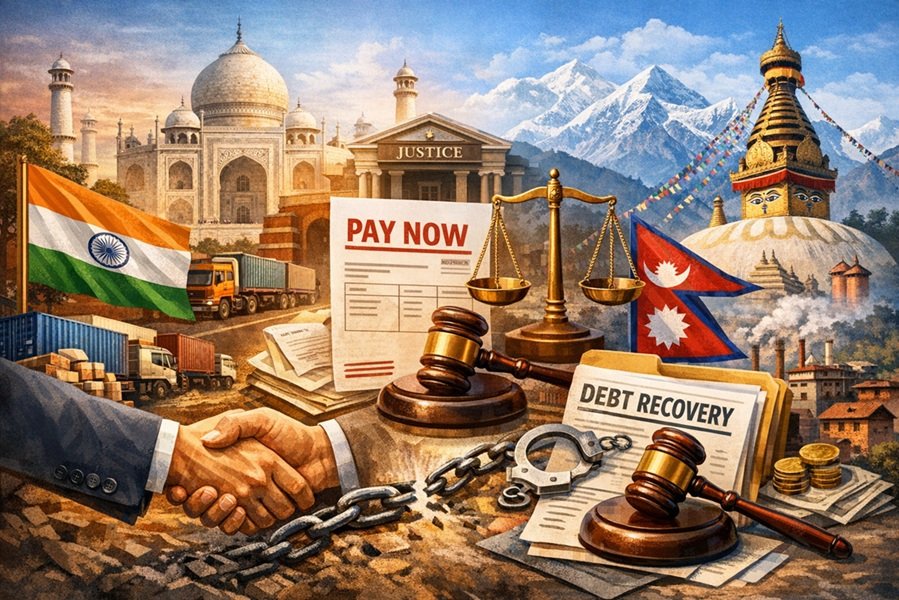
How an Indian Company Can Collect a Debt from a Nepali Company
Cross-border trade between India and Nepal is extensive, particularly in sectors such as manufacturing, FMCG, pharmaceuticals, and infrastructure. While commercial relations are generally smooth, Indian exporters occasionally face delayed payments or defaults by Nepali buyers. In such situations, understanding the legal and practical framework for debt collection in Nepal becomes critical. This article outlines the available mechanisms and provides practical recommendations for Indian companies seeking to recover dues from Nepali counterparties.
Legal Framework Governing Debt Collection in Nepal
Nepal follows a mixed legal system influenced by civil law principles and customary practices. Commercial disputes, including unpaid invoices and breach of contract, are governed primarily by the Muluki Civil Code, 2017, the Contract Act, 2000, and relevant provisions of company and banking laws. If the debt arises from a written contract, purchase order, or invoice, Indian exporters have a legally enforceable claim, provided proper documentation exists.
Nepali courts recognize foreign parties’ rights to sue local companies. Indian companies can initiate civil recovery proceedings before the District Court having jurisdiction over the debtor’s registered office or place of business. Where contracts include arbitration clauses, enforcement can be sought under Nepal’s arbitration framework, which is aligned with international standards.
Practical Options for Indian Companies
- Pre-litigation Negotiation and Legal Notice
Before initiating formal proceedings, it is advisable to send a well-drafted legal notice through a Nepali lawyer. Many cases of debt collection in Nepal are resolved at this stage, as local companies often prefer settlement to avoid litigation costs and reputational damage. - Civil Suit for Recovery of Money
If negotiations fail, filing a civil recovery suit is the most direct legal remedy. Courts can award the principal amount, interest, and in some cases, damages. Interim measures such as asset attachment may also be sought to prevent dissipation of assets. - Arbitration and Enforcement
Where contracts provide for arbitration, Indian exporters can initiate arbitral proceedings. Domestic arbitral awards and certain foreign awards can be enforced in Nepal, subject to compliance with procedural requirements. - Insolvency and Winding-up Proceedings
In cases of chronic default, initiating insolvency or winding-up proceedings against the Nepali company can be an effective pressure tactic, especially when the debtor is financially distressed.
Key Recommendations for Indian Exporters
To improve the chances of successful recovery, Indian exporters should adopt a proactive and structured approach:
- Robust Contracts: Always use detailed written contracts specifying payment terms, governing law, dispute resolution mechanisms, and jurisdiction. Including arbitration clauses with Nepal as the seat can significantly streamline enforcement.
- Due Diligence: Conduct background checks on Nepali buyers, including corporate status, financial health, and litigation history, before extending credit.
- Document Preservation: Maintain complete records of invoices, delivery documents, correspondence, and acknowledgments of debt. These are crucial for debt collection in Nepal.
- Local Legal Support: Engage experienced Nepali legal counsel who understands local court procedures, timelines, and negotiation dynamics.
- Early Action: Avoid prolonged delays in initiating recovery steps. Prompt action increases leverage and reduces the risk of asset depletion.
Conclusion
While recovering dues from a foreign buyer may seem challenging, debt collection in Nepal is legally feasible and practically effective when handled correctly. Indian exporters who combine strong contractual practices, early legal intervention, and local expertise can significantly improve their recovery prospects. A strategic and informed approach not only helps in recovering outstanding amounts but also strengthens long-term cross-border trade relationships.
Source: materials from the Grandliga website.
