
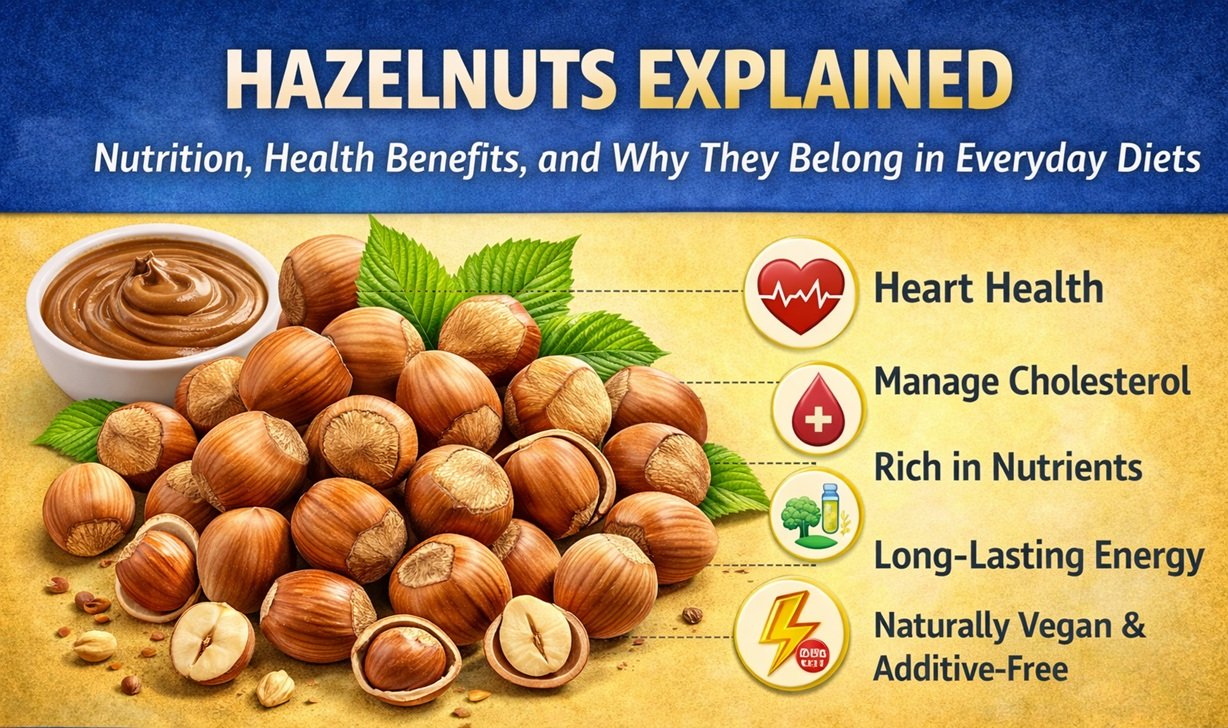
Hazelnuts Explained: Nutrition, Health Benefits, and Why They Belong in Everyday Diets
Hazelnuts are often associated with indulgence—luxury chocolates, creamy spreads, and gourmet desserts. But beyond their rich taste lies a far more practical truth: hazelnuts are a nutrient-dense, everyday food that can easily fit into balanced diets, including Indian meals.
At recent food and nutrition discussions during MEWA India 2026, one idea stood out clearly—hazelnuts are not meant to be occasional treats. They are naturally wholesome, versatile, and suitable for daily consumption, much like other commonly eaten nuts.
This article takes a closer look at hazelnut nutrition, health benefits, common myths, allergy concerns, and practical ways to include them in everyday diets, without the hype or confusion.
What Makes Hazelnuts Nutritionally Special?
Hazelnuts grow on trees and are consumed with minimal processing. This alone sets them apart from many modern packaged snacks. Nutritionally, they offer a balanced combination of healthy fats, plant protein, vitamins, and minerals, making them suitable for regular intake.
Key nutrients found in hazelnuts include:
- Unsaturated (good) fats
- Vitamin E (antioxidant support)
- B-complex vitamins
- Magnesium, copper, and manganese
- Dietary fiber
Instead of viewing hazelnuts in isolation, nutrition experts emphasize a simple approach: all natural nuts are healthy, and variety is key. Hazelnuts add diversity to nutrient intake rather than competing with almonds, walnuts, or cashews.
Hazelnuts vs Other Nuts: Why Comparison Isn’t the Point
Hazelnuts are often compared with almonds or walnuts, especially in terms of fat content. While it’s true that hazelnuts contain around 60% fat, most of this is unsaturated fat, which supports heart and metabolic health.
Different nuts offer different benefits:
- Walnuts are higher in omega-3 fats
- Almonds are protein-rich
- Hazelnuts provide a smooth balance of fats, vitamins, and minerals
The goal isn’t to rank nuts but to rotate and include multiple varieties. Hazelnuts simply bring their own nutritional strengths to the table.
Why Hazelnuts Work Well in Indian Diets
One of the biggest advantages of hazelnuts is adaptability. While globally they’re popular in chocolates, desserts, cereals, and baked goods, they blend surprisingly well into Indian cooking.
Chefs and home cooks alike have found that hazelnuts can be:
- Ground into gravies and sauces
- Added to snacks and ladoos
- Used in breakfast mixes and porridges
- Consumed raw or lightly roasted as snacks
Unlike many commercially roasted nuts, hazelnuts are often eaten without added salt, helping reduce unnecessary sodium intake—an important factor for heart health.
Understanding Hazelnuts and Allergy Concerns
Nut allergies are a valid concern, especially for urban consumers. However, not all “nut allergies” are the same.
- Peanuts are legumes, grown underground, and are responsible for most severe allergic reactions
- Hazelnuts are tree nuts, and globally, they show lower rates of severe allergic responses
While mild reactions can occur in sensitive individuals, serious reactions are less common. People with known allergies are advised to:
- Avoid mixed nut packs
- Choose single-nut packaging
- Consult healthcare professionals before introducing new foods
The Fat Myth: Do Hazelnuts Cause Weight Gain?
One of the most persistent myths around nuts is that they cause weight gain because they are “fatty.” This oversimplification ignores how the body processes different types of fat.
Hazelnuts contain mainly unsaturated fats, which:
- Support heart health
- Help manage cholesterol levels
- Provide sustained energy
- Improve satiety (feeling full longer)
When eaten in moderation, hazelnuts do not automatically convert into body fat. In fact, they can help reduce reliance on ultra-processed snacks, indirectly supporting weight management.
How Much Hazelnut Is Enough?
The recommendation is simple and practical:
A small handful a day.
Hazelnuts can be eaten:
- Between meals
- As a mid-morning or evening snack
- Alongside fruits or yogurt
- As part of home-cooked meals
Regular, moderate consumption is what delivers long-term benefits—not overconsumption.
Key Health Benefits of Hazelnuts
When included as part of a balanced diet, hazelnuts offer multiple health advantages:
- Support heart health through healthy fats
- Help regulate cholesterol levels
- Provide antioxidants that fight oxidative stress
- Offer plant-based energy for daily activities
- Naturally gluten-free and vegan
- Free from additives when eaten raw or dry-roasted
- Help control hunger and reduce junk food cravings
Their nutritional profile makes them suitable for adults, active individuals, and people seeking cleaner snack options.
From Premium Product to Pantry Staple
In India, hazelnuts are often perceived as premium due to limited awareness and fluctuating prices. Globally, however, annual hazelnut production exceeds one million tonnes, and in many European countries, they are everyday pantry items.
As availability improves and nutritional awareness grows, hazelnuts are expected to move out of the “luxury” category and into regular household use.
In the coming years, hazelnuts may no longer feel special or rare—they’ll simply feel normal, like peanuts or almonds do today.
Final Thoughts
Hazelnuts don’t need marketing hype or comparison battles to prove their worth. They are simple, natural, and nutritionally valuable. When eaten in moderation, they support heart health, provide clean energy, and fit effortlessly into everyday diets—including Indian kitchens.
Sometimes, healthy eating isn’t about discovering something new—it’s about using familiar foods more wisely.
Disclaimer
The information provided in this article is for general informational and educational purposes only and is not intended as a substitute for professional medical advice, diagnosis, or treatment. Always seek the advice of your physician or a qualified healthcare provider with any questions you may have regarding a medical condition.
