
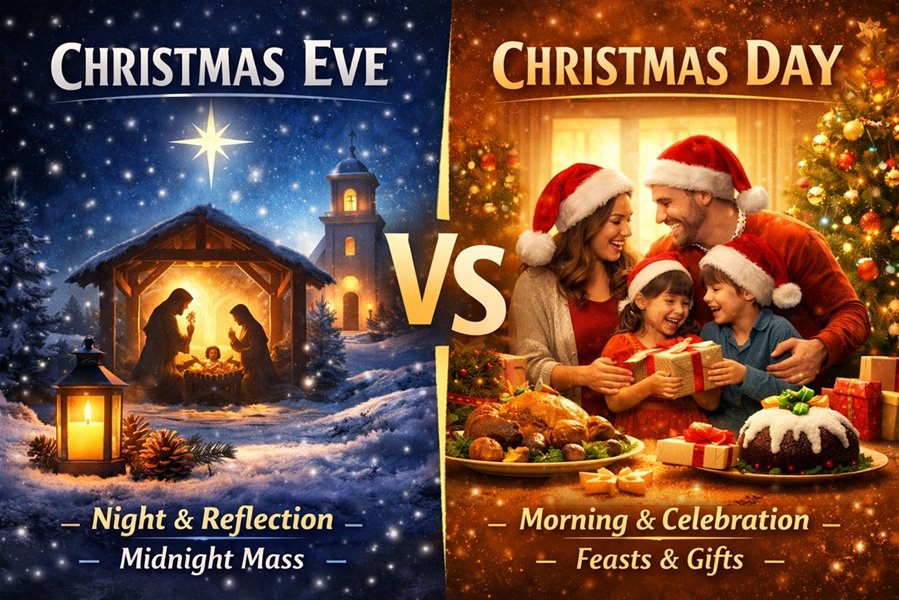
Christmas Eve vs. Christmas Day: Meaning, Traditions, and Key Differences Explained
Christmas is one of the most widely celebrated festivals in the world, observed by billions of people across cultures and countries. However, many people often confuse Christmas Eve and Christmas Day, assuming they are similar or interchangeable. In reality, both days hold distinct religious, cultural, and emotional significance.
This article provides a detailed comparison of Christmas Eve vs. Christmas Day, explaining their meanings, origins, traditions, and how celebrations differ globally.
What Is Christmas Eve?
Christmas Eve is observed on December 24, the day before Christmas Day. It marks the anticipation and preparation for the birth of Jesus Christ.
Religious Significance of Christmas Eve
In Christian theology, Christmas Eve symbolizes the final waiting period before the Nativity of Jesus. Many churches conduct special evening or midnight services that commemorate the moment when Jesus was born in Bethlehem.
Key religious aspects include:
- Midnight Mass
- Nativity reenactments
- Scripture readings about the birth of Christ
- Lighting candles to symbolize hope and divine light
For many Christian denominations, Christmas Eve holds greater spiritual importance than Christmas Day itself.
What Is Christmas Day?
Christmas Day is celebrated on December 25 and marks the birth of Jesus Christ, central to Christian belief.
Religious Importance of Christmas Day
Christmas Day represents:
- The fulfillment of biblical prophecy
- The arrival of Jesus as the Savior
- A message of peace, love, and redemption
Churches conduct morning services, hymns, and prayers focused on joy and gratitude rather than anticipation.
Christmas Eve vs. Christmas Day: Core Differences
1. Date and Timing
| Aspect | Christmas Eve | Christmas Day |
|---|---|---|
| Date | December 24 | December 25 |
| Nature | Anticipation and preparation | Celebration and fulfillment |
2. Emotional Tone
- Christmas Eve is reflective, calm, and spiritual
- Christmas Day is joyful, festive, and celebratory
Christmas Eve focuses on waiting and hope, while Christmas Day emphasizes celebration and happiness.
3. Religious Observances
Christmas Eve
- Midnight Mass
- Candlelight services
- Nativity plays
- Fasting traditions in some cultures
Christmas Day
- Morning church services
- Hymn singing
- Community prayers
- Blessings and sermons
4. Gift-Giving Traditions
Gift exchanges vary by region:
- In countries like Germany, Austria, and Scandinavian nations, gifts are often exchanged on Christmas Eve.
- In countries like India, the USA, UK, and Canada, gifts are typically opened on Christmas Day morning.
5. Family and Social Celebrations
- Christmas Eve is usually quieter, spent with close family
- Christmas Day involves larger gatherings, feasts, and social visits
Cultural Celebrations Around the World
Europe
- Christmas Eve dinners are traditional in Poland, Italy, and Germany
- Midnight Mass is widely attended
- In some Eastern European cultures, Christmas Eve meals follow symbolic rituals
United States and United Kingdom
- Christmas Eve includes church services and last-minute preparations
- Christmas Day is the main holiday with gifts, meals, and family time
India
- Christmas Eve is marked by midnight church services
- Christmas Day includes festive meals, greetings, and community celebrations
- Public holiday observed on December 25
Food Traditions: Christmas Eve vs. Christmas Day
Christmas Eve Meals
- Often lighter or symbolic
- In some traditions, meat is avoided
- Emphasis on traditional or regional dishes
Christmas Day Meals
- Heavier, celebratory feasts
- Special desserts and festive sweets
- Family-style meals bringing everyone together
Why Both Days Matter
Christmas Eve and Christmas Day together form a complete celebration cycle:
- Christmas Eve prepares the heart and mind
- Christmas Day celebrates joy and fulfillment
Both days complement each other spiritually and culturally.
Christmas Eve vs. Christmas Day: Which Is More Important?
There is no universal answer.
- Religiously, Christmas Eve may hold deeper significance due to midnight services
- Culturally, Christmas Day is often considered the main festival
- Emotionally, families may value one day over the other based on tradition
Ultimately, both days are equally important in their own ways.
Conclusion
Christmas Eve and Christmas Day are not the same, but together they create the full essence of Christmas.
Christmas Eve is about hope, reflection, and anticipation, while Christmas Day is about joy, celebration, and togetherness.
Understanding the difference helps deepen appreciation for the festival and its timeless message of love, peace, and goodwill.
