
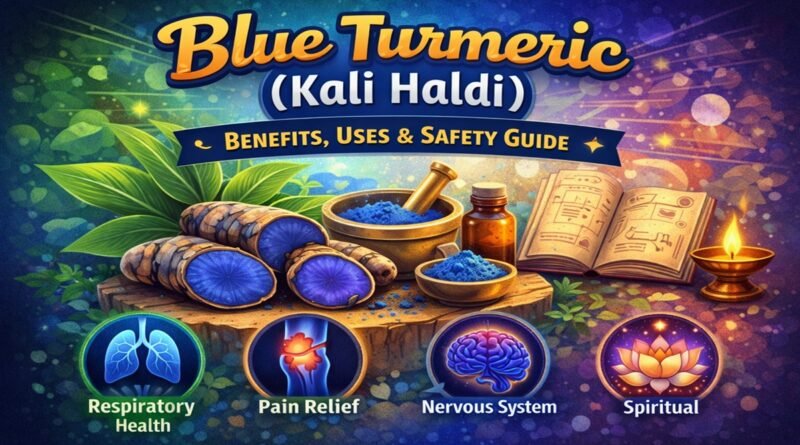
Blue Turmeric (Kali Haldi): Benefits, Uses, Science & Safety Guide
Most people know the yellow kitchen turmeric, but in many parts of India — especially tribal regions — another rare variety has been valued for centuries: Blue Turmeric, commonly called Kali Haldi.
It is not just a spice. Traditionally, it has been used in Ayurveda, rituals, folk medicine, and even protection talismans.
In this article, we’ll explore the plant, medicinal benefits, traditional uses, scientific facts, and precautions in a clear human-friendly way.
What Is Blue Turmeric?
Blue turmeric is a rhizome belonging to the ginger family (Zingiberaceae).
Its botanical name is Curcuma caesia.
Unlike yellow turmeric:
| Feature | Yellow Turmeric | Blue Turmeric |
|---|---|---|
| Color inside | Yellow | Deep blue / bluish-black |
| Smell | Warm, earthy | Camphor-like, sharp |
| Taste | Mild bitter | Strong, pungent |
| Main use | Cooking & health | Medicine & rituals |
It grows naturally in:
- Madhya Pradesh
- Chhattisgarh
- Jharkhand
- Odisha
- North-East India
How Does It Look?
When cut open, the rhizome shows a dark bluish-black interior — the reason behind its name.
Active Compounds (Why It Works)
Blue turmeric contains powerful bioactive compounds:
- Curcuminoids
- Essential oils
- Camphor
- Borneol
- Turmerone
- Terpenoids
These give it strong antimicrobial, anti-inflammatory and nervine properties.
Health Benefits of Blue Turmeric
Important: Traditionally used in small medicinal quantities — not daily food.
1. Respiratory Relief
Traditionally used for:
- Asthma
- Bronchitis
- Chronic cough
- Nasal congestion
It works like a natural decongestant due to camphor-like volatile oils.
2. Pain & Inflammation Control
Applied externally for:
- Joint pain
- Sprains
- Arthritis
- Muscle swelling
Acts similar to a natural anti-inflammatory balm.
3. Skin Disorders
Used in paste form for:
- Ringworm
- Fungal infection
- Boils
- Wounds
Strong antimicrobial properties help prevent infection.
4. Nervous System Support
In folk medicine, it has been used for:
- Epileptic episodes
- Anxiety calming
- Nerve disorders
Some compounds act on the central nervous system.
5. Digestive Aid
Small doses traditionally used to relieve:
- Gas
- Stomach cramps
- Worm infestation
Traditional & Cultural Uses
Blue turmeric is famous in tantra-mantra traditions.
People keep it for:
- Protection rituals
- Prosperity symbols
- Spiritual practices
- Warding negative energy
Because of rarity, it is sometimes treated as a sacred root.
How To Use Blue Turmeric
External Application (Most Common)
Make a paste:
Blue turmeric powder + water or mustard oil
Apply on affected area.
For Steam Inhalation
Very small crushed piece in hot water steam for congestion.
Internal Use (Only Under Guidance)
Ayurveda practitioners sometimes prescribe micro-doses.
Self-consumption is not recommended.
Scientific Research Status
Modern research is still limited, but preliminary studies show:
- Antimicrobial activity
- Anti-inflammatory effects
- Antioxidant potential
- Possible anti-seizure compounds
Because it’s rare, large clinical trials are still lacking.
Side Effects & Safety
Do NOT treat it like kitchen turmeric.
Avoid:
- Pregnancy
- Children consumption
- High oral doses
- Long-term internal use
Possible reactions:
- Burning sensation
- Nausea
- Nervous irritation (overdose)
Always consult an Ayurvedic practitioner before ingestion.
Difference Between Black Turmeric & Blue Turmeric
They are actually the same plant.
“Kali haldi” = “Blue turmeric” = Curcuma caesia
The inside looks blue but the outer skin is black — hence both names.
How Rare Is It?
It is considered a vulnerable medicinal plant because:
- Slow growth
- Overharvesting
- Ritual demand
Some states restrict wild collection.
Read This: Are Peanuts Peas or Nuts? The Botanical Truth Revealed
Final Thoughts
Blue turmeric sits at the intersection of botany, medicine, and tradition.
Unlike everyday turmeric, it is not a food spice — it is a powerful medicinal rhizome historically used carefully and respectfully.
Modern science is slowly catching up to what traditional systems already practiced:
small doses, specific purposes, and expert supervision.
Used correctly, it may be beneficial.
Used casually, it may be harmful.
