
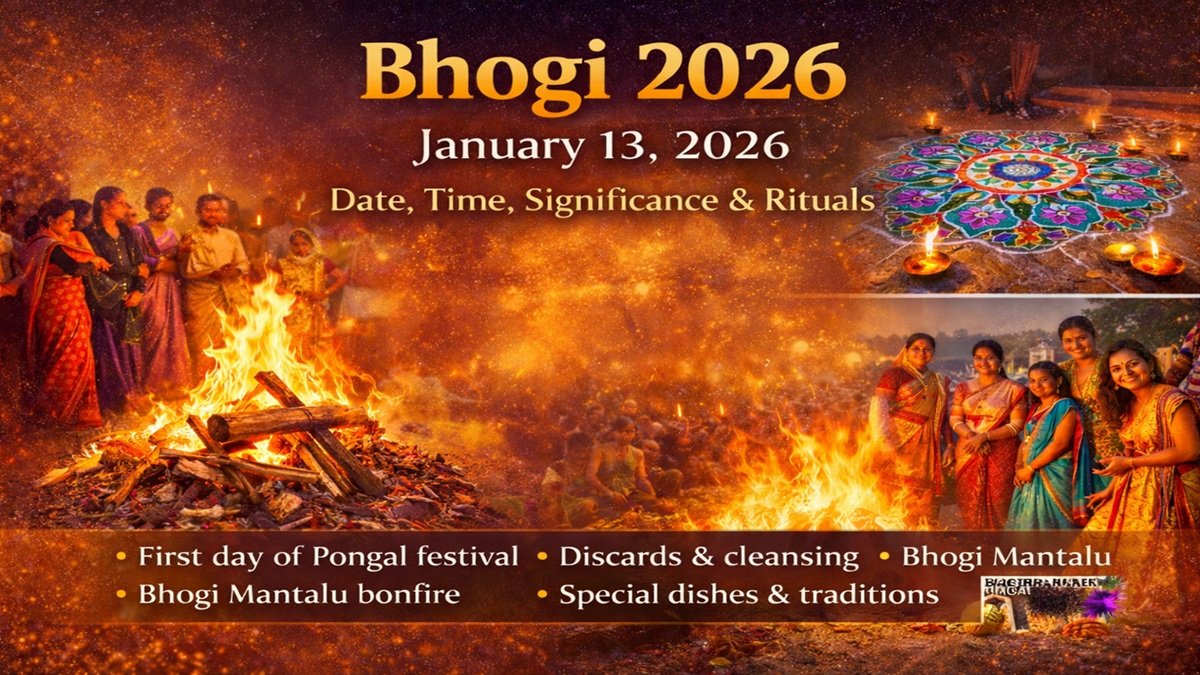
Bhogi 2026: Date, Time, Significance, Rituals, and How the Festival Is Celebrated Across South India
Bhogi is a vibrant and meaningful festival that marks the beginning of the four-day Pongal and Sankranti celebrations in South India. Observed with great enthusiasm in Tamil Nadu, Andhra Pradesh, Telangana, and parts of Karnataka, Bhogi symbolises renewal, purification, gratitude to nature, and preparation for a prosperous harvest season.
Celebrated a day before Makar Sankranti, Bhogi sets the spiritual and cultural tone for the harvest festivities that follow.
Bhogi 2026: Date and Timings
Bhogi in 2026 will be observed with the following important timings:
- Bhogi Pandigai: Tuesday, January 13, 2026
- Bhogi Sankranti Moment: 03:13 PM on Wednesday, January 14, 2026
- Makar Sankranti: Wednesday, January 14, 2026
Bhogi is followed by:
- Thai Pongal / Makara Sankranti
- Mattu Pongal / Kanuma Panduga
- Kaanum Pongal / Mukkanuma
Together, these four days celebrate agriculture, cattle, nature, family, and community bonding.
What Is Bhogi Festival?
Bhogi is the first day of the Pongal festival and focuses on the idea of letting go of the old to make way for the new. Unlike other festive days filled with elaborate rituals, Bhogi is simple yet deeply symbolic.
The festival encourages:
- Physical cleanliness of homes
- Mental and spiritual cleansing
- Gratitude for past experiences
- Hope for abundance and growth in the coming year
Significance of Bhogi Pandigai
1. Festival of Renewal and New Beginnings
Bhogi represents a fresh start. People discard unused, broken, or worn-out items from their homes, symbolising the removal of:
- Negativity
- Obstacles
- Old habits
- Emotional burdens
This practice reflects the belief that progress and prosperity require space—both physically and spiritually.
2. Spiritual Cleansing
Bhogi is considered a day of inner purification. By giving up the old, people mentally prepare themselves for:
- Positive thinking
- Gratitude
- Harmony with nature
- A productive harvest season
It aligns with the solar transition into Uttarayan, when the Sun begins its northward journey.
Bhogi Mantalu: The Ritual Bonfire
One of the most important and visually striking rituals of Bhogi is Bhogi Mantalu.
What Is Bhogi Mantalu?
Bhogi Mantalu is a ceremonial bonfire lit early in the morning using:
- Old wooden furniture
- Discarded household items
- Agricultural waste
Families and communities gather around the fire, especially before sunrise.
Symbolic Meaning of the Bonfire
The bonfire represents:
- Burning away negativity
- Ending past hardships
- Welcoming transformation
- Readiness for change
The collective nature of Bhogi Mantalu reflects community unity and shared hope for a better future.
Rituals and Customs of Bhogi
Some common Bhogi rituals across South India include:
- Cleaning and decorating homes
- Lighting Bhogi Mantalu at dawn
- Discarding unused items responsibly
- Wearing new clothes
- Preparing traditional foods
- Offering prayers for prosperity
- Spending time with family and neighbours
Children often take special joy in the bonfire celebrations, while elders guide them on the festival’s deeper meaning.
How Bhogi Is Celebrated Across South India
Though the spirit of Bhogi remains the same, regional traditions add unique cultural flavours to the celebration.
Bhogi in Tamil Nadu
In Tamil Nadu, Bhogi is known as Bhogi Pandigai and marks the official beginning of the Pongal festival.
Key highlights:
- Homes are thoroughly cleaned and decorated
- Colourful kolams are drawn at entrances
- Old household items are discarded
- Bhogi Mantalu is lit in the early morning
- Families prepare for Thai Pongal the next day
Bhogi in Tamil Nadu sets the stage for gratitude toward nature and farmers.
Bhogi in Andhra Pradesh and Telangana
In Andhra Pradesh and Telangana, Bhogi is celebrated as the first day of Sankranti festivities.
Key traditions include:
- Large community bonfires
- Wearing new traditional clothes
- Preparing festive dishes
- Visiting relatives and neighbours
- Joyful family gatherings
The festival is celebrated with enthusiasm, especially in rural areas where agriculture plays a central role in daily life.
Bhogi in Karnataka
Bhogi is observed in select regions of Karnataka, particularly those bordering Tamil Nadu and Andhra Pradesh.
Though not as widespread:
- Traditional rituals are followed
- Bonfires are lit in villages
- People participate in community celebrations
The festival reflects shared cultural ties across South Indian states.
Bhogi and Its Connection to Agriculture
Bhogi holds special importance for farmers as it:
- Marks the end of one agricultural cycle
- Welcomes the harvest season
- Honors the hard work of farming communities
- Prepares the ground—both literally and symbolically—for abundance
It is a reminder that nature, effort, and gratitude are deeply interconnected.
Modern Relevance of Bhogi
In today’s times, Bhogi also carries an important message:
- Decluttering responsibly
- Recycling and sustainability
- Letting go of emotional stress
- Beginning the year with positivity
Many communities now promote eco-friendly Bhogi celebrations, encouraging safe and environmentally conscious practices.
Conclusion
Bhogi 2026, celebrated on January 13, is much more than a prelude to Pongal and Makar Sankranti. It is a festival of renewal, cleansing, transformation, and hope. From the glowing flames of Bhogi Mantalu to the joy of family gatherings, Bhogi beautifully captures the essence of starting afresh.
As the Sun enters Uttarayan on January 14, 2026, at 03:13 PM, Bhogi reminds us that every new beginning begins by letting go of the old.
