
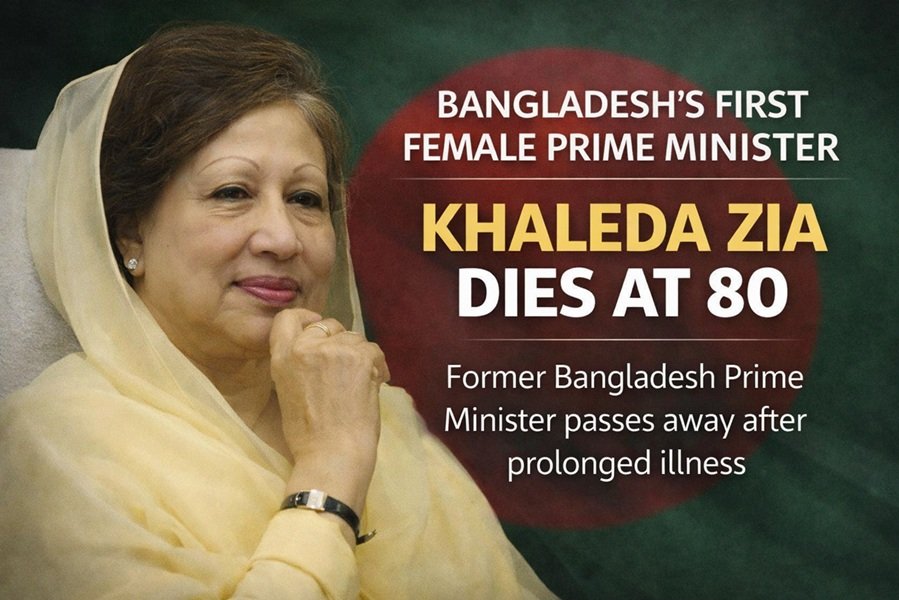
Bangladesh’s First Female Prime Minister Khaleda Zia Dies at 80
Former Bangladesh Prime Minister Khaleda Zia, the country’s first woman to hold the top political office, passed away on Tuesday at the age of 80. She died after a prolonged illness at a hospital in Dhaka, according to officials of the Bangladesh Nationalist Party (BNP).
Khaleda Zia had been suffering from multiple age-related health complications for several years and was receiving regular medical care. Her death has plunged Bangladesh into mourning, marking the end of an era in the nation’s political history.
Zia entered politics following the assassination of her husband, former President Ziaur Rahman, and rose to national prominence in the early 1990s. She became Prime Minister for the first time in 1991, leading the country during a crucial phase of democratic transition. Over the years, she served multiple terms as Prime Minister and remained one of the most influential figures in Bangladeshi politics.
For decades, Khaleda Zia and former Prime Minister Sheikh Hasina dominated the political landscape of Bangladesh, representing rival parties and shaping the country’s governance, policies, and political debates. Their rivalry defined national politics for more than thirty years.
Despite facing legal challenges and periods of political isolation in her later years, Khaleda Zia continued to be regarded as a symbol of resilience and leadership by her supporters. She played a key role in strengthening parliamentary democracy and expanding political participation in Bangladesh.
Tributes and condolence messages have poured in from political leaders, supporters, and citizens across the country, remembering her as a trailblazer who broke barriers for women in South Asian politics.
Details regarding her funeral and state honours are expected to be announced by her family and party leaders later.
