
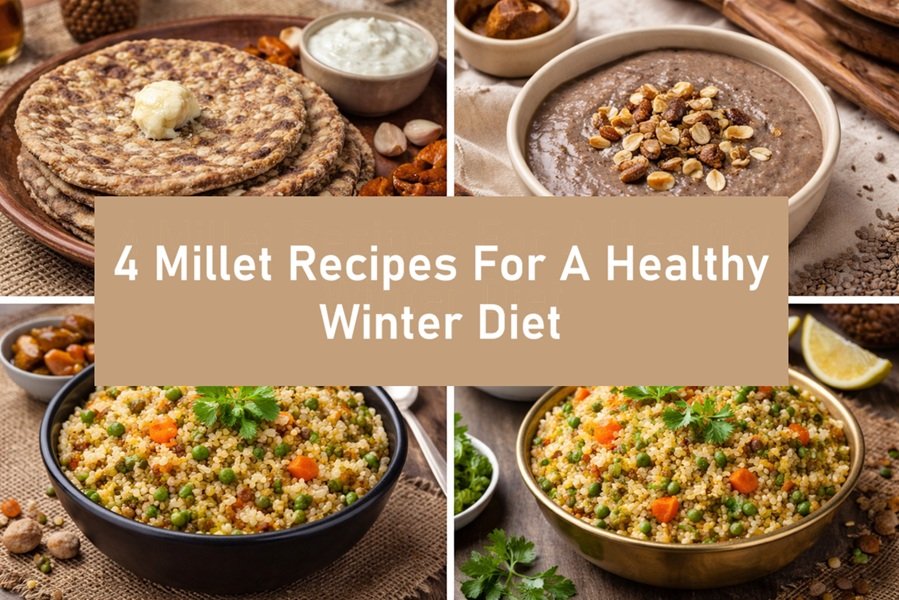
4 Millet Recipes For A Healthy Winter Diet
As winter sets in, the body naturally craves warm, nourishing foods that provide sustained energy and support immunity. Millets, often referred to as ancient grains, fit perfectly into a winter diet. Rich in fibre, plant protein, minerals, and slow-digesting carbohydrates, millets help generate internal warmth and keep digestion strong during the colder months.
According to traditional Indian and Ayurvedic wisdom, many millets have a “warming” effect, making them especially beneficial in winter. Here are four easy and nutritious millet-based recipes that you can add to your seasonal meal plan.
1. Bajra Roti or Bajra Paratha
Why it’s great for winter:
Bajra (pearl millet) is one of the most winter-friendly grains. It is high in fibre and iron and helps the body retain heat, reducing feelings of cold and seasonal fatigue.
How to prepare:
Mix bajra flour with a small portion of whole wheat flour for better binding. Use warm water to knead a soft dough. Roll slightly thick rotis or parathas and cook them on a hot tawa using ghee.
How to serve:
Enjoy them hot with homemade white butter (safed makkhan), jaggery, or a bowl of curd. This traditional combination delivers warmth, energy, and comfort—ideal for chilly mornings or dinners.
2. Ragi Porridge (Ragi Malt)
Why it’s great for winter:
Ragi (finger millet) is exceptionally rich in calcium and iron, making it excellent for bone health during low-sunlight months. It is also easy to digest and keeps you full for longer.
How to prepare:
Mix ragi flour with water to remove lumps. Add the mixture to boiling milk while stirring continuously. Cook until it thickens into a smooth porridge. Sweeten naturally with jaggery or mashed dates.
Winter-friendly tip:
Garnish with crushed almonds, walnuts, or cashews for added healthy fats and warmth. This makes an excellent breakfast or evening meal during winter.
3. Jowar Vegetable Khichdi
Why it’s great for winter:
Jowar (sorghum) is rich in complex carbohydrates and is naturally gluten-free. It provides slow-releasing energy, helping maintain stable blood sugar levels during colder days.
How to prepare:
Soak whole jowar overnight to soften it. Pressure cook with moong dal, turmeric, ginger, and seasonal vegetables like carrots, beans, or pumpkin. Finish with a light tempering of cumin seeds and hing in ghee.
Serving suggestion:
Add a spoon of ghee just before serving for enhanced flavour and better nutrient absorption. This one-pot meal is warming, filling, and easy on digestion.
4. Foxtail Millet Pulao
Why it’s great for winter:
Foxtail millet is a nutritious alternative to rice. It is high in protein, iron, and has a low glycaemic index, making it suitable for all age groups.
How to prepare:
Sauté whole spices like bay leaf and cloves in ghee or oil. Add onions, ginger-garlic paste, and seasonal vegetables. Stir in soaked foxtail millet, add hot water, and cook until fluffy.
How to enjoy:
Pair with cucumber-tomato raita or a bowl of warm lentil soup. This dish is light yet satisfying—perfect for lunch or dinner in winter.
Final Thoughts
Including millets in your winter diet is a simple yet powerful way to stay warm, nourished, and energetic. These grains are versatile, affordable, and deeply rooted in Indian food traditions. By rotating different millets through your meals, you not only enhance nutrition but also bring variety and comfort to your winter plate.
A warm bowl of millet-based food might just be the healthiest habit you adopt this season.
