
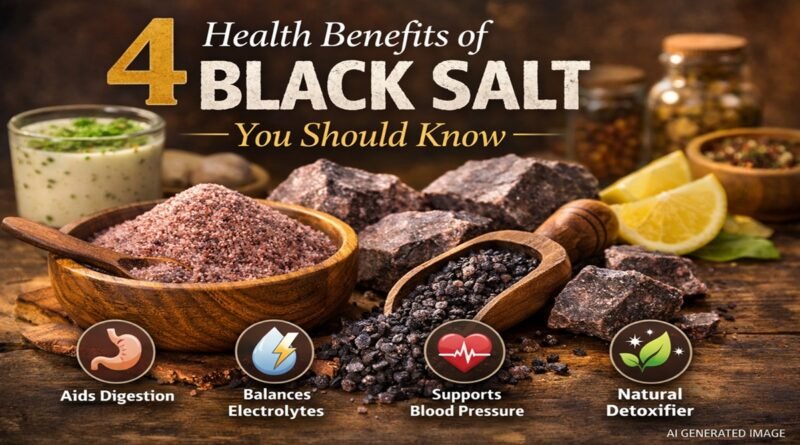
4 Health Benefits of Black Salt (Kala Namak) You Should Know
Black salt, commonly called kala namak in India, is a traditional ingredient used in Indian kitchens and Ayurvedic remedies for centuries. Its distinct flavour and slightly sulphurous aroma make it popular in chaats, chutneys, salads, fruit bowls and buttermilk.
But beyond taste, black salt is valued for its potential health benefits. Let’s explore what makes this traditional rock salt unique and how it may support your health.
What Is Black Salt?
Black salt is a type of rock salt that primarily comes from the Himalayan region of India, Pakistan, and Nepal. Unlike regular table salt, it undergoes a traditional heating process with natural herbs and seeds, which gives it:
- A dark brown to pinkish-grey colour
- A strong sulphurous aroma
- A tangy, umami-like flavour
It contains trace minerals such as iron, potassium and magnesium, which contribute to both its taste and nutritional profile.
4 Health Benefits of Black Salt (Kala Namak)
1. Helps Improve Digestion
One of the most well-known benefits of black salt is its ability to support digestion.
Traditionally, it is used to relieve:
- Acidity
- Gas
- Bloating
- Indigestion
Research published in the Journal of Drug Discovery and Health Sciences supports traditional claims that sulfur compounds in black salt have carminative properties. These compounds may help reduce bloating and flatulence by promoting the expulsion of gas from the intestines.
Black salt is also believed to stimulate digestive enzyme production, helping your body break down food more efficiently. This is why it is commonly added to:
- Buttermilk (chaas)
- Lemon water
- Post-meal digestive drinks
2. Supports Electrolyte Balance
Black salt contains essential minerals such as:
- Potassium
- Calcium
- Magnesium
- Iron
Some studies suggest that kala namak may have slightly lower sodium content compared to refined table salt, while providing additional trace minerals.
Electrolytes are crucial for:
- Proper hydration
- Nerve function
- Muscle contractions
- Maintaining fluid balance
During hot summer days in India or after exercise, adding a pinch of black salt to water or lemonade can help replenish lost minerals naturally.
3. May Help Regulate Blood Pressure (When Used in Moderation)
Compared to refined white salt, black salt contains more potassium and magnesium, which may support heart health.
A study published in Cardiology and Angiology: An International Journal suggested that users of sea or white salt had a higher risk of high blood pressure compared to those consuming black salt or Himalayan rock salt, possibly due to differences in mineral composition.
Potassium plays a key role in balancing sodium levels in the body. This balance may help in:
- Supporting normal blood pressure
- Reducing sodium-related strain on the heart
However, moderation remains essential, as black salt still contains sodium.
4. Acts as a Natural Detoxifier
In many Indian households, drinking warm water with a pinch of black salt in the morning is considered a natural cleansing practice.
It may help:
- Stimulate digestion
- Improve bowel movement
- Support the body’s natural detox process
While scientific evidence on “detox” claims is limited, black salt may support digestive efficiency, which indirectly aids waste elimination.
How to Use Black Salt in Your Diet
You can include black salt in your daily meals in simple ways:
- Sprinkle on fruits or salads
- Add to chaas or lassi
- Use in lemon water
- Mix in chutneys and raitas
- Season roasted vegetables
Its strong flavour means you need only a small quantity.
Important Note
While black salt offers several potential benefits, it should always be consumed in moderation.
Even though it may contain slightly less sodium than table salt, excessive intake can still:
- Raise blood pressure
- Affect kidney function
- Increase overall sodium load
If you have:
- High blood pressure
- Kidney disease
- Thyroid disorders
Consult your doctor before making significant dietary changes.
Conclusion
Black salt (kala namak) is more than just a flavour enhancer. With its digestive benefits, electrolyte support, and mineral content, it can be a healthier alternative to refined table salt when used wisely.
Incorporating small amounts into your diet may support digestion and overall wellness — but balance is key.
