
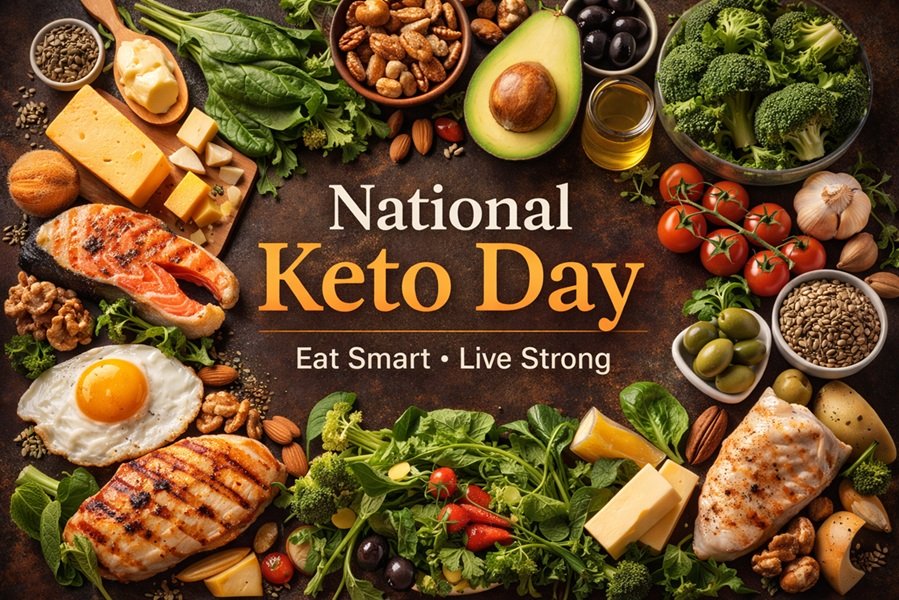
National Keto Day: Meaning, Benefits, and Why Keto Lifestyle Matters
National Keto Day is observed every year on January 5 to raise awareness about the ketogenic (keto) diet, a low-carb, high-fat eating approach that focuses on metabolic health, mindful nutrition, and sustainable lifestyle changes.
This day encourages people to learn about keto, clear myths, and understand how food choices impact energy, weight, and overall well-being.
What Is the Keto Diet?
The ketogenic diet is a nutritional approach where:
- Carbohydrates are reduced
- Healthy fats are increased
- Moderate protein is consumed
This dietary shift helps the body enter a metabolic state called ketosis, where fat—not glucose—is used as the primary energy source.
Why National Keto Day Is Celebrated
National Keto Day is not about promoting extreme dieting. Its purpose is to:
- Educate people about metabolic health
- Highlight the role of healthy fats
- Encourage balanced, informed eating
- Bust misconceptions around fats and carbs
- Promote mindful lifestyle choices over crash diets
Key Principles of the Keto Lifestyle
1. Focus on Healthy Fats
- Avocado
- Nuts and seeds
- Olive oil, coconut oil
- Ghee and butter (in moderation)
2. Reduce Refined Carbs
- Avoid sugar, white flour, processed foods
- Limit grains and starchy vegetables
3. Choose Quality Proteins
- Eggs
- Paneer
- Fish and lean meats
- Plant-based protein sources
4. Stay Hydrated & Balanced
- Adequate water intake
- Electrolyte balance is essential
Health Benefits Often Associated with Keto
Results may vary from person to person.
- Supports weight management
- Helps regulate blood sugar levels
- May improve mental clarity and focus
- Encourages stable energy levels
- Promotes mindful eating habits
National Keto Day reminds us that food is fuel, not just calories.
Myths About the Keto Diet
Myth 1: Keto means eating unlimited fat
➡ Reality: Quality and balance matter.
Myth 2: Keto is unsafe
➡ Reality: When done responsibly and with guidance, it can be effective for many.
Myth 3: Keto is only for weight loss
➡ Reality: It also focuses on metabolic and lifestyle health.
Is Keto for Everyone?
Keto is not a one-size-fits-all solution. People with medical conditions, pregnant women, or those on medication should always consult a healthcare professional before adopting a keto diet.
National Keto Day promotes awareness, not pressure.
National Keto Day Captions & Quotes
🥑 Short Captions
- Fuel your body, not your cravings.
- Healthy fats, mindful living.
- Keto is a lifestyle, not a trend.
- Eat smart, live strong.
- Let food work for you.
- Less sugar, more balance.
- Nutrition with intention.
- Mindful eating starts today.
- Keto: simplicity on a plate.
- Health begins with choices.
🥑 Inspirational Quotes
- “Good health starts with conscious eating.”
- “Not all fats are bad—knowledge makes the difference.”
- “Your body listens to what you feed it.”
- “Wellness is built one meal at a time.”
- “Balance beats extremes every time.”
- “Food is information, not temptation.”
- “A healthy body supports a focused mind.”
- “Sustainable health is the real goal.”
- “Eat for energy, not just taste.”
- “Lifestyle change begins with awareness.”
🥑 Social Media Captions
- Celebrating mindful nutrition on National Keto Day 🥑
- Health isn’t a shortcut—it’s a journey.
- Keto isn’t about restriction, it’s about intention.
- Smart fuel for a smarter life.
- Today’s choice, tomorrow’s health.
- Understanding food is self-care.
- National Keto Day: Learn before you follow.
- Eating right is an act of self-respect.
- Progress starts on the plate.
- Balanced habits create lasting results.
Frequently Asked Questions (FAQs) on the Keto Diet
1. What is the keto diet in simple terms?
The keto (ketogenic) diet is a low-carb, high-fat, moderate-protein eating approach that helps the body shift from using glucose to burning fat for energy (a state called ketosis).
2. How long does it take to enter ketosis?
Most people enter ketosis within 2–7 days, depending on carbohydrate intake, metabolism, activity level, and hydration.
3. Is the keto diet safe?
For many healthy adults, keto can be safe when followed responsibly. However, people with medical conditions, pregnant or breastfeeding women, or those on medication should consult a healthcare professional before starting.
4. What foods are allowed on keto?
Common keto-friendly foods include:
- Healthy fats (avocado, olive oil, coconut oil, ghee)
- Eggs
- Paneer, cheese
- Fish and lean meats
- Low-carb vegetables (spinach, cauliflower, broccoli)
- Nuts and seeds (in moderation)
5. Which foods should be avoided on keto?
Foods typically avoided include:
- Sugar and sweets
- White rice, wheat, bread
- Potatoes and starchy vegetables
- Soft drinks and sugary juices
- Processed and packaged foods
6. Can vegetarians follow a keto diet?
Yes. A vegetarian keto diet can include paneer, cheese, tofu, nuts, seeds, coconut products, dairy fats, and low-carb vegetables.
7. Is keto only for weight loss?
No. While weight management is a common goal, keto is also followed for:
- Blood sugar control
- Mental clarity
- Stable energy levels
- Metabolic health awareness
8. What is “keto flu”?
Keto flu refers to temporary symptoms such as fatigue, headache, or irritability when starting keto. It usually occurs due to electrolyte imbalance and improves with hydration and proper mineral intake.
9. How much carbohydrate is allowed on keto?
Most keto plans limit carbs to 20–50 grams per day, depending on individual tolerance and goals.
10. Can I exercise while on keto?
Yes. Light to moderate exercise is generally fine. Some people may experience reduced energy initially, but performance often improves once the body adapts to fat-burning.
11. Is long-term keto recommended?
Keto can be followed short-term or cyclically. Long-term adherence should be personalized and ideally monitored by a nutrition professional to ensure nutrient balance.
12. Can keto increase cholesterol?
Keto may change cholesterol levels differently for each person. For many, HDL improves and triglycerides reduce, but monitoring through regular checkups is advised.
13. Is fruit allowed on keto?
Most fruits are high in natural sugars. Small portions of berries (like strawberries) may be included occasionally.
14. Can diabetics follow keto?
Some people with diabetes find keto helpful, but it should be done only under medical supervision, especially for those on insulin or glucose-lowering medication.
15. Is keto better than other diets?
There is no universal “best” diet. Keto works well for some, while others may benefit more from balanced or moderate-carb diets. Sustainability and health outcomes matter more than trends.
Conclusion
National Keto Day is not about forcing a diet—it’s about understanding nutrition, respecting your body, and making informed choices. Whether you follow keto or not, the core message remains the same:
👉 Mindful eating leads to mindful living.
Use this day to learn, reflect, and choose what truly supports your health.
