
Microwave Oven: Complete Guide to All Types Available in the Market (Beginner to Advanced)
A microwave oven is one of the most essential kitchen appliances in modern homes. From reheating leftovers to baking cakes and grilling food, microwave ovens have evolved significantly over the years. Today, the market offers multiple types of microwave ovens, ranging from basic models for simple tasks to advanced smart ovens capable of replacing several kitchen appliances.
This detailed guide explains every type of microwave oven available in the market, their working principles, features, advantages, disadvantages, and ideal use cases—starting from the simplest to the most advanced options.
What Is a Microwave Oven and How Does It Work?
A microwave oven uses electromagnetic waves (microwaves), typically at 2.45 GHz frequency, to heat food. These microwaves excite water, fat, and sugar molecules inside food, producing heat through molecular friction.
Key Components:
- Magnetron (generates microwaves)
- Waveguide (directs microwaves)
- Turntable (rotates food for even heating)
- Control panel (manual or digital)
- Cavity (cooking chamber)
Classification of Microwave Ovens (Market Overview)
Microwave ovens can be classified based on:
- Functionality
- Technology
- Installation type
- Smart features
Below is a complete breakdown.
1. Solo Microwave Oven (Basic Level)
Description
A solo microwave oven is the most basic and affordable type. It is designed mainly for reheating, defrosting, and simple cooking.
Features:
- Microwave heating only
- Manual or basic digital controls
- Compact size
- Low power consumption (typically 700–1000W)
What You Can Cook:
- Reheat food
- Boil vegetables
- Defrost frozen items
- Cook simple dishes like rice or noodles
Advantages:
- Budget-friendly
- Easy to operate
- Ideal for small families or students
Limitations:
- Cannot grill or bake
- Limited cooking versatility
Best For:
- Beginners
- Hostel rooms
- Office pantries
2. Grill Microwave Oven (Intermediate Level)
Description
A grill microwave oven includes an additional heating element (usually at the top) for grilling and browning food.
Features:
- Microwave + Grill mode
- Metal grill rack included
- Better temperature control
- Power range: 900–1200W
What You Can Cook:
- Grilled sandwiches
- Paneer, chicken, fish
- Toasting and browning
- Crispy toppings
Advantages:
- Adds grilling capability
- Better texture than solo ovens
- Moderate price range
Limitations:
- Limited baking ability
- Manual monitoring often required
Best For:
- Small families
- Users who enjoy grilled food
3. Convection Microwave Oven (Advanced Level)
Description
A convection microwave oven combines microwave heating + convection fan + heating element, making it the most versatile conventional microwave.
Features:
- Microwave, Grill & Convection modes
- Uniform heat circulation
- Temperature control up to 230–250°C
- Auto-cook menus
What You Can Cook:
- Cakes, bread, cookies
- Pizza and pastries
- Roasted chicken
- Full meals
Advantages:
- Acts as microwave + oven + grill
- Even cooking and baking
- Suitable for Indian and international recipes
Limitations:
- Higher cost
- Requires learning curve
- Larger size
Best For:
- Home bakers
- Families
- All-purpose kitchen use
4. Built-In Microwave Oven (Premium Segment)
Description
A built-in microwave oven is installed inside kitchen cabinets for a seamless modular kitchen look.
Features:
- Available in grill and convection types
- Touch controls
- Elegant design
- High capacity (30L+)
Advantages:
- Saves counter space
- Premium aesthetics
- High durability
Limitations:
- Expensive
- Requires professional installation
- Less portable
Best For:
- Modular kitchens
- Luxury homes
5. OTG (Oven Toaster Grill) – Microwave Alternative
Description
Though not a microwave, OTG ovens are often compared. They use electric heating coils, not microwaves.
Features:
- Top & bottom heating rods
- Mechanical or digital controls
- Excellent for baking and grilling
Advantages:
- Best baking results
- Precise temperature control
- Affordable
Limitations:
- No microwave reheating
- Slower cooking
- Higher power usage
Best For:
- Baking enthusiasts
- Small bakeries
- Cake and bread makers
6. Smart Microwave Oven (Latest Technology)
Description
A smart microwave oven integrates Wi-Fi, AI cooking, voice control, and app connectivity.
Features:
- Smartphone control
- Voice assistant support
- Sensor cooking
- Recipe recommendations
Advantages:
- Highly automated
- Consistent cooking results
- Future-ready appliance
Limitations:
- High cost
- Internet dependency
- Complex setup for some users
Best For:
- Tech-savvy users
- Smart homes
7. Combination & Hybrid Microwave Ovens
Description
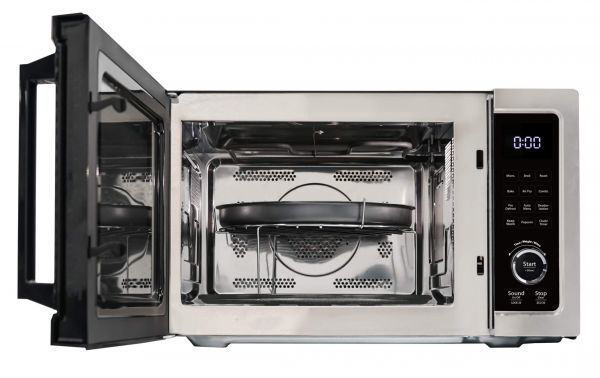
These ovens combine multiple technologies, such as:
- Microwave + Steam
- Microwave + Air Fryer
- Microwave + Grill + Convection + Steam
Features:
- Health-focused cooking
- Retains nutrients
- Oil-free frying
Advantages:
- Multi-appliance replacement
- Advanced cooking techniques
- Time-saving
Limitations:
- Very expensive
- Larger footprint
- Advanced maintenance
Best For:
- Health-conscious users
- Premium kitchens
Comparison Table: Microwave Oven Types
| Type | Reheat | Grill | Bake | Price Range |
|---|---|---|---|---|
| Solo | ✔ | ✘ | ✘ | Low |
| Grill | ✔ | ✔ | Limited | Medium |
| Convection | ✔ | ✔ | ✔ | Medium–High |
| Built-In | ✔ | ✔ | ✔ | High |
| Smart | ✔ | ✔ | ✔ | Very High |
| Hybrid | ✔ | ✔ | ✔ | Premium |
How to Choose the Right Microwave Oven?
Consider These Factors:
- Family size (20L–25L for small, 30L+ for large)
- Cooking habits
- Kitchen space
- Power consumption
- Budget
- Ease of use
Safety Tips for Microwave Ovens
- Use microwave-safe containers only
- Avoid metal utensils (unless specified)
- Do not operate empty
- Keep door seals clean
- Ensure proper ventilation
Conclusion
Microwave ovens have evolved from simple reheating devices to advanced cooking systems. Whether you are a beginner looking for a solo microwave or an expert chef exploring smart and hybrid ovens, there is a model for every need and budget.
Understanding the types of microwave ovens helps you make a smart, long-term investment that enhances convenience, saves time, and improves cooking quality.
