
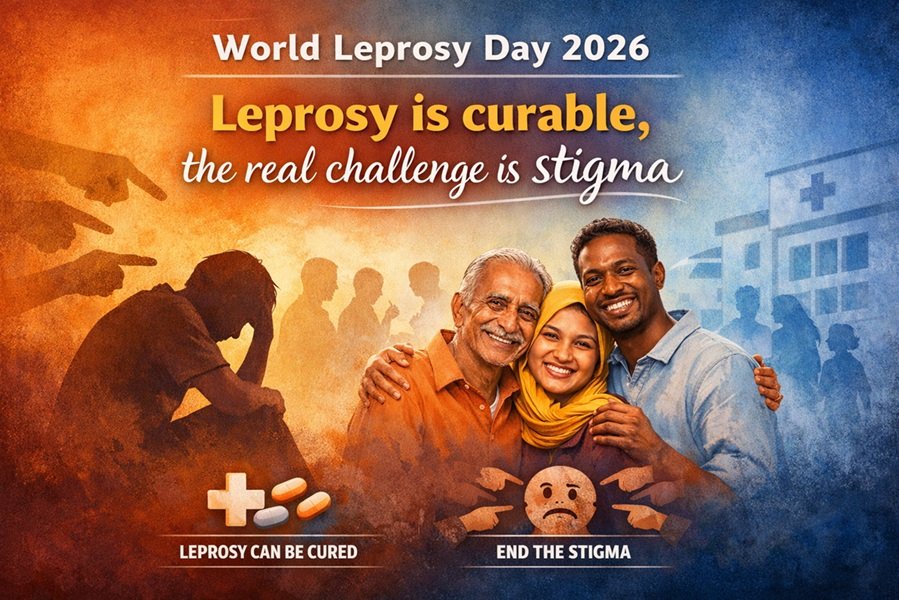
World Leprosy Day 2026
Theme: Leprosy is curable, the real challenge is stigma
Introduction
World Leprosy Day 2026 is observed to raise awareness about leprosy, promote early diagnosis and treatment, and most importantly, address the deep-rooted stigma and discrimination associated with the disease. Although leprosy is completely curable, social exclusion and fear continue to affect the lives of millions of people worldwide.
World Leprosy Day is observed every year on the last Sunday of January. In 2026, it falls on 25 January.
What is World Leprosy Day?
World Leprosy Day is a global awareness observance dedicated to:
- Educating people about leprosy (Hansen’s disease)
- Promoting early detection and effective treatment
- Upholding the dignity and human rights of persons affected by leprosy
- Eliminating stigma, myths, and discrimination
The day serves as a reminder that the fight against leprosy is not only medical, but also social and psychological.
History and Origin of World Leprosy Day
World Leprosy Day was first observed in 1954, initiated by French humanitarian Raoul Follereau. He chose the date to coincide with the anniversary of Mahatma Gandhi’s death, as Gandhi worked closely with people affected by leprosy and strongly advocated compassion and social inclusion.
Since then, the day has been supported by governments, civil society organizations, and international bodies such as the World Health Organization.
Theme of World Leprosy Day 2026
“Leprosy is curable, the real challenge is stigma”
The theme for World Leprosy Day 2026 highlights a powerful and often overlooked reality:
medical treatment for leprosy is effective and widely available, but stigma remains the biggest barrier to elimination.
Leprosy can be cured with standard antibiotic therapy when detected early. However, many people delay diagnosis or hide symptoms due to fear of social rejection, discrimination, and loss of livelihood.
As part of the 2026 campaign, a video series released ahead of 25 January will share first-hand experiences of persons affected by leprosy, bringing real voices to the forefront and challenging long-standing misconceptions.
Why Stigma is the Real Challenge
Despite medical progress, stigma continues to cause:
- Social isolation and exclusion
- Loss of employment and education opportunities
- Psychological distress and loss of self-esteem
- Delay in seeking medical care
Stigma often leads to late diagnosis, which increases the risk of disability—making discrimination both a cause and a consequence of suffering.
Understanding Leprosy
What is Leprosy?
Leprosy, also known as Hansen’s disease, is a chronic infectious disease caused by Mycobacterium leprae. It primarily affects:
- Skin
- Peripheral nerves
- Eyes
- Upper respiratory tract
Is Leprosy Contagious?
Leprosy is not highly contagious. It spreads only through prolonged and close contact with untreated individuals. Casual contact such as touching, sharing food, or living together does not spread the disease.
Signs and Symptoms of Leprosy
Early symptoms may include:
- Pale or reddish skin patches with loss of sensation
- Numbness in hands or feet
- Muscle weakness
- Thickened nerves
- Eye problems in advanced cases
Early diagnosis is critical to prevent permanent nerve damage and disability.
Treatment and Cure
Leprosy is fully curable with multidrug therapy (MDT), which is:
- Safe and effective
- Provided free of cost in many countries
- Capable of stopping transmission once treatment begins
People who complete treatment can live completely normal lives.
Global and Indian Perspective
Globally, the number of leprosy cases has reduced significantly over the past decades. However, countries like India continue to report a high number of new cases each year, making awareness and stigma reduction especially important.
Sustained public health efforts, community education, and social acceptance are essential to achieving a leprosy-free world.
How World Leprosy Day 2026 Can Be Observed
Individual Level
- Share accurate information about leprosy
- Speak out against discrimination
- Support organizations working for affected communities
Community and Institutional Level
- Organize awareness programs and screenings
- Promote inclusion and rehabilitation
- Advocate for equal rights and dignity
Key Messages of World Leprosy Day 2026
- Leprosy is curable
- Early treatment prevents disability
- Stigma delays diagnosis and worsens outcomes
- Dignity and inclusion are human rights
Conclusion
World Leprosy Day 2026 reinforces a crucial message: medicine can cure leprosy, but only society can cure stigma. Ending discrimination is essential to ensuring early treatment, protecting human rights, and achieving true elimination of the disease.
By spreading awareness, listening to lived experiences, and challenging myths, the world can move closer to a future with zero leprosy and zero stigma.
