
2026 Makara Sankranti: Punya Kaal Muhurta, Maha Punya Kala, Date, Time and Spiritual Significance
Makara Sankranti 2026 is one of the most auspicious solar events in the Hindu calendar and will be observed on Wednesday, January 14, 2026. This sacred day marks the moment when Surya Dev (the Sun God) enters Makara Rashi (Capricorn) and begins his Uttarayana (northward journey)—a transition symbolising light, progress, and spiritual awakening.
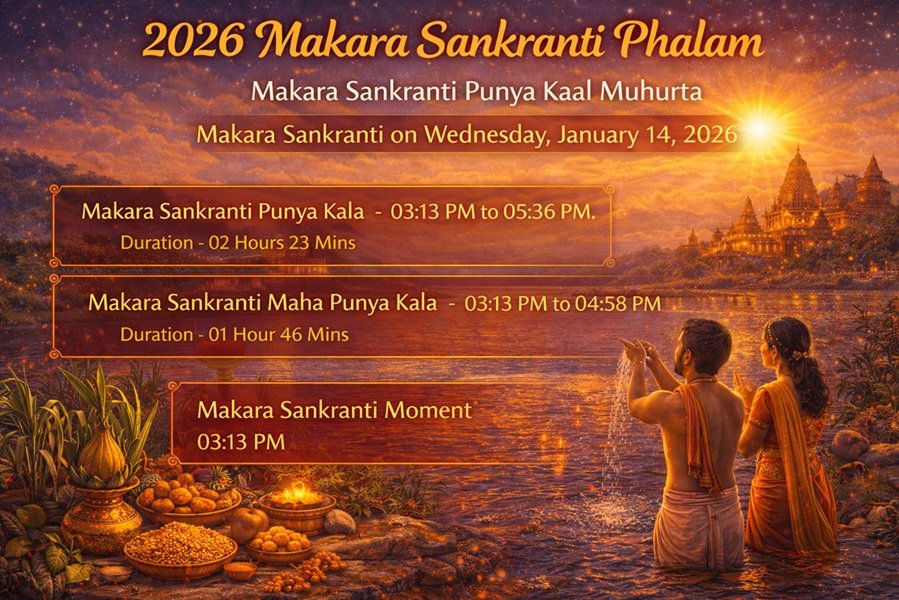
The Makara Sankranti Moment in 2026 occurs at exactly 03:13 PM, which also determines the highly auspicious Punya Kaal and Maha Punya Kala timings for religious activities.
This article explains the Makara Sankranti Phalam (spiritual results and benefits), along with detailed muhurta timings and religious importance.
Makara Sankranti 2026: Date and Key Timings
- Festival: Makara Sankranti
- Day: Wednesday
- Date: January 14, 2026
Makara Sankranti Moment
- 03:13 PM
This precise moment marks the Sun’s transition into Capricorn and is the foundation for all Sankranti rituals.
Makara Sankranti Punya Kaal Muhurta 2026
The Punya Kaal is the most auspicious time period during which rituals, holy baths, charity, japa, and worship yield maximum spiritual merit.
Punya Kaal Timings
- Makara Sankranti Punya Kala:
03:13 PM to 05:36 PM - Duration: 02 Hours 23 Minutes
Any religious activity performed during this time is believed to bring long-lasting blessings, peace, and prosperity.
Makara Sankranti Maha Punya Kala 2026
The Maha Punya Kala is an even more powerful sub-period within the Punya Kaal.
Maha Punya Kala Timings
- Makara Sankranti Maha Punya Kala:
03:13 PM to 04:58 PM - Duration: 01 Hour 46 Minutes
This period begins exactly at the Sankranti moment and is considered the most spiritually rewarding time for sacred acts.
What Is Makara Sankranti Phalam?
Makara Sankranti Phalam refers to the spiritual, karmic, and material benefits gained by observing Sankranti rituals with devotion during the Punya Kaal.
According to Hindu scriptures, actions performed during this solar transition multiply in merit and help cleanse accumulated negative karma.
Spiritual Significance of Makara Sankranti
Makara Sankranti signifies:
- The beginning of Uttarayana, the path of light (Devayana)
- Victory of light over darkness
- Growth, renewal, and auspicious beginnings
- A favorable period for spiritual progress
In the Bhagavad Gita, Uttarayana is described as the divine path that leads toward liberation.
Makara Sankranti Phalam: Benefits of Observing Rituals
1. Punya (Spiritual Merit)
Bathing, charity, and worship during Punya Kaal grant immense punya equivalent to major yajnas.
2. Karmic Purification
Donations and prayers on Sankranti help neutralize past negative karmas.
3. Prosperity and Abundance
Charity of food, grains, sesame, and clothes attracts material and spiritual abundance.
4. Health and Longevity
Sun worship on Makara Sankranti is believed to strengthen vitality and overall well-being.
5. Ancestral Blessings
Charity and prayers performed with remembrance of ancestors bring peace to pitrs and blessings to the family.
Rituals Recommended During Makara Sankranti Punya Kaal
Holy Bath (Snan)
- Ideally taken in sacred rivers like Ganga, Yamuna, or at home with sanctified water
- Symbolizes purification of body and soul
Surya Puja
- Offer water (Arghya) to the Sun God
- Chant Gayatri Mantra or Aditya Hridayam
Charity (Daan)
Highly auspicious items to donate:
- Sesame seeds (Til)
- Jaggery
- Warm clothes
- Food grains
- Ghee and utensils
Japa and Meditation
Chanting mantras during Maha Punya Kala is especially powerful.
Importance of Til (Sesame) on Makara Sankranti
Sesame seeds hold special significance:
- Considered purifying
- Associated with Surya Dev
- Used in charity, bath, and food
It is believed that Til Daan on Makara Sankranti removes sins and brings protection from misfortune.
Makara Sankranti Phalam for Householders and Seekers
- For householders: Ensures family harmony, prosperity, and protection
- For students: Enhances focus, discipline, and success
- For spiritual seekers: Aids inner clarity and progress toward moksha
Makara Sankranti is considered equally beneficial for worldly and spiritual life.
Makara Sankranti and the Beginning of Auspicious Activities
After Makara Sankranti:
- Auspicious ceremonies increase
- Marriage and spiritual activities gain momentum
- The Sun’s energy is considered highly favorable
Hence, Sankranti is regarded as a gateway to a positive six-month phase.
Why Makara Sankranti 2026 Is Special
- Clear and well-defined Sankranti Moment at 03:13 PM
- Long Punya Kaal of 2 hours 23 minutes
- Strong Maha Punya Kala of 1 hour 46 minutes
- Coincides with major harvest and regional festivals across India
Summary of Makara Sankranti 2026 Timings
- Makara Sankranti Date: Wednesday, January 14, 2026
- Makara Sankranti Moment: 03:13 PM
- Punya Kaal: 03:13 PM – 05:36 PM
- Maha Punya Kala: 03:13 PM – 04:58 PM
Conclusion
Makara Sankranti Phalam 2026 highlights the immense spiritual and karmic rewards associated with this sacred solar transition. Observing rituals during the Punya Kaal and Maha Punya Kala, beginning exactly at 03:13 PM, allows devotees to align with cosmic energy, cleanse past karma, and invite prosperity, health, and spiritual growth.
Makara Sankranti is not just a festival—it is a powerful cosmic reset, reminding us to move toward light, discipline, and higher purpose as the Sun begins its divine northward journey.
